By Udo Silas
“Terpsichorean” is a literary word relating to stage dancing, named after Terpsichore, the Greek Muse of dance.
In Nigeriaʼs political theatre, however, the muse risks becoming an election agent: summoned not to illuminate life, but to throw sequins over its wounds.
Shettima and Oshiomholeʼs “Buga” performance at different APC rallies and Tinubu’s attempt at dancing, offers a spectacle worth interrogating.
While Oshiomhole’s was full of energy, force and the suggestion of coital dexterity, that of Shettima conveyed the optics of a clown, without his costume.
Tinubu’s dance, rather than stirring the onlookers, ended up exhibiting the frailties of nature’s clock.
The question is not whether politicians may dance; it is whether choreography can masquerade as a governing argument.
A nimble ankle cannot secure a highway.
No presidential shuffle can thresh rice into an empty granary.
To offer rhythm where citizens demand results is the terpsichorean fallacy: mistaking movement for progress, applause for consent, and spectacle for service.
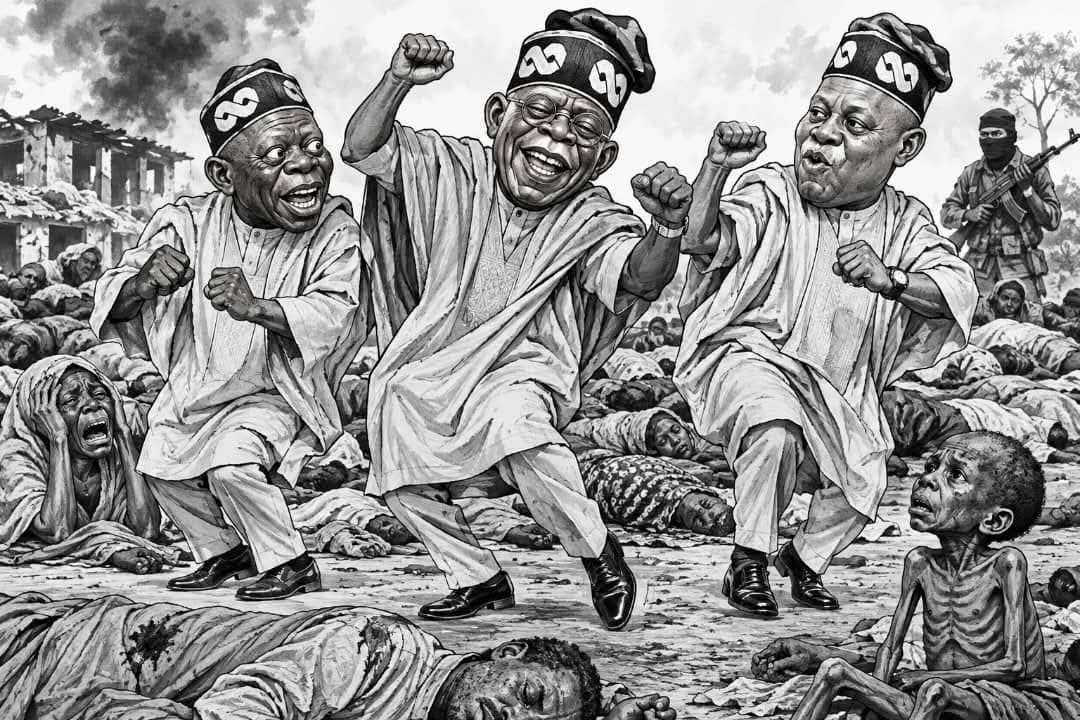
Against truths of deepening hunger and insecurity, such exuberance invites a sterner reading.
But power owes suffering something more searching than a party trick.
Let there be a dance solemnity: feet keeping time with accountability, shoulders bearing responsibility, hands opening a report card.
Count safer villages, affordable meals, functioning hospitals and public money honestly accounted for.
Let achievement compose the music before ambition hires the orchestra.
Shettima, Oshiomhole and Tinubu: amid hunger, banditry and rampant corruption, your dancing risks symbolising not national renewal but powerʼs insulation from pain—a banquetʼs carefree footsteps above a cellar of deprivation.
I leave you three and your numerous supporters who exist in suspended reasoning, with the words of legendary dancer, choreographer and educator, Pearl Primus.
A pioneering dance professor who taught dance at New York University and Hunter College, Primus, defined dance as “the wordless joy of freedom”.
It is her contention that dance connects people together, rather than existing solely as a spectacle or performance.
“I dance not to entertain but to help people better understand each other” she said.
From your hoofings and prancing; you, Shettima, Oshiomhole, and Tinubu, Nigerians have come to understand you better.
You don’t give a damn about us.
Silas is a journalist