By Marcel Okeke
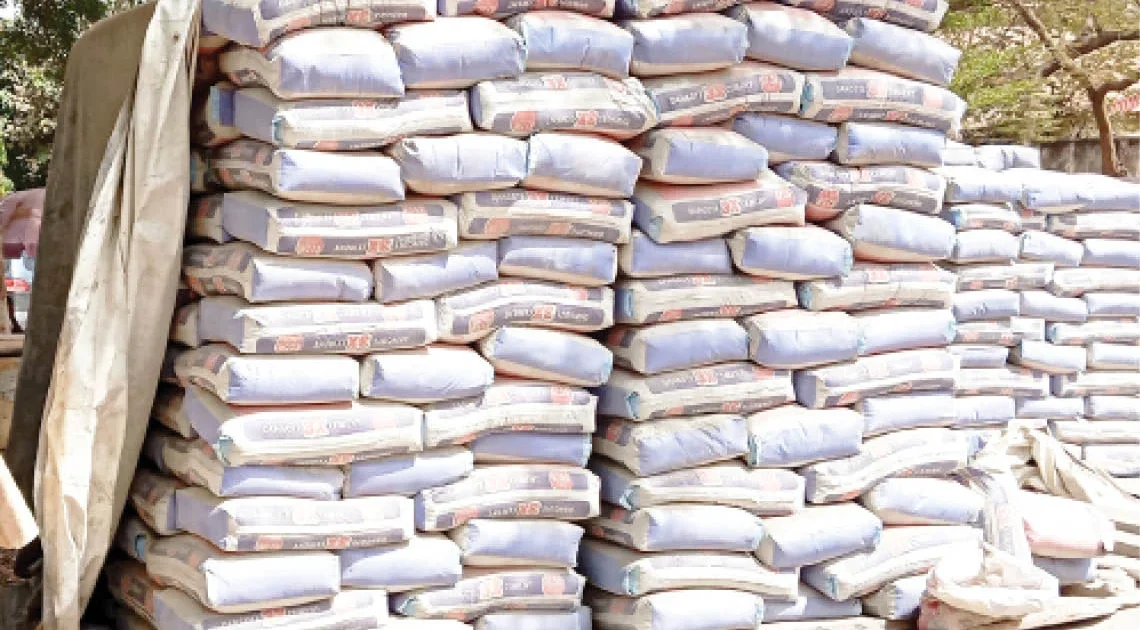
The Federal Government of Nigeria (FGN’s) anti-private-sector operations came to a climax recently when the Minister of Works, David Umahi, told cement manufacturers in the country that the prices of their product (cement) were “no longer acceptable to the Government. At a function in Lagos to unveil HBM as Lafarge Nigeria’s new corporate identity, Umahi said “I want to insist that Lafarge, now HBM and other manufacturers of cement should reduce their prices.”
“We shall be engaging on this from first of July; manufacturers of cement must reduce their prices because the contractors are choking me to review their contracts. But nobody is reviewing anybody’s contract. It is the manufacturers of cement that should review their prices,” he said. The minister said the high and soaring prices of cement was already taking a toll on the FGN’s road projects and the Renewed Hope Housing Projects.
Unwittingly, the minister, in his address, has let the cat out of the bag regarding the ultimate outcome of his proposed ‘engagements’ with cement manufacturers: prices of cement must go down. This is because the minister has, unilaterally, named cement manufacturers as the victims who are responsible for hampering the delivery of FGN’s projects.
But the minister’s verdict on cement manufacturers obviously was without any consideration for their choking operating environment and cost structure: input costs, machinery and equipment costs, energy costs, warehousing, distribution and transportation costs, etc. To be added to all these are high corporate taxes, and corporate social responsibility and sustainability demands—including environmental management pressures.
The Minister’s dictatorial orders, if anything, demonstrate a vivid lack of understating of the daunting challenges confronting private sector operators in general, and the manufacturing industry in particular. Nigeria’s notoriously poor energy/power supply has remained a binding constraint on virtually all productive activities in the country, but more so on the manufacturing operations.
Cement production is well known to be both capital and labor-intensive; especially with modern sophisticated high energy-kilns being used by the three major cement producers in Nigeria. None of these major cement companies depends on the country’s epileptic national grid to power their production activities. Their state-of-the-art machinery and equipment are all imported without exception.
Today, as the manufacturing sector is bearing the brunt of the extremely high-cost operating environment unleashed by recent FGN reforms, has the powers that be contemplated some incentives, subsidies or consolations for the manufacturers? The tight monetary policies of the Central Bank of Nigeria (CBN) have kept interest rates for loans too high for the productive sector-operators.
Businesses, like the cement manufacturers, who take these bank loans at prohibitively high interest rates—end up having very high production costs. While this is their reality, the CBN keeps regaling Nigerians with its ballooning foreign portfolio investment (FPI) inflow—as foreign investors take advantage of the attractive yields from investments in Nigeria’s financial assets.
The Manufacturers Association of Nigeria (MAN)—the umbrella body of manufacturers in the country, has lamented to no end about the negative ripple effects of the CBN’s tight monetary policies over the last three years. Accessibility and affordability of credit facilities have become a major challenge to all manufacturing concerns. And there is no end to this trend in sight yet.
As the manufacturers are wading through these challenges, the Honorable Minister of Works is giving hint of impending price control or forced pricing for their products. Apparently at its wits’ end regarding the soaring prices of a commodity it does not produce, the FGN wants to impose price control on cement. However, imposing price ceiling on cement—a purely private sector product—is laden with auguries.
Cement manufacturing is entirely a profit-driven private sector business that may not be very amenable to price control modes. Indeed, these businesses are deserving of a variety of government incentives, support, and encouragements to moderate prices of their products. Rather than waging a ‘war’ to forcefully bring the prices of cement down, as the Works Minister has pronounced, the Government should put together a bouquet of incentives to reduce cost of operations for the cement manufacturers.
There are a variety of tax incentives that the FGN can give the cement manufacturers. Government can also pursue policies that intensify competition in that sub-sector to trigger some price adjustments. Although, this is not to recommend the type of competition the Government has unleashed in the refined products market. The virtually unrestrained licensing of petrol (Premium Motor Spirit, PMS) importation to be competing with local refineries appears ludicrous.
A federal government that cannot run its own refineries, resorts to issuing licenses for petrol importation, on the flimsy excuse that it is fighting against perceived monopoly tendencies in the sub-sector. This approach not only stifles local refining initiatives but also provides a channel for avoidable frittering away of the country’s scarce foreign exchange (FX). As the FGN is backing continued importation of PMS, it also claims to be encouraging the development of local refining.
While all this keeps stifling the downstream sub-sector of the oil and gas sector in the country, the FGN takes its ‘blame game’ to other sectors and ecosystems. This is why the FGN would want blames for its failure to provide dividends of democracy to Nigerians to be shifted to the sub-nationals, claiming that they (states and LGAs) now receive so much money more than hitherto.
But, again, using the price of cement as an index: as of May 2023, the price of a 50kg cement was about N3000. A state government that deployed its entire Three Billion Naira FAAC allocation to buying only cement, would be able to buy one billion (50kg) bags of the product. As of today, if the same state is getting Twelve Billion Naira, and the price of cement stands at over Twelve thousand Naira per (50kg) bag, how many bags of cement can that state afford now? Obviously less than it could afford before!
This scenario is the plight of virtually all the states, especially those without buoyant internally-generated revenue (IGR). The badly depreciated local currency (Naira), owing to its full floatation and the fallouts of fuel subsidy removal, all combined to weaken the purchasing power of all economic agents. In truth, the sub-nationals have been made poorer; their purchasing power having been thoroughly weakened.
Therefore, the Works Minister’s singling out of the cement manufacturers for blame is a case of transferred aggression; or scapegoating. Cement manufacturers are rational business entities who fix prices of their products based on a number of variables, including cost of operations, profitability and sustainability considerations. Indeed, they are in business for business, not for Renewed Hope Projects!

The author, Okeke, a practicing Economist, Business Strategist, Sustainability expert and ex-Chief Economist of Zenith Bank Plc, lives in Lekki, Lagos. He can be reached via: obioraokeke2000@yahoo.com (08033075697) SMS only