By Celestine Mel
Some arguments don’t gather momentum because they are true. They gather momentum because the people fueling them simply cannot afford to lose. That is the ugly truth that may be festering at the heart of the raging debate about the Ibom Deep Seaport.
Strip away the legal briefs, the syndicated headlines, the coordinated op-eds, and the breathless claims of ethnic betrayal, and what you might find standing naked is not patriotism. What you may find is panic—the panic, perhaps, of powerful men whose bet went wrong; men who quietly bought up swaths of land around the Ibaka community expecting a multibillion-dollar federal windfall, and then watched the “wicked” engineers arrive with their data and their verdict, and point somewhere else.
I cannot verify this with documentary certainty. It is what I have been told by people close to the project, and I present it as the question that it is: if powerful elite interests did consolidate land around Ibaka early in the project’s lifespan, if they speculated on the singular outcome that a federal seaport would be built exactly on their property lines, and if the engineering studies then returned a verdict that pointed elsewhere, would that not explain the ferocity of what we are witnessing? Would it not explain why a standard infrastructure-siting decision has ignited this level of coordinated, sustained, and well-resourced outrage? I do not say this is what happened; I say it is worth asking.
What I can see plainly is that this does not look like a technical dispute. It looks like a business expectation gone wrong.
Two days ago, a seasoned expert who was deeply embedded in this project told me something I cannot shake off. He said ours is the only seaport project in the world where an initially proposed host community is insisting the port must be built in their backyard. Think about that for a moment. Every other major port development in history has faced fierce community resistance.The locals at Lekki protested because dredging destroyed their marine ecosystems and ruined generations of fishing livelihoods. Citizens in Valencia, Spain, rose up in 2002 when port expansion threatened to demolish their homes and privatize their coastline. Fishing communities in Colombo, Sri Lanka, fought port development that swallowed their coastal territories whole. In the Johor Strait in Malaysia, fishermen marched against Singapore’s land reclamation because the dredging shredded their nets and killed the fish. Communities across the globe have wept, protested, and bled to keep seaports away from their homes. But in Akwa Ibom, certain loud voices want the seaport dragged toward them. Ask yourself why.
What benefit does the average fisherman in Ibaka derive from a seaport roaring to life beside his canoe? Not a salary. Not a contract. Not a future. His livelihood—the only economy he has ever known, would be swallowed whole by dredging equipment, industrial noise, and chemical runoff. The people being championed loudest in this campaign are precisely the people who would suffer most if these champions succeeded. The fishermen are being used as a human shield, possibly for interests that have nothing to do with them.
Now, to the men firing the guns.
Emem Benson, Esq., launched a lengthy, two-part broadside against my earlier piece titled *“Separating Facts from Fiction”*. His headline called me out by name. He brandished clipped newspaper covers and early project documents showing the seaport was originally conceived as the Ibaka Deep Seaport. He is correct on that narrow point, and I have never disputed it. The port bore that name because early planners believed a suitable harbor could be found somewhere within Ibaka Bay.
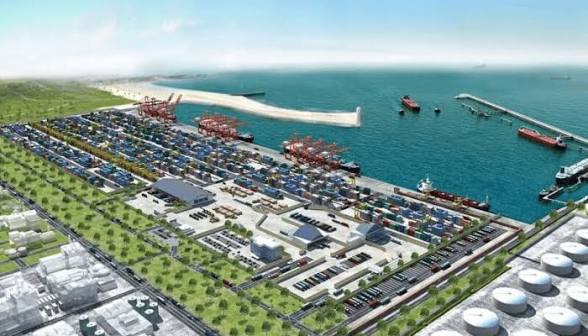
But when that waterfront was subjected to rigorous hydrographic surveys, environmental assessments, business impact assessment, and marine analysis, the science disagreed. A superior location was found, recommended, and approved by the Federal Executive Council in 2015. The name was later changed to be consistent with the Akwa Ibom brand, which already features Ibom Air, Ibom Broadcasting Corporation, Ibom Hotels, etc. But really, what is in a name?
Barrister Benson also caught a genuine error on my part. I referred to Dr. Nkpubre Nkpubre by the wrong name, Edet Nkpubre. I acknowledge that and apologize for the unintended “Nkpubrestical” mix-up. It was careless, and he deserved better. But one wonders: if a misspelled name can exercise Benson’s legal sensibilities so thoroughly, why does the misspelling of facts, the chronological distortions, the invented engineering figures, and the ethnic grievance narrative built on a timeline that simply does not hold water, attract no equivalent outrage from his pen? After all, a lawyer’s precision, one would hope, applies equally to all evidence, not selectively to what serves his brief. No?
Then came the chief himself: Dr. Nkpubre Nkpubre, a maritime administrator and former head of Nigeria’s premier shipbuilding facility. He came ashore to anchor with a thunderous counteroffensive, widely syndicated under dramatic headlines like *”Nkpubre Bombs Gov Umo Eno”*. It went viral.
I respect his credentials, experience, and his lifetime of achievements. I genuinely do. But credentials do not grant immunity from fact-checking. Dr. Nkpubre claims the “relocated site” requires excavating approximately 1.5 square kilometers (or 150 football pitches) to a depth of 18 meters, a number he presents as an engineering apocalypse and a damning indictment of the chosen site. I have reviewed the Outline Business Case (OBC) and Full Business Case (FBC). That statistic appears nowhere in either document.
Now, I cannot say with certainty where this figure originated. Perhaps there is a calculation I have not seen. Perhaps it derives from a private technical model that Dr. Nkpubre constructed independently. But one must ask: if this dramatic number does not appear in any approved project document, what is its source, and why is it being deployed in a public campaign designed to alarm ordinary citizens? If he is familiar with the topography of the area, does he not know that the terrain is marshy and below sea level, and not “dry solid land” as he claims? Public discourse on a national infrastructure asset cannot be held hostage to statistics that cannot be traced to official records.
Moreover, why is Engr. Nkpubre bothered about the impact of large excavations in a place that he says is not within the “Oron territorial boundary”? He should be happy that his environment will not be subjected to that degree of degradation. Or is there something I am missing?
The most poisonous allegation circulating is that Governor Udom Emmanuel secretly orchestrated a politically motivated relocation of the port, away from Mbo, to spite the Oro Nation and advantage the Ibibio and Governor Umo Eno is simply cintinuing the Oro marginalization tradition. It is a compelling, corrosive ethnic narrative. It is also a complete and verifiable untruth.
The Outline Business Case—the very document critics wave as their smoking gun—was completed in 2014 and approved by the Federal Executive Council in 2015. Governor Udom Emmanuel was sworn into office on May 29, 2015. The document they claim he manipulated was drafted, finalized, federally approved, and filed before Udom even set foot in Government House. He did not choose the location; rather, he inherited it. The chronology alone kills the argument stone dead.
It must be reiterated that the site was not selected by a politician. Instead, it was selected by the Inter-Ministerial Steering Committee, constituted under Governor Godswill Akpabio, working alongside international transaction advisors including MTBS, WorleyParsons, and Felak. Their mandate was singular and strictly professional: to identify the most technically feasible, commercially viable, and environmentally sustainable deep seaport location on that coast.
In August 2013, the Committee’s Second Progress Report, sighted by this writer and signed by Chairman Dr. Iorwuese Viashima and Secretary Dikko T. Bala, unequivocally recommended the seaside Area ‘D’ location in Ibeno Local Government Area for the seaport. The recommendation carried the joint endorsements of the Akwa Ibom State Government, the Federal Ministry of Transportation, the Nigerian Ports Authority, and the Infrastructure Concession Regulatory Commission.
And who is Governor Akpabio? He is the uncommon *_Uko Akwa Ibom_*—an Annang son. If tribal politics had driven this process, you would expect the seaport to sit squarely in Annang territory. He could have routed it to the Inyang Udo Anwankwo river flowing through his own native Ukana community, which also passes through my village. He did not, because science and nature did not allow it.
More importantly, the overwhelming majority of the professionals who made this determination were not from Akwa Ibom State. The committee included senior officers from the Federal Ministry of Transportation, executives from the Nigerian Ports Authority, regulators from the Infrastructure Concession Regulatory Commission, independent marine engineers, financial advisers, and commercial consultants from outside the state. Their allegiance was to data. Their mandate was the nation.
I have also searched every available record and cannot find any evidence that Mrs. Mfon Usoro was anywhere near this project at the time the accusers suggest. An accomplished Ibibio amazon and managing partner of Paul Usoro & Co, she is married to an Annang icon in Essien Udim (and indeed, Ukana Ikot Ntuen), and now heads the Technical Implementation Committee. At the time, she was still building her distinguished career in her chambers, minding her business. The insinuations against her are chronologically impossible, factually incorrect, and unsupported by any documentary record.
Three successive governors—Obong Godswill Akpabio, Deacon Udom Emmanuel, and Pastor Umo Eno—have each kept faith with the same approved location across more than a decade. This is not because they are friends, nor because they share an ethnic agenda, but because the science and business case have not changed. When the Federal Ministry of Transportation was petitioned by the Oron Union on this same allegation in 2021 through Ibritam & Associates to revisit the decision, they reviewed the evidence and dismissed the petition as unfounded. The process, they ruled, had been meticulous. Oron Union was told so, in clear terms.
-Now, let us look at the money.
The Ibom Deep Seaport is designed to be a Public-Private Partnership. The private sector concessionaire will hold 60% equity, while the Federal and Akwa Ibom State Governments will hold 20% each. The private partner whom we are still courting—a rational, internationally minded investor—will be committing the lion’s share of the capital and bearing the lion’s share of the risk.
Do you think a private investor will commit 60 percent of the financing for a multibillion-dollar seaport because of an ethnic arrangement? Do you think international capital bows to local zoning arguments and community grievances? Capital does not do sentiment. It looks at bathymetric depth, navigational access, commercial traffic projections, and return on investment. If the approved location were as flawed as the critics insist, no serious concessionaire would go anywhere near it. Their buy-in is not a favor; it is business. As the elders say, *“the stream does not change its course because the fisherman wishes it so.”* Nor does capital follow political slogans to a commercially unviable site.
One final observation for the sake of transparency: Dr. Nkpubre has acknowledged that the approved port location lies entirely within the Ibeno Local Government Area. That acknowledgment raises a question I do not share lightly, and which I cannot answer with the documents currently available to me.
It has been suggested—and I present this only as a question worth sharing. Dr. Nkpubre admitted that he submitted a corporate proposal seeking a government partnership for a separate, private maritime project at or near Ibaka. If that is true, one would naturally wonder whether his vigorous campaign against the approved federal location began before or after such a proposal failed to secure state government endorsement? I do not know the answer, and I am not certain the allegation is true. However, public advocacy of this intensity, sustained over this period on a matter with such obvious commercial stakes, warrants transparency. The public deserves to know not just what advocates are arguing, but what, if anything, they stand to gain or recover.
The Ibom Deep Seaport is not an ethnic trophy or political bargaining chip. It is not, if the whispers circulating among project insiders are to be believed, a compensation prize for disappointed land speculators whose gamble did not pay off. It is a federally approved, technically validated, commercially structured national infrastructure asset—one that has survived scrutiny across three administrations, multiple petition processes, and the sustained fury of interests whose agenda, whatever it truly is, has produced nothing but distraction.
The economic benefits of the seaport will spread throughout Akwa Ibom State, irrespective of where it is located. Since the experts have made a choice and that choice was approved more than a decade ago, we as citizens and stakeholders owe a duty of care to make this project come alive, whether in Mbo, Ibeno, or my village of Ikot Inyang Udo. For those still waging yesterday’s battles and still mourning whatever windfall they may have anticipated and lost, I offer this counsel: when the market closes, the wise trader counts his losses and prepares for the next market day. No press release or syndicated headline can alter hydrographic reality or reverse a Federal Executive Council approval. No personal setback can move a seaport.
Now that Pastor Umo Eno has redoubled the determination to see this project through, we all owe ourselves and our children the responsibility to see it come to life. The Ibom Deep Seaport will be built where science, economics, and sovereign federal authority dictate.
Not where the speculators bought land. Or not at all.