By Celestine Mel
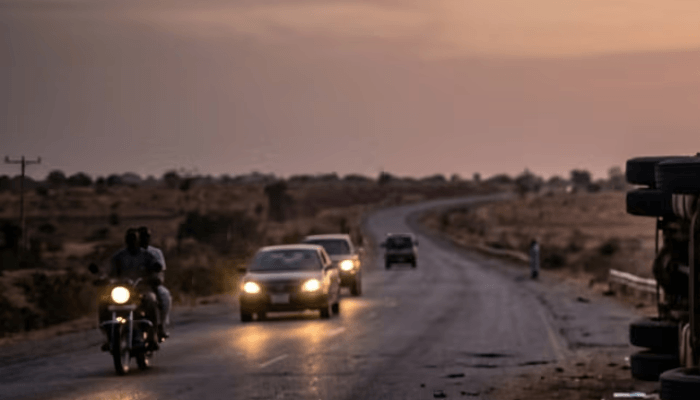
The decision to embark on a road journey from Abuja to Katsina for an official assignment was not taken lightly. It weighed heavily against the searing national temperature and the stark cultural gulf separating the familiar terrain of my origin from the distant reaches of the far North. Yet for those who truly know me, there was never any real debate because the open road has always been my chosen communion. This preference has nothing to do with an inability to fly. Far from it. Divine providence has blessed me sufficiently to traverse Nigeria by air at will. But the highway offers something far more visceral and transcendent. It binds me, soul and spirit, to the raw realities and quiet splendours of this fleeting earthly sojourn. Through its endless ribbon, I behold the wonder of creation, the kaleidoscopic beauty of peoples unlike my own, the unvarnished truths of governance rarely captured by radio, television, or the fleeting scrolls of TikTok, and above all, the primal, unfiltered power of humanity in ceaseless motion.
Several formidable considerations counselled caution. First, the journey fell squarely within Easter weekend, that sacred hinge of the Christian calendar when absence from family—my greatest and most cherished possession—felt almost profane. Second, among the twelve intrepid volunteers who had committed to the trip, I was one of only two southerners. Third, I was likewise one of only two non-Muslims venturing more than six hundred kilometres into the core North, to a city lying a mere sixty-five kilometres from Maradi, just across the border with the Niger Republic. Fourth, and most sobering, the spectre of resurgent insecurity was once again stalking the body politic, rendering the risk of being caught up in its violent undertow disturbingly high.
These factors and the attendant risks churned restlessly in my mind on the last night before we set sail. While my entire household lay shrouded in sleep, I rose and stood silently over my wife and children. A profound heaviness pressed upon my spirit. I wrestled fiercely with the insidious voice that whispered: What if you risk this and die? Do you truly value these souls enough at all? Are you mad? If they kidnap you, what will you do? Where would you raise the money from? How do you explain to your wife and children when they order you to contact someone? What if you are dehumanized, stripped bare, and forced to recite any verse in the Holy Qur’an? These thoughts kept running until 5:00 a.m. returned my resolve. I sprang back to life, showered, dressed, and prepared for the ride. It was D-day.
The brand-new Hiace bus arrived fifteen minutes late. Before exiting the gate, I told my wife that I would call at regular intervals and that if I remained silent for up to two hours, she should call. I also activated my disaster recovery and business continuity plans regarding my passwords, assets, liabilities, and other contingencies. I took my fully charged mobile phone and power bank, loaded the phone with sufficient airtime and data plans, said a prayer, then hopped into the front passenger seat, buckled up, and we set out.
The first surprise was the driver’s decision to take the Abuja–Jere Road, which detours at Kubwa. It was a route I had read about in the news throughout the Buhari years as the hotbed of kidnapping. I had travelled to Kaduna from Abuja several times over the past decades but never once on that road. I expressed my outrage, but the driver told me I had nothing to worry about. He said: “Oga, I have three wives and twelve children, eight males and four females. I will never follow this road if it is not safe. I must live to train my children. Don’t fear, Oga…”
As soon as he muttered those words, something in me shifted. I pretended as if the casual statement by this slim-looking and neatly dressed ordinary driver in my organization had not hit me like a thunderbolt. I adjusted my seatbelt and continued the conversation to know more. “Pilot, so where are your three wives and how do you manage conflict in the house?” I asked. “Oga, na Allah dey give wife and children. They are my blessing. My father taught me that if I marry only one wife, I will not be at peace. But if I marry two or more, they will not unleash their energies on me. Rather, they will compete with love. That way, my home will be at peace. I have been a polygamist since the last fifteen years and I have a very happy family. Oga, don’t tell me you have only one wife? Allah kiaye…” I continued the sensitive conversation with Musa for about an hour while keeping a gaze on the not-too-smooth road.
We hit the Jere junction, 76 kilometres away from home, along the massive Abuja–Kaduna Expressway, immersed in different conversations about the journey ahead. I could see the Dave-Umahi-imposed heavy concrete reinforced base with a mesh of iron-rods on the unused lane. The construction was obviously ongoing but at a slowed pace. The only lane in use was the old road with potholes large enough to swallow an elephant. Fully loaded trucks of all shapes and sizes—some with dozens of live cows, others with staple foodstuffs in huge bags, etc.—were coming from the opposite direction, negotiating the dirt and dusty road, sometimes hooting loud horns to harass small cars out of the way. We bumped and meandered, shifting from time to time between hissing, complaining, and patience. I could see neatly arranged heavy equipment owned by Infouest Construction Company on the other lane, stationary and collected. My mind flashed back to 2025 when the controversy raged about the propriety of re-awarding the terminated contract away from Julius Berger for the completion of section 2 of the highway through Zuba, to a company which was indicated as dormant by the Corporate Affairs Commission. The yellow-newish heavy equipment I saw dented that fear. I noted the thick layer of concrete. My colleague told me to be patient as the bad stretch would come to an end before Olam’s Farm, down the road. We skirted and bumped on.
It wasn’t long before we started seeing military outposts and sniper watchtowers on both sides of the adjacent overgrowth with ready-to-shoot soldiers holding out. They were spaced 500 meters evenly apart. Auwal, one of us, told me that we were going through an area that used to be the hotbed for kidnappers until the military moved in to set up those positions, fortified with dug-out trenches. Lorries and vehicles were moving freely and the atmosphere did not suggest danger. However, I could observe a large expanse of uncultivated land sprawling into the horizon, as far as the eyes could see. “Those are the forests where the bad guys diffuse into when they used to kidnap along this stretch. They have been flushed out. Thank God,” said Auwal. I heaved a sigh as we kept moving.
Then suddenly, we hit the tarmac shortly before Olam’s Farm. The experience was like a sudden unexpected cut from hell to paradise. Both lanes were as smooth as silk.
We were in Kaduna in no time, gliding at top speed. Someone suggested that we should take the bypass to empty into Kawo Junction and proceed to Zaria. We tried but the road was terrifyingly and suddenly empty of traffic. On the left was the sprawling Kaduna Refinery, standing imposingly, dominating the skyline with different distillation columns, crackers, storage tanks, and furnaces, all lined up in unison, facing the sky as if begging the Nigerian system for help. I watched and didn’t see any smoke billowing. I pointed my co-travellers to the empire which had guzzled tons of scarce foreign exchange in billions without adding a liter of fuel to this hapless nation for decades. We scoffed at the numerous Turn-Around-Maintenance contracts that every government pursued, to fleece the public purse and raise false hopes. A festival of sighs descended on the cabin with each passenger shaking his head in anger and disappointment. My mind quickly went to Alhaji Aliko Dangote and former President Muhammadu Buhari, for having the courage to establish the Dangote Refinery which has single-handedly taken Nigeria’s fuel burdens away. That thought lightened my spirit and reconnected me back to memories of Buhari, a man whom I supported to the death and whose State of Origin I was visiting on this journey, for the first time……
TO BE CONTINUED
Celestine Mel is a chartered banker and public affairs enthusiast. He writes from Abuja-FCT
Follow:
X – @melfication
WhatsApp Channel: 08088188805
Facebook: https://www.facebook.com/owydoho.Idio