Isaac Samuel
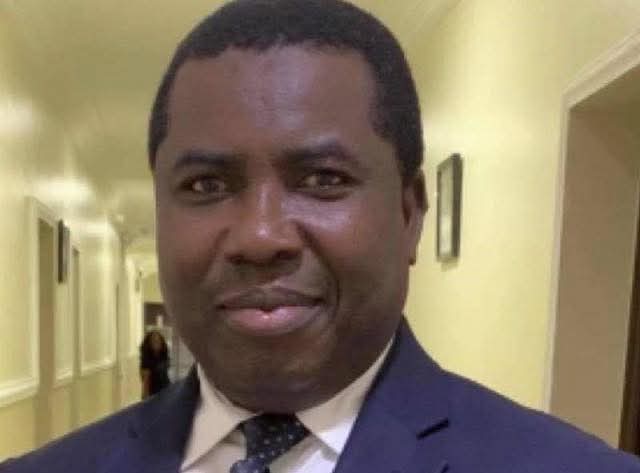
A fresh wave of controversy has engulfed the Independent National Electoral Commission (INEC) following viral claims that its Chairman, Prof. Joash Amupitan, previously made partisan comments on social media.
The Commission has however, firmly denied the claims, saying the posts were fabricated.
The claims, which circulated widely on X (formerly Twitter), centred on screenshots purportedly showing past posts attributed to the INEC Chairman expressing support for the All Progressives Congress (APC) during the 2023 general elections.
One of the posts, now deleted and traced to a handle later labelled a “parody account,” allegedly contained the phrase “Victory is sure,” sparking outrage and calls in some quarters for his removal ahead of the 2027 polls.
However, INEC dismissed the claims as “entirely baseless” and part of a “malicious and coordinated campaign of calumny” aimed at undermining the integrity and neutrality of its leadership.
Chief Press Secretary to the INEC Chairman, Dayo Oketola in a strongly worded statement issued in Abuja, maintained that the Chairman does not own or operate any personal account on X and has never engaged in partisan commentary.
“The allegation is a total fabrication and a figment of the imagination of its purveyors,” the statement read.
It warned that cybercriminals have increasingly exploited fake social media accounts in the Chairman’s name to mislead the public and, in some cases, defraud unsuspecting Nigerians.
INEC further disclosed that it is working with security agencies and cyber-intelligence units to identify those behind the alleged impersonation, noting that identity theft and the spread of forged digital content constitute offences under Nigeria’s Cybercrimes Act.
Despite the official rebuttal, the controversy has continued to generate debate across political and media circles, with some commentators pointing to what they describe as a troubling pattern of alleged past online engagements.
In a separate opinion piece, Farooq A. Kperogi argued that certain digital traces attributed to Amupitan prior to his appointment raise ethical questions about perceived neutrality, although such claims remain contested and unverified.
Kperogi stated that what he described as “verifiable past tweets” linked to Prof. Joash Amupitan “unmistakably reveal partisan sympathies for the APC and, more specifically, for President Bola Ahmed Tinubu.”
According to him, the content and tone of the alleged posts suggest more than casual political observation, pointing instead to what he interprets as identifiable political alignment during the 2023 election cycle.
He argued that if such digital traces are indeed authentic, they create moral burden” for anyone occupying a position expected to embody strict institutional neutrality.
In his view, leadership of the electoral commission demands not only the absence of present partisan engagement, but also scrutiny of past public expressions that could reasonably raise doubts about impartiality.
The media scholar also recalled earlier controversies surrounding Amupitan, noting that he had previously refrained from making definitive judgments, preferring to interpret earlier concerns through what he contextual or intellectual limitations.
He suggested that the emergence of additional material had shifted his assessment, making continued silence or neutrality more difficult to sustain.
Kperogi maintained that the cumulative effect of the alleged digital footprint, as he described it, now warrants ethical reflection by the occupant of the office, arguing that public confidence in electoral administration depends heavily on both actual neutrality and perceived neutrality.
On X (formerly Twitter), the controversy quickly gained momentum as users circulated screenshots and competing interpretations of the alleged posts.
A user, @AyoDebate, wrote that the development raised serious questions about neutrality in sensitive public offices,”adding that “Nigeria cannot afford electoral credibility issues ahead of 2027.”
Another user, @NaijaWatchdog, also weighed in, posting that “if these past tweets are verified, then it raises concerns about how deep partisan sentiment runs within institutions expected to be neutral.”