By: Celestine Mel
A chill runs through me as I write these words. The air feels heavy, thick with déjà vu — the same creeping dread, the same gathering storm that swallowed an incumbent president whole in 2015. I wrestle with every sentence, aware of the cost of speaking plainly in today’s Nigeria. The temptation is strong to look away, to distract myself with the dazzling splashdown of NASA’s Artemis II crew in their Orion spacecraft, back on Earth in the Pacific Ocean off the coast of San Diego after the 10-day odyssey to the hidden side of the moon. I have tried to juxtapose that spectacle against our teetering pedestrian struggles with issues of self-governance and progress. And I can’t find the explanation. Yet, I will bother about the gathering clouds because I am involved.
There are risks in this intervention. In Nigeria, candor can be dangerous. Proximity to power has taught me a hard truth: if you are close to the “system”, you must see everything and say almost nothing. Otherwise, you risk becoming the roasted goat served at breakfast, or waking up to find every gate of authority slammed shut in your face. If I had the President’s ear, I would have whispered these thoughts in private, as an earnest memo. I do not. Therefore, let me share this. Perhaps someone out there will be kind enough to fill him in.
Before we continue, let me be clear. I support the Tinubu administration. Not because he is flawless, nor because his journey has been free of controversy. My support rests on something deeper. He has dared to confront Nigeria’s toughest, long-avoided challenges. He has injected hard-won economic knowledge into the bloodstream of governance, re-engineering the macro economy and restoring a measure of certainty to the business environment after decades of rot. He has made the Naira more fungible, begun stabilizing prices, and is gradually reconstructing the country from ruins. On the road from Abuja to Akwa Ibom last December, I saw the long-neglected southeastern corridor finally being opened up. On another road trip to Katsina last weekend, I witnessed earnest efforts to complete Buhari-era projects. These are not small feats. Yet, the biting pangs of the reforms are hitting folks extremely hard. Every citizen, save for those who have access to lots of money, is feeling the pressure. Many, especially the fixed-income earners, are choking under the weight of the reforms. They are angry and resentful.
If I alone could decide 2027, I would keep Tinubu. He has steadied the ship of state. Some of the economic recommendations that I and other experts made to salvage the system have been implemented. Our nation, which was literally bankrupt and facing the prospect of going in the direction of Greece and Venezuela, has been successfully turned around. There is no doubt that the worst days are behind us. But what does this mean to an average citizen who wishes to simply eat, clothe himself, and have a roof over his head? What is an economy without the ability to send children to decent schools, access primary healthcare, and earn a decent living?
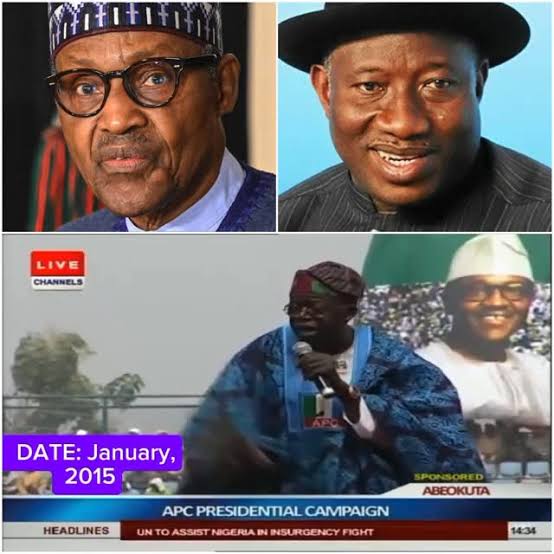
While the national economy as a construct has been majorly fixed with government revenue all but guaranteed, it is time to fix the economy of the citizen; the micro-level everyday Musa and Udofia must be connected to the renewed hope. Sadly, the election is upon us and the citizens who do not understand all the economic El Dorado that I put forward above will be the ones to choose to renew the Tinubu mandate or hire a different captain for the ship. I dare say the prognosis is not looking good. The atmosphere feels hauntingly familiar — like late 2014, when Jonathan’s presidency began to unravel.
If the election were held tomorrow, I fear Tinubu would lose. And I suspect his inner circle knows it too. While some loyalists insist he is no Jonathan, that he will not surrender power easily, others boast that the man who engineered Jonathan’s fall cannot himself be dethroned, that the rigging machine will deliver victory, I am compelled to laugh heartily at such bravado. History has shown that when the people rise in anger, no machinery can withstand the tidal wave. Jonathan did not concede defeat because he loved power less than Tinubu. He conceded because survival demanded it.
I remember 2015 vividly. Insecurity crept toward the FCT like it is doing now. Military formations fell to ragtag insurgents as we experienced in Maiduguri recently. The ruling PDP forgot the basic rules of democracy, much as the APC risks doing today. The arrogance was breathtaking. Aspirants like Atiku Abubakar bought nomination forms only to be told by Mr. FixIt that “there is no vacancy in Aso Rock.” Governors’ Forum elections were manipulated. While Rotimi Amaechi won 19 votes, yet Jonah Jang, who was supported by the hawks in the presidency, was declared winner with 17 votes. That single act shattered the PDP and birthed the coalition that toppled Jonathan.
Today, the echoes are deafening. INEC’s sudden derecognition of the David Mark-led ADC executive, however legally justified, reeks of clumsiness. Opposition parties are imploding one after another, and Nigerians see that as not regulation but raw power play. Yesterday’s villains whom we prayed should vacate the public space for their insensitivity to the plight of Nigerians, have been transformed now into saints in the eyes of a furious public by poor political missteps and too much strategy. The polity has hardened. Positions have calcified.
In the far North, conversations are sobering. Mosques echo with sermons declaring “Tinubu must go”. Some APC chieftains, smiling in “Renewed Hope” regalia by day, fund the opposition by night. It is déjà vu, all over again.
In 2015, a national chairman of the ruling party secretly backed the opposition and fled abroad once results were announced. PDP governors who swore victory would be swift could not even fill rallies. Jonathan addressed near-empty arenas in Maiduguri, ringed by armored tanks while his close associates goaded him on. Until it was too late. Here we are again.
To complicate the matter for my President, external shocks have poured fuel on the fire. The Trump-induced conflict in Iran has sent global oil prices soaring, hammering Nigeria’s fragile economy. Fuel prices that had begun to ease have spiked by over 78 percent. Drought in Kainji and gas supply hiccups have slashed electricity generation, crippling industries and households. Inflation has hit the roof. Corruption is everywhere. Nigerians, already weary, now feel the ground shifting beneath their feet once more.
At this point I can hazard a guess that if the opposition unites to pair Peter Obi with Musa Kwankwaso, the challenge will be existential. Not because Obi is necessarily more competent. Indeed, I have severally published my candid and honest opinion that Peter Obi is about the most shallow, ill-informed mob creation in the contemporary political history of Nigeria. But because he commands a cult-like following who have bought into the whiff of that intoxicant; who are willing to move mountains with near-religious fervor, that ticket could sweep the South and carve deep into the North.
So what must Tinubu do to turn the tide?
He must reopen the political space and prove, beyond rhetoric, that he is a democrat at heart. The arrest and detention of Malam Nasir El-Rufai, for instance, is extremely damaging, especially given his role in producing the 2023 Tinubu win. Bold, visible solutions to the energy crisis and crushing cost-of-living emergency must be delivered. Nigerians need relief, not lectures. The APC must abandon PDP-style arrogance and present young, credible candidates across all levels. Internal democracy must be real, not a slogan. Deadwood in the cabinet must go. Critical projects must be accelerated so citizens feel progress in their daily lives. Rice as therapy to all economic problems should be discontinued. It is becoming a mockery. The President himself must step into living rooms through unscripted media chats, reconnecting with a weary electorate to assure them that he is still the progressive democrat that he was once perceived as. Security demands more than directives — it requires a transparent, coordinated plan that halts the endless slaughter of citizens and soldiers. We need to know where billions in defense spending have gone.
Finally, waste must be slashed without mercy. The convoys of luxury vehicles, the obscene ostentation in the midst of suffering by public office holders need to be curtailed. The Second Republic died because operators of the system displayed exactly the arrogance and insensitivity on display right now by public officials. These fuel resentment more than any policy memo ever could.
I genuinely want Tinubu to succeed. The foundations he has laid are too important to abandon midway. But success now requires more than macroeconomic resilience. It demands humility, speed, and political courage. While the clock is ticking and 2027 is whispering, will this administration listen — or will history repeat itself in the most unforgiving way?
Celestine Mel is a chartered banker and public affairs enthusiast. He writes from Abuja, FCT.
Feedback:
1. WhatsApp (message only) – 08088188805
2. Facebook – https://www.facebook.com/owydoho.Idio
3. X – @melfication