By Reuben Abati
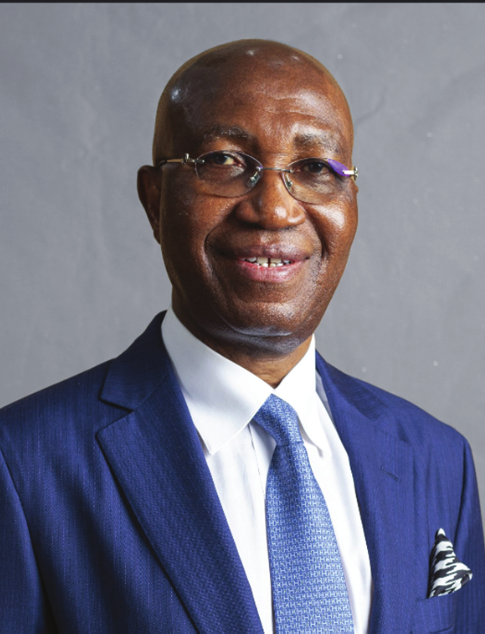
Chief Wole Olanipekun, OFR, CFR, GCON, SAN who was celebrated widely, elaborately and well-deservedly last week on the occasion of his achievement of a triple: 75th birthday, 50 years at the Bar, and 35 years as a Senior Advocate of Nigeria (SAN), belongs to a select group of historical figures in Nigeria’s legal profession (Bar and the Bench) , and without question, one of the most influential lawyers of our time. He is famous not for the longevity of his practice, wealth, or age, but his industry, the breadth of his practice, his contributions to the evolution of legal jurisprudence through compelling courtroom advocacy, his level of expertise and professionalism unmatched by many in the same profession, and how over the years, he has helped to defend access to justice and respect for the rule of law, his advocacy in defining principles and the role of the courts, and his leadership.
There is little that he has not yet achieved in the legal profession (notably he has not served as Attorney-General of the Federation and Minister of Justice, and he has not sat on the Bench), but he served early as Attorney General and Commissioner for Justice in Ondo State ()1992 -1993). He became a Senior Advocate of Nigeria (SAN) at the young age of 39, the youngest at the time. In 2002, he was elected the 20th President of the Nigerian Bar Association (NBA), in which capacity he introduced reforms to modernize legal practice, and repositioned the NBA as a voice of reason in defence of the rule of law in society. His leadership as a remarkable NBA President has been acknowledged by the current NBA President, Mrs Oyinkan Badejo-Okusanya. In a tribute to the celebrant, she describes him as “the formidable counsel whose name on a brief commands attention.” In 2002, Chief Olanipekun was appointed a member of the Body of Benchers, the statutory body which formally admits qualified Nigerian law graduates to the Bar and also upholds values and standards within the profession. In January 2007, he was appointed a Life Bencher. He would later serve as the Chairman of the Body of Benchers (March 2022 – March 2023). The conclusion of his tenure in the latter position was preceded by a controversy involving a partner in his law firm, over “a question of professional misconduct,” but Olanipekun not only stayed till the end of his tenure, he departed with his integrity intact, his reputation unblemished. The Body of Benchers Complex was completed during his tenure. He is not only one of the best lawyers in Nigeria, his law firm Olanipekun and Co. has served as a training ground for many lawyers and produced Senior Advocates, including two of his sons, Dr. Oladapo Olanipekun, who following closely in his father’s footsteps, became a SAN at the age of 35, the second son is Bode Olanipekun, SAN at 34.
Many know Chief Wole Olanipekun for the many high-profile election cases that he has handled, and this much was further affirmed by President Bola Ahmed Tinubu on November 19, when he told those in attendance at the celebration of Chief Olanipekun’s 75th birthday that the celebrant is his trusted friend and long-time legal adviser and that he has also already been “booked for 2027”, so opposition party leaders should go and get their own lawyers – a subtle act of intimidation in the circumstance. It is true that Chief Olanipekun has defended four Presidents (President Umaru Yar’Adua, President Goodluck Jonathan, President Muhammadu Buhari, and President Bola Tinubu) and has been involved in Presidential election disputes since 2007, 2011, 2019, and 2023 – including Abubakar vs Yar’Adua (2008), Buhari v. INEC (2008), Abubakar v. INEC (2020), Abubakar v. INEC (2023); and Obi v. INEC (2023). Tinubu boasted: “Whenever I hand a matter to Olanipekun, I sleep soundly. I cannot promise that the other side sleeps as well. Wole led the legal team that defended three of my predecessors when their elections were challenged. He has therefore been lead counsel to four successful Presidents of Nigeria since 2007. That record is unprecedented in Nigeria.” Chief Wole Olanipekun has also featured prominently in election petition cases at state levels as seen in Adeleke v. Oyetola, Ogboru v. Uduaghan, People’s Democratic Party v. Okocha, Ikpeazu v. Otti, and Agagu v. Mimiko. But in reality his contributions to jurisprudence is not limited to election cases, remembered by many because of the cause celebre character of such litigations, and this is why the proper record has now been established through a six-volume publication titled “Wole Olanipekun Through The Cases (1976 – 2026)” – a festschrift contributed by scholars, legal practitioners and others who critically examine the various cases in which Chief Olanipekun has been involved since his early days as lawyer in 1976. The volumes acknowledge and pay tribute to his varied legal practice from his early days, a phase which Professor Fabian Ajogwu, in a review of the six volumes, refers to as “provincial practice” in Ilorin. Before he became famous, before he set up Wole Olanipekun and Co. in 1980, Chief Olanipekun was a junior lawyer with Akanbi Oniyangi and Co and like all young lawyers he started out in such cases as Okin v. Okin (a matrimonial cause matter), and such other matters as land, trespass, debts and small companies and criminal trials. Before going into full time practice, Olanipekun had taught briefly as a member of the NYSC mandatory scheme at the Kwara State College of Technology (now Kwara State Polytechnic). Olanipekun, the legal icon that is celebrated today did not arrive at this moment overnight: he is a product of hard work and integrity and a reputation built through a strong capacity, using technical details of law to his advantage, testing evidence in court and pushing the court to affirm original principles. In Wole Olanipekun Through The Cases (1976 -2026), the contributors review a total of 59 High Court cases, 102 Court of Appeal cases, and 114 Supreme Court cases, 275 cases in all in which Chief Olanipekun appeared as lawyer – the scope of which covers electoral litigation, commercial law, jurisdiction, constitutional law, arbitration, real estate, labour, intellectual property, and criminal law – a prodigious range of work. As Professor Lanre Fagbohun puts it in another review of the six volumes: “Together these contributions explore socio-legal contexts of the disputes, the honoree’s underlying legal philosophy, distinctive advocacy strategies and pragmatism as an eloquent and formidable advocate; and the enduring significance of these landmark cases to the development of Nigerian jurisprudence”.
At 75, and 50 years after, Chief Olanipekun has not yet shown any sign of slowing down or retiring, even if the future of his practice remains assured – all his four children are lawyers. The alumni of his Chambers are also all over the field as lawyers and judges, cementing his reputation as a trainer of lawyers and as father-figure in the profession. One of the lessons of his career is his versatility. In a few cases, Olanipekun has had to argue the same fine points of law from two sides of the aisle, as counsel for the applicant and in other cases standing for the defendant to resolve specific legal questions. But his more outstanding quality is his capacity to learn and reinvent himself. Many young wigs these days are in such haste to become superstars without the painstaking effort to learn the ropes. It has become more of a fashion these days for a young wig to get onto the register, only to set up an exotic Chambers a few weeks later, gaudily furnished, with the walls lined with the most expensive books that money can buy, books he has no intention to read, and may never read. The newly minted young wig is content to go about insisting on being addressed as Barrister X or Y, even when there is a question mark on the use of the Barrister lawyer appellation by Nigerian lawyers, now that it is treated almost like a chieftaincy title. These new lawyers show up at every major legal conference in Nigeria and in Europe or elsewhere even when they do not know enough to make a contribution, but of course, they are good at taking pictures and posting same on social media. This lowering of standards justifies the calls in some quarters for compulsory pupillage for Nigerian lawyers, a period of mentorship and structured training, under an experienced practitioner, as a path to preserving standards and discipline.
Chief Wole Olanipekun’s impact extends beyond his courtroom advocacy or the mentoring of lawyers. He has made equally outstanding contributions in the field of education having served as the Pro-Chancellor of four major universities: the University of Ibadan (2009 – 2013), the Ajayi Crowther University, Oyo (2014 – 2022), his alma mater, the University of Lagos, and the Bamidele Olumilua University of Education, Science and Technology in Ikere-Ekiti. He is also a kind-hearted philanthropist, giving back to the universities where he has served as well as other educational institutions. In 1996, he established the Wole Olanipekun Scholarship Scheme through which over 3, 000 students have been sponsored through secondary schools, universities and law faculties. He has donated a 350-seat lecture hall to the University of Ibadan, a lecture theatre to Babcock University, Ilisan-Remo, a Senate Building to Bamidele Olumilua University and a Vice-Chancellor’s Lodge to Ajayi Crowther University. He also has a Wole Olanipekun Foundation which has built hospital wards and other healthcare as well as educational facilities in his home town of Ikere-Ekiti. In 2023, at a scholarship award and empowerment programme in Ikere-Ekiti, Chief Olanipekun justified his benevolence in the following words when he said: “The poverty level in Nigeria today is not just scary but also terrifying, as over 70 per cent of Nigerians are rudderless, poverty stricken… This situation then beckons on those who have received God’s benevolence to also tap from God’s attribute of compassion, by lending hands to their fellow human beings.”
Chief Wole Olanipekun is a recipient of over 600 awards and titles including Asiwaju of Ikere-Ekiti. He is also a recipient of national honours – Officer of the Order of the Federal Republic (OFR), by the Jonathan administration, 2012, and Commander of the Federal Republic (CFR) in 2022 by the Buhari administration. On November 19, 2026, he made legal history by becoming the first Nigerian lawyer in practice at the Bar to be conferred with the honour of Grand Commander of Nigeria (GCON). This was well deserved, but the manner of its presentation may raise not a few highbrows. Nigeria’s National Honours, certainly not the second highest ranking title of a GCON, should never be given out as a chieftaincy title, at a birthday event. The National Honours Act establishes a procedure for nominations, screening and vetting, approval by the President, and an investiture ceremony where the recipients are decorated by the President. The President or the Presidency is of course at liberty to nominate whoever is considered deserving. The grandeur of the occasion, the weight of it, deepens the symbolism of the honour. President Bola Ahmed Tinubu could have conferred the honour on Chief Olanipekun at a special ceremony within the State House, or wait till the next National Honours event, which takes place annually, to celebrate him. National Honours should not be conferred casually or as a birthday gift. In 2025, President Tinubu conferred the GCON on Professor Wole Soyinka as part of Democracy Day Honours, lending the gesture with a cloak of formality, as he did also when he conferred the same rank on Senator Godswill Akpabio, Hon. Tajudeen Abbas and Justice Kudirat Kekere-Ekun (CJN) during the 64th Independence Day broadcast in October 2024. The President stirred controversy, however, when on the occasion of the 80th birthday of the Lebanese-Nigerian businessman, Gilbert Chagoury, in January 2026, he more or less sent a GCON to the celebrant like a birthday cake. President Bola Ahmed Tinubu must learn to resist such a temptation.
Chief Oluwole Oladapo Olanipekun did not earn a GCON because he is his friend, a trusted legal adviser or a distinguished elder statesman. He deserves the GCON for his outstanding contributions to Nigeria’s jurisprudence and legal system, also for defending the Constitution as a basic framework for expanding the frontiers of justice and the rule of law, and for helping to persuade us, especially politicians and businessmen, that arguments are better resolved in the dignified arena of the courtroom, not the streets. His practice teaches young lawyers what rich harvest awaits the lawyer who is diligent, consistent and dedicated as a minister in the temple of justice. His philanthropy in support of the poor and the deprived is a fresh and welcome reminder of the common humanity we all share. We take the occasion of his 75th birthday to salute him and wish him many more years of service in good health.
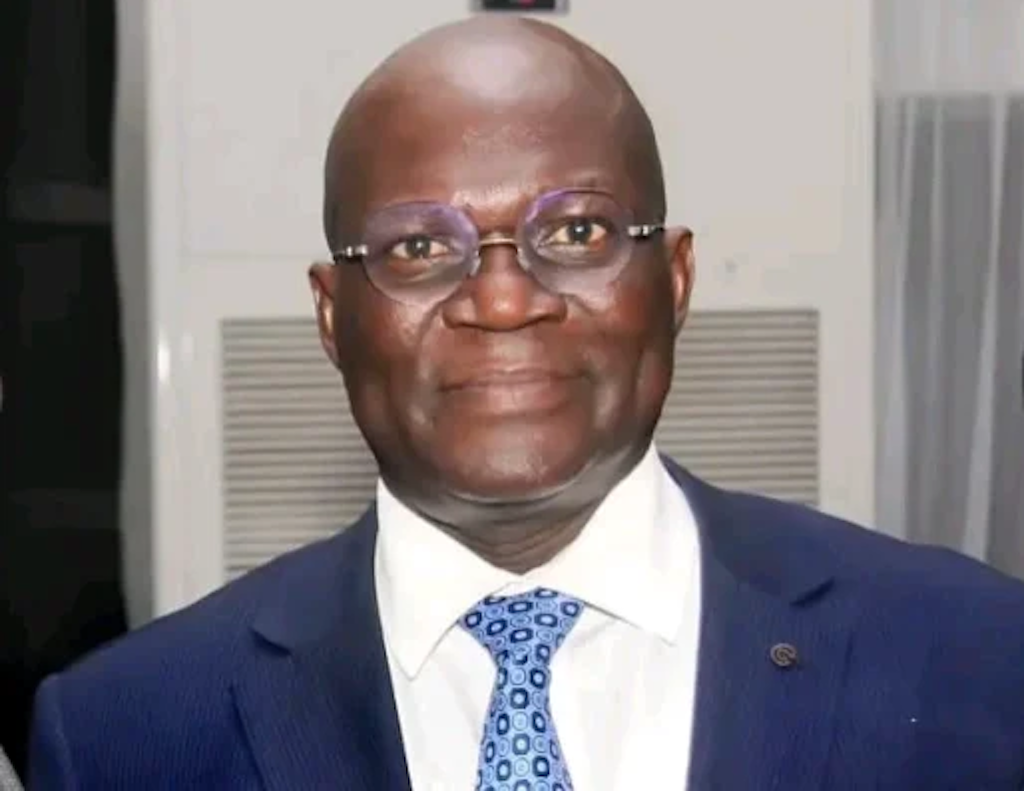
Reuben Adeleye Abati is a Nigerian journalist, politician, TV presenter and newspaper columnist. He was the Peoples Democratic Party’s deputy governor candidate in Ogun State in the 2019 Gubernatorial election. Abati was Special Adviser on media to President Goodluck Jonathan of Nigeria between Year 2011 and 2015