Isaac Samuel
A renowned academic and Vice Chancellor of Wigwe University has urged African countries to move beyond consuming technologies developed elsewhere and invest in home-grown innovations capable of addressing the continent’s development challenges.
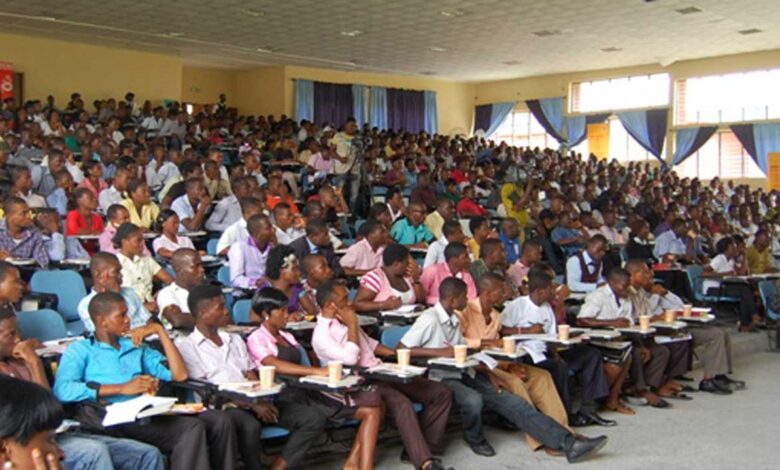
Prof. Marwan M. Al-Akaidi stated this at the maiden African Multidisciplinary Conference of Wigwe University (AMCWU 2026), held at the University’s campus in Isiokpo, Rivers State.
Al-Akaidi said Africa must position itself as a creator, innovator and exporter of knowledge, technologies and solutions rather than depend largely on innovations developed in other parts of the world.
“Africa must move beyond being merely a consumer of technologies developed elsewhere. We must increasingly become creators, innovators and exporters of knowledge, technologies and solutions that address our own challenges and contribute to global progress,” he said.
The conference, which held from November 18 to 19, had as its theme, “Harnessing Emerging Technologies for Green Economy Transition and Sustainable Development in Africa.”
The vice-chancellor said the continent was at a defining moment in its development, given its enormous natural resources, youthful population and economic potential, but noted that challenges such as climate change, energy insecurity, food insecurity, environmental degradation and unemployment continued to undermine its progress.
He identified artificial intelligence, the Internet of Things (IoT), data analytics, renewable energy and advanced manufacturing as emerging technologies that could help accelerate Africa’s economic transformation.
According to him, the challenge is not merely adopting these technologies but deploying them strategically and innovatively to address the continent’s specific needs.
He stressed that universities had a critical responsibility to drive the transition by becoming centres of discovery, innovation, entrepreneurship and societal transformation.
The VC said: “The question is not simply how Africa can adopt these technologies, but how we can harness them strategically and innovatively to accelerate our own economic transformation and sustainable development.
“Our research must address real-world problems, while our graduates must be equipped not only with academic qualifications but also with the ability to innovate, create enterprises and lead change,” he said.
Al-Akaidi disclosed that the maiden conference received 133 abstracts from 61 institutions, predominantly from Nigeria, with additional contributions from different parts of the world.
He said 82 abstracts, representing approximately 62 per cent, were accepted, while 51, representing 38 per cent, were rejected after the review process. Of the accepted submissions, 75 papers were scheduled for presentation.
Describing the response as encouraging for a first edition, he said the submissions demonstrated growing interest among researchers and institutions in the conference’s subject areas.
He explained that the conference’s 14 sub-themes brought together disciplines including science, technology, engineering, business, management, economics, environmental studies, communication and the creative arts.
The sub-themes covered artificial intelligence, renewable energy, smart grids, green manufacturing, climate finance, agricultural technology, sustainable transportation, economic policy and frugal innovation.
The vice-chancellor said sustainable development required collaboration across disciplines, urging engineers, economists, scientists, entrepreneurs, policymakers and researchers to work together in developing solutions.
He challenged participants to ensure that discussions produced practical research outcomes, lasting partnerships and tangible contributions to Africa’s development.
“My aspiration is for AMCWU to become a respected African and international platform for multidisciplinary research, innovation and strategic partnerships, with tangible contributions to the transformation of our continent,” he said.
The conference featured keynote contributions from Prof. Raouf Hamzaoui of De Montfort University, United Kingdom, and Prof. Charles Adetunji, Deputy Vice-Chancellor of FU Agriculture Development Studies.
Al-Akaidi said the conference was an expression of Wigwe University’s ambition to unlock Africa’s potential for prosperity, nurture fearless leaders and become a leading university on the continent.