
Culled from FINANCIAL TIMES
Africa’s explosive growth in citie
By David Pilling and Jacob Judah
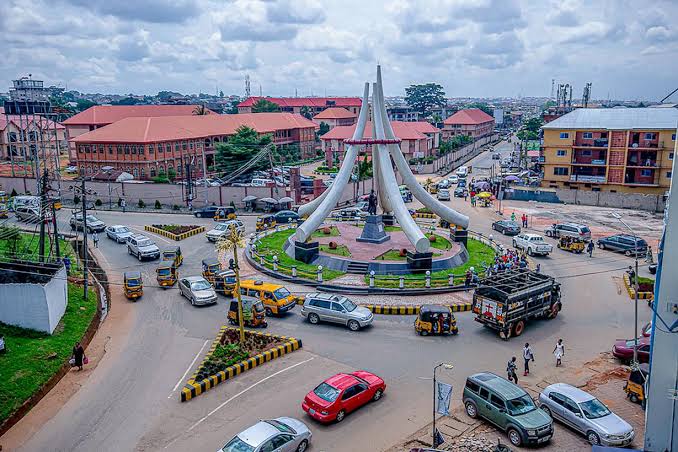
Onitsha may be the biggest city you’ve never heard of. A historic trading hub in southern Nigeria with commercial tendrils that stretch throughout west Africa and to China, Europe and the US, the urban area contains 5.6mn people, according to the UN.
In the 1963 census, three years after Nigeria gained independence, Onitsha’s population was just 163,000. Driven by both internal migration and demographics, its spectacular growth typifies the breakneck rise of urban Africa.
Until relatively recently, Africa was predominantly rural. In 1950, nearly 90 per cent of Africans lived in the countryside and the continent had only two cities — Cairo and Alexandria — with more than 1mn people.
Today nearly three-quarters of Africans live in either an urban or semiurban setting, according to new UN methodology that applies a consistent global definition. Some 42 per cent live in cities. There are 88 African cities with more than 1mn people, according to the UN, 17 in Nigeria alone.
In 1950, there were 228mn people living in Africa, with about 33mn in cities. Today there are 1.6bn Africans, 19 per cent of the world’s total, of whom 670mn live in cities. Almost unnoticed, Africa has become an urban story.
Cities are the crucible of modernity. Their rise in Africa will affect everything from income and economic growth to social attitudes and politics. It will also have a powerful impact on Africa’s relations with the world as cities connect a hitherto isolated continent through finance, trade, migration, remittances and culture.
“My brother said life is better here, that there’s opportunity,” says 18-yearold Success Chiemela of her move to Onitsha last month. Now she works in a stall in the city’s market, one of a cacophony of traders selling a bewildering array of goods from mattresses and spare parts to building materials and boom boxes.
Africa’s rapid urbanisation bears some similarities to the world-shaking growth of Chinese cities after Deng Xiaoping launched market reforms in 1979. But it is happening even faster.
When China’s urban growth peaked in the late 2000s, its cities were adding roughly 14mn people a year, according to the UN’s The World Cities in 2025 report. African cities expanded by 15mn people annually in the past few years and are expected to grow by 19mn annually by 2050. That’s almost two Londons a year, or more than 50,000 new city dwellers every day.
Yet the growth in Africa’s cities is not following a familiar path. “In China, and before that in Europe, industrialisation and job creation pulled people from the countryside,” says Jeffrey Paller of Sweden’s Uppsala University, one of the world’s foremost experts on African urbanisation. “That’s not what’s driving urbanisation in African cities.”
With great variations, Africa is urbanising at an average income per capita of just $2,370. Many city dwellers have to hustle for a living, carrying goods, shining shoes, cooking street food, cleaning and washing.
Academics call this kind of urbanisation “fast, late and poor”. With a few exceptions, most of Africa’s cities are unplanned sprawls. They lack public transport, reliable power and — especially in poorer neighbourhoods — basic services such as sewerage or rubbish collection. More than half of the continent’s urban residents live in informal settlements or slums.
The unplanned nature squanders the efficiencies — and ultimately wealth creation — that occur in densely packed, well-planned, well-connected conurbations. “For the most part you’re seeing the growth of cities happen outward,” Paller says. “There’s very little state capacity, so you don’t see a lot of the benefits of what people tend to think of from cities.”
A big question for Africa over the coming decades is whether rapid urbanisation will eventually lead to faster growth and higher incomes. Or alternatively, will overstretched cities with a desperate lack of infrastructure and few formal jobs become epicentres of poverty and popular unrest?
There is plenty of evidence that agglomeration, or the clustering of people in urban environments, has “a whole bunch of economic benefits in terms of productivity and innovation”, says Sean Fox, director of the Planetary Urban Sciences Lab at the University of Bristol.
“What we don’t know is what happens if agglomeration precedes economic development. Will cities allow people to do things — and especially their kids — that they wouldn’t be able to do in the village?”
Lagos, Nigeria’s commercial and banking capital, is one of four African megacities with more than 10mn people (the others are Cairo in Egypt, Kinshasa in the Democratic Republic of Congo and Luanda in Angola).
Such is the pace of urbanisation that, by 2050, there will be 17 megacities in Africa, with Abidjan in Ivory Coast, Bamako in Mali, Nairobi in Kenya, and Ouagadougou in Burkina Faso among those joining the ranks.
The population of Lagos has grown at least 20-fold from 1963 when it was just 655,000, according to the census. Although it has become denser in parts as developers build housing blocks and skyscrapers, it has mostly extended outwards. Yet even cities of the scale and frenetic energy of Lagos can feel like villages in parts, particularly on their periphery. In many cities, it is not unusual for people to keep goats or sheep or for herders to graze cattle beneath flyovers. Many city dwellers live a life not far removed from the one they ostensibly left behind in the village.
“What you see in [places like these] is a kind of transfer of rural life into urban areas,” says Ken Opalo, associate professor at Georgetown University. City planners, he argues, must avoid “rurification” which deprives cities of the economic and social impetus offered by well-organised conurbations.
“Many cities still have the same fertility rates as rural areas, the same levels of education, people still do farming,” he says. “We can’t just sit back and hope that urbanisation will do what it did elsewhere.”
On the very outskirts of Lagos is a fishing community called AjegunleIkorodu where a “face-me-I-face-you” room in shared accommodation can be had for as little as $5 a month. It was founded on low, swampy land more than half a century before Nigeria became an independent state and has since been swallowed up by an everexpanding Lagos.
On the day the FT visited in September, it had been raining and floodwater had crept along the muddy alleyways and into people’s homes. “Even inside your room, the fish will come and greet you,” says Oluwakemi Awobona, laughing off the inconvenience of having her home regularly inundated.
Many features of rural life are preserved in this Lagos community. Graves for family members are constructed on the doorsteps of houses and women still dip their shoulders in a shallow curtsy when they pass elders in the street. But there are also electric motorbikes and Chinese smartphones.
Few people in places like AjegunleIkorodu earn much. “Informality is a huge drag in a country like Nigeria,” says Jakkie Cilliers, head of the African Futures & Innovation programme at the Institute for Security Studies. “Someone in the informal sector doesn’t pay tax but they use roads and water.”
Yet piped water is a rarity here. Refuse collection is sporadic. There is electricity, sometimes for as much as eight hours a day, says one resident without irony.
But while “we may not have systems”, says Temilade Sesan, who runs the Lagos programme at the African Cities Research Consortium, “we have some of the most dynamic people on the planet.” Some people in the community continue to work as fishermen, catching catfish, croaker and eels in the surrounding creeks and lagoons. But others have got city jobs working as clerks, waiters, porters or roadside groomers. One young man patrols the streets with a pair of nail clippers, cutting customers’ nails for a few cents.
Such are the low wages that many who commute into town, a journey that can take hours depending on traffic, cannot afford to pay the return fare of around $2 every day.
The transport system is so inadequate one Lagos resident likens it to “trying to empty a swimming pool with a teaspoon”. Many workers sleep in town all week, sometimes in car parks, returning to Ajegunle-Ikorodu on Friday night.
Esther Ibukun, a 21-year-old, works for nothing as an apprentice to a seamstress. Her friend, Cynthia, also “a fashion designer”, earns a few extra dollars selling fish.
Both women want to put off marriage until their mid-20s and limit their children to two, something that would be difficult in the village where women are often pressed into early marriage. In rural Africa, children are assets who can work the land, but in cities they become financial liabilities, over time pushing down the average family size. By 2050, the UN expects Africa’s average fertility rate to drop to as low as 2.6.
Inside the Eric Kayser bakery on Victoria Island, meanwhile, people drink flat whites and munch on buttery croissants. Outside, where their drivers wait patiently in tinted-windowed SUVs, people with goods on their heads step gingerly over open sewers.
The parts of town where wealthy Lagosians live have become playgrounds with fancy restaurants and clubs where a ceviche starter can set you back an average person’s weekly wage.
African cities are unequal places where the struggle for land is more intense than in the countryside. While many in Lagos live in neglected public spaces with mounds of trash, the uppermiddle class retreat into gated communities. There they are insulated from the daily grind, protected by private security guards and treated in private medical centres.
Much wealth is poured into real estate. Cities from Dakar to Dar es Salaam have become massive building sites filled with cranes, dust and the sound of jackhammers.
Douglas Gollin, an economist at Tufts University, wrote a much-cited paper a decade ago that described Africa’s “consumption cities” where elites spent “rent” that they had extracted from control of natural resources such as oil, copper and gold.
Consumption cities, academics say, import many goods from abroad, potentially fuelling balance-of-payments crises and encouraging overvalued exchange rates that damage export competitiveness.
Nollywood, the Nigerian film industry, often glamorises life in Lagos. But Tiwa Medubi, managing director of Livespot360, a media production company, rejects the criticism that this is not a “realistic” view of the city. “The affluence is just as real as the struggle,” says Medubi.
What “irks [Nigerians] most,” she says, is when foreigners insist that gritty realism is more authentic. “When we tell a more sophisticated story, it doesn’t feel African enough for them.”
Livespot360 does not only portray the life of the super-rich, however. In its debut feature, The University of Side Hustle, co-directed by Darey-Art Alade and Kayode Kasum, even middle-class Nigerians have to hold down several jobs to make ends meet.
The confluence of rich, poor and everything in between in Lagos reflects the city’s status as a melting pot of ethnic groups, in a country where 350 languages are spoken. Communities live cheek by jowl and communicate in a lingua franca known as pidgin.
In Onitsha, there is some evidence that — however messily — the growth of cities can produce economic and social advances. “There’s a very big opportunity here,” says Amobi Chukwuka, the manager of a motorbike parts shop in Nnewi, a city outside Onitsha that has created thousands of jobs for mechanics.
Though complex parts like pistons are imported, plastic bodywork and mudguards are made in local factories. “In the village, there is only farming, but in town you have many opportunities for work,” he says.
Next to Onitsha, by the Niger River in a scrappy industrial zone, local entrepreneurs have found a way to make manufacturing pay.
Igwe Chris Chidume, a traditional ruler whose parents were farmers, got an education in Anambra and then abroad before setting up in business in the 1990s. His Krisoral holding company began life as a distillery. Today his eight factories employ more than 1,300 people, producing plastic caps, PVC shrink labels, recycled aluminium and branded drinks sold throughout Nigeria and in parts of west Africa. “Left, right, centre, everywhere here are factories,” he says.
It’s a long way from Shenzhen, the Chinese village that has become an ultra-competitive high-tech metropolis of 18mn people. But most African cities lack the tax base, investment and institutional capacity that enabled cities in China and elsewhere in Asia to turn large concentrations of people into a productivity surge.
Charles Soludo, governor of Anambra state, says governments must take a more active role in creating a connected physical environment. So rapid has been the sprawl in Anambra, which is already 70 per cent urban, that “it’s difficult to say where Onitsha starts and where it ends”, he says.
The governor says he feels a sense of urgency about meeting the infrastructural challenges, exacerbated by severe gully erosion. As land shrinks and the population grows, Soludo says his government is widening roads to dual carriageways and linking towns and cities with a new road network.
The seemingly far-fetched ambition, say his advisers, is to “make location obsolete” by building such an effective road system that you can get from any one point in the sprawling conurbation to another within 60 minutes. In reality, Soludo admits, one can get stuck in traffic for three or four hours on roads that can feel more like obstacle courses.
Despite this, Fox of the Planetary Urban Science Lab says he is optimistic that the growth of cities, however chaotic, will improve lives. “If you think about the city as a universe of opportunity — social, cultural as well as economic — you begin to see why all those people not only move to cities, but stay.” Paul Collier, whose book The Bottom
Billion described people trapped in poverty, also sees an upside in the rapid growth of African cities. “Urbanisation is an opportunity to become more productive,” he says, adding that there is one iron rule of development: “No rural society escapes poverty.”
