***Seeks release of outstanding funds
***Rules out inconclusive election
***Acquires 57,000 new BVAS, mobilises 100,000 vehicles, 4,000 boats
***PVC distribution begins October 9
By Isaac Samuel
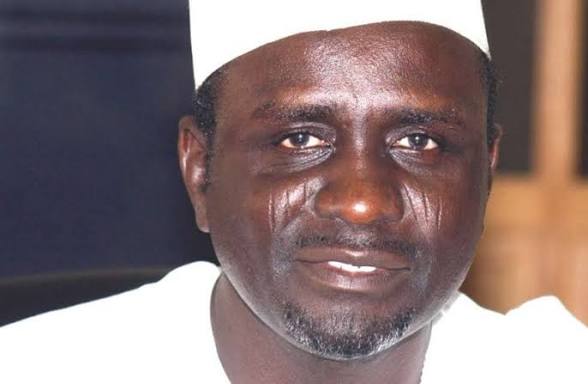
Lagos and Kano states have the highest number of registered voters, according to INEC Chairman, Prof Joash Amupitan, who put the total number of registered voters at 103,428,715 voters.
He disclosed this on Tuesday in Abuja at the World Press Conference and National Stakeholders’ Meeting marking 100 days to the 2027 general election.
Amupitan said the latest register followed the conclusion of the three phases of the Continuous Voter Registration (CVR) and the final Automated Biometric Identification System (ABIS) verification.
He said the commission registered 10,772,421 new voters during the three phases of the exercise.
According to him, the first phase, conducted from August 25 to December 10, 2025, registered 2,611,266 voters, while the second phase, from January 5 to April 17, 2026, recorded 4,121,835 new registrants.
The third phase, which ran from May 11 to July 26, 2026, produced another 3,867,997 registrants.
Amupitan said the commission had now completed the biometric clean-up of the register, bringing the national figure to more than 103 million voters.
The completion of the CVR and ABIS exercise has also paved the way for the next stage of preparations for the polls.
Lagos tops the state-by-state distribution with 7,488,633 registered voters, followed by Kano with 6,570,276.
Kaduna occupies the third position with 4,662,640 voters, while Katsina has 3,876,051 and Rivers 3,736,434.
Oyo follows with 3,588,111, Delta with 3,525,988, Benue with 3,057,225, Ogun with 3,037,981 and Bauchi with 3,012,547.
At the bottom of the table, Ekiti has the lowest number of registered voters with 1,055,708, followed by Bayelsa with 1,200,691.
The Federal Capital Territory has 1,732,043 registered voters, while Yobe and Gombe have 1,733,671 and 1,768,566 respectively.
The register comprises 53,528,218 male voters, representing 51.75 per cent, and 49,900,497 female voters, representing 48.25 per cent.
Voters aged between 35 and 49 constitute the largest age group, with 43,265,946, representing 41.83 per cent of the register.
They are followed by those aged 18 to 34, numbering 29,777,578 or 28.79 per cent; voters aged 50 to 69, numbering 22,982,900 or 22.22 per cent; and those aged 70 and above, with 7,402,291 or 7.16 per cent.
The commission also recorded 232,658 Persons With Disabilities (PWDs), representing about 0.23 per cent of the national register.
While outlining the commission’s preparations, Amupitan appealed for the prompt release of outstanding funds for the 2027 elections, saying timely funding remained critical to the completion of procurement and other operational activities.
He said the Federal Government had maintained its commitment to funding the electoral body through the release of statutory budgetary allocations, which had enabled INEC to meet international vendor obligations, finance election technology, upgrade infrastructure and sustain nationwide operations.
He said the commission was still expecting the release of the remaining funds to ensure the seamless execution of the activities ahead.
INEC had earlier projected a budget of about N873.78 billion for the 2027 general elections, with about N500 billion reportedly released, leaving roughly N371 billion outstanding.
The commission has previously stressed that funding delays could affect procurement, logistics, technology and other preparations requiring long lead times.
Amupitan said the commission had moved from planning and tendering to actual contract execution, production, delivery and construction.
He disclosed that contracts had been awarded for the production of 57,000 new Bimodal Voter Accreditation System (BVAS) devices, additional voting cubicles and ballot boxes, while some of the new BVAS had already been delivered.
He also said new operational vehicles were being distributed nationwide, while construction of dedicated BVAS storage facilities and local government offices was ongoing.
The INEC chairman announced that distribution of the first phase of Permanent Voter Cards (PVCs) to local government collection centres would commence on Friday, October 9.
He said the preliminary register would also be displayed nationwide from October 9 to 15 to allow voters to scrutinise their details and make claims or objections where necessary.
The commission introduced online registration during the third phase of the CVR to reduce barriers associated with distance and time.
It also introduced printable PVC technology under the Electoral Act 2026, which INEC said would reduce the waiting period for voters seeking cards and facilitate replacement for those whose cards are lost or stolen.
Amupitan also outlined measures aimed at eliminating delays in the opening of polling units, saying the commission was working towards having polling units open at 7:30am nationwide.
He said non-sensitive materials were being pre-batched and moved to local government hubs before election day, while sensitive materials would be moved from Central Bank of Nigeria vaults to local government areas 72 hours before the polls.
The materials would subsequently be deployed to the 8,838 Registration Area Centres and Super RACs by 4pm on the eve of the election.
For the massive logistical operation, INEC said it had strengthened its partnerships with transport unions and would mobilise more than 100,000 vehicles and 4,000 boats.
The commission will also deploy specialised transport arrangements, including speedboats, four-wheel-drive vehicles and local pack transport, to reach difficult riverine, mountainous and other hard-to-access locations.
The commission also signalled its determination to avoid the recurrence of inconclusive elections, pointing to lessons learnt from recent off-cycle polls.
Amupitan had previously disclosed that none of the five off-cycle elections conducted under his leadership had been declared inconclusive, saying the lessons from the exercises were being applied to the 2027 general election.
The commission’s preparations include early deployment of personnel and materials, stronger logistics, improved result management and technology upgrades designed to reduce disruptions during voting and collation.
Amupitan said the commission had acquired 57,000 additional BVAS devices and subjected its existing inventory to nationwide functionality testing.
He said the devices had undergone software hardening, battery optimisation and biometric calibration to strengthen the accreditation process.
The commission is also enhancing its eEC8A system to ensure polling-unit result sheets are verified, authenticated and uploaded to the INEC Result Viewing Portal, IReV.
The chairman disclosed that INEC had established a dedicated Artificial Intelligence Division within its ICT Department as part of efforts to protect the electoral process from emerging technological threats.
According to him, AI-driven anomaly detection tools are being integrated into the commission’s results verification process, while measures are being developed to protect public portals against cyber intrusions and unauthorised alterations.
He also warned political actors against the use of artificial intelligence to produce deepfake videos, cloned voices and fabricated electoral documents.
Amupitan said the commission would work with the Federal Ministry of Justice, Economic and Financial Crimes Commission (EFCC), Independent Corrupt Practices and Other Related Offences Commission (ICPC) and Nigerian Financial Intelligence Unit (NFIU) to track illicit campaign spending and vote-buying.
He said joint financial monitoring and undercover surveillance teams would be deployed, with offenders facing arrest and prosecution under the Electoral Act 2026.
INEC said it would require 707,384 ad hoc personnel for each of the two election days, translating to 1,414,768 engagements across the presidential/National Assembly and governorship/State House of Assembly elections.
The commission said the figure represents an increase from the approximately 1.2 million ad hoc personnel engaged during the 2023 general election.
Recruitment is already underway through the INEC Portal for Recruitment of Election Staff, with the application window scheduled to close on November 18, 2026.
The commission said eligible applicants include serving and former National Youth Service Corps members, tertiary institution students, qualified public servants and ICT professionals.
With the 2027 presidential and National Assembly elections scheduled for January 16, followed by the governorship and State House of Assembly elections on February 6, INEC said its preparations had moved into the final 100-day phase.
The commission said it had translated its statutory timetable into an operational plan covering its 23 headquarters departments and directorates, 36 state offices, the FCT and all 774 local government areas.
It will deploy its Election Monitoring and Support Centre dashboard to track preparations nationwide, while the Situation Room Data Support Centre will be activated six days before the election and remain operational through election day and the post-election period.
Amupitan said INEC’s objective was to deliver an election that would be transparent, peaceful, inclusive and credible, urging political parties, security agencies, the media, civil society and voters to work with the commission as the final countdown begins.