By Babafemi Ojudu
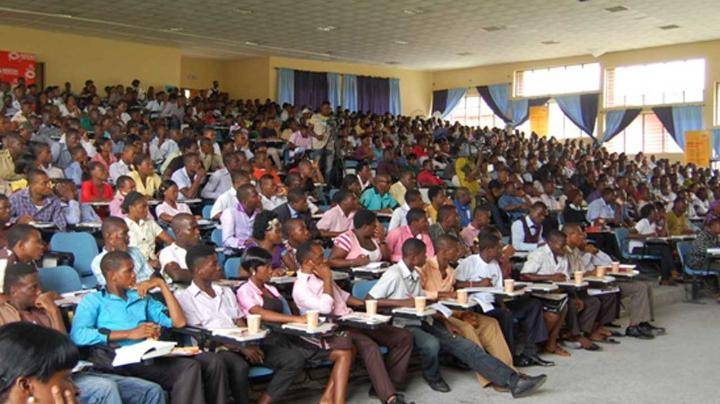
I live in Ado-Ekiti, the capital of Ekiti State. Within a radius of about twenty kilometres of the town are no fewer than nine institutions of higher learning. Every year, these institutions admit thousands of young people, train them for several years, award them certificates and release them into a labour market that has little or no use for much of what they have been taught.
Not even five per cent of these graduates, I suspect, find suitable employment or establish enterprises capable of keeping them productively engaged. Many spend years roaming the streets with certificates tucked into brown envelopes. Some are driven into cybercrime and other fraudulent ventures. Others rush into politics—not necessarily from a desire to serve, but because it appears to be one of the few remaining routes to livelihood, relevance and the coveted prefix “Honourable.” Some young women, equally frustrated and without opportunities, become vulnerable to exploitation and transactional relationships now casually glamorised as “olosho.”
In effect, parents make enormous sacrifices to educate their children, only for the system to prepare many of them—not for the productive economy, but for unemployment, frustration and, in the worst cases, the criminal economy.
The tragedy is even more striking because, across Ekiti State, it remains difficult to find competent, reliable and ethical artisans. We struggle to find people who can properly install or repair a roof, wire a building, fix plumbing, lay tiles, maintain machinery, service household appliances, weld metal, paint professionally or execute basic construction work to an acceptable standard.
Consequently, many of the skilled workers employed on building sites in Ekiti are brought in from Togo, the Republic of Benin and, sometimes, Ghana. This is not because our young people lack intelligence. Far from it. It is because our education system has failed to convert their intelligence into useful, marketable competence.
Anyone who has tried to engage some of the locally available artisans will understand the frustration. A job estimated to take three days may drag on for three weeks. The artisan arrives late, closes early, disappears midway through the assignment, demands additional payment without justification and offers excuses instead of results. Too often, there is little regard for time, precision, professional ethics or customer satisfaction.
This is not merely a problem of individual character. It is evidence of a systemic failure in training, certification, supervision and professional culture. We have neither adequately trained enough artisans nor created a credible system for certifying and regulating those already practising.
Imagine if half of the higher institutions around Ado-Ekiti were devoted to training young men and women to use both their hands and their brains. Imagine institutions producing expert electricians, builders, plumbers, carpenters, welders, tilers, solar-energy technicians, irrigation specialists, refrigeration engineers, automobile diagnosticians, medical technicians, software developers and machinery fabricators. Imagine if their training included entrepreneurship, accounting, digital marketing, customer relations, workplace discipline and professional ethics.
The condition of our people would improve, the local economy would expand, unemployment would decline, and billions of naira now paid to imported labour would circulate within our communities.
But no. We are obsessed with degrees. We do not merely want degrees; we want to pile one degree upon another. A young person obtains a bachelor’s degree that gives him no practical competence and then proceeds to acquire a master’s degree in the same field of helplessness. Thereafter, he begins a doctorate—not necessarily to investigate and solve a problem, but to add another title to his name.
At the end of it all, no value has been created and no problem has been solved.
Ask ten young people what they are studying, and a substantial number will mention Business Administration, Accounting, Banking and Finance, Political Science or Mass Communication. There is nothing inherently wrong with any of these disciplines. Society needs administrators, accountants, bankers, political scientists and communicators. But how many can the economy absorb? Why do we continue to produce thousands of graduates for sectors that are already saturated while industries, farms, workshops, construction sites and technology companies are desperately short of skilled hands?
Even some graduates of engineering leave university unable to diagnose a simple mechanical fault, repair a household appliance or translate a technical drawing into a functional product. They have mastered formulas for examinations but cannot apply them to the problems before them. The fault is not entirely theirs. You cannot give what you were never taught, and you cannot practise with equipment your institution does not possess.
Some time ago, I accompanied a friend who had been invited to deliver a lecture at a university in Ekiti. As we drove around the campus, we saw about five buildings whose roofs had been blown off. My friend turned to me and asked: “Does this university not have departments of Building Technology, Architecture or Civil Engineering?”
His question stayed with me.
Should a university with relevant departments merely watch while its buildings deteriorate? Could the damaged structures not have become practical laboratories for students and lecturers? Could they not investigate why the roofs failed, redesign them, supervise the repairs and develop more resilient roofing systems suited to the weather conditions of the area?
What is the purpose of a Department of Civil Engineering if it cannot contribute to solving structural problems on its own campus? What is the value of an agriculture faculty surrounded by farmers whose yields remain miserable? What purpose does a computer science department serve if it cannot develop simple digital tools for the institution or surrounding community? What is the relevance of a business school that cannot help local traders improve their bookkeeping, packaging and access to markets?
A university should not be an island of theories in an ocean of problems.
Our education is largely disconnected from the basic challenges confronting our communities. We teach agriculture without transforming farms. We teach engineering without maintaining infrastructure. We teach business without creating enterprises. We teach computer science without building useful technology. We teach public administration without improving public institutions. We produce dissertations that gather dust while the problems they supposedly examine continue to grow.
We have mistaken schooling for education, certificates for competence and titles for productivity.
A certificate should be evidence that its holder can think, create, repair, organise, improve or solve something. Today, however, we have far too many certificated people who are not competent and many competent people whose skills our society refuses to respect because they do not possess impressive certificates.
This is not peculiar to Ekiti. It is a nationwide malaise that demands urgent attention. These are the issues that should preoccupy our ministers and commissioners of education—not merely the distribution of TETFund and SUBEB contracts, the construction of buildings, 20 kilometer fences, or the commissioning of projects. Buildings do not educate people. Contracts do not create competence. A workshop without equipment and instructors is merely a warehouse; a laboratory that students cannot use is only a decorated room. A fenced university is just a formula to distribute contracts and take kickbacks.
Nigeria needs a fundamental review of its educational philosophy and curriculum. We must ask a basic question: What kind of society are we trying to build, and what skills do our people require to build it?
The answer cannot be to continue licensing universities endlessly. There should be a pause in the reckless multiplication of conventional universities until we have strengthened existing institutions and corrected the imbalance between academic education and technical competence. Every new university produces additional administrators, lecturers and graduates, but not necessarily additional solutions.
We do not simply need more graduates. We need people equipped to solve the pressing problems of society.
We need agricultural extension workers who can introduce improved methods to farmers, help them reduce post-harvest losses and connect them to markets—not only agriculture graduates paralysed by theory.
We need irrigation technicians, veterinary assistants, food processors, greenhouse operators, soil-testing specialists and mechanics capable of repairing modern farm machinery.
We need paramedics, community health workers, laboratory technicians and other well-trained personnel who can provide essential services in rural communities. This does not diminish the importance of doctors. It recognises that healthcare delivery requires a broad pyramid of competent professionals, especially when many doctors leave after being trained at enormous public expense.
We need young people who can write code, build software, secure digital systems and develop applications that address Nigerian problems. But we also need technicians who can install solar panels, maintain transformers, repair industrial machines, build affordable homes, manage water systems and keep our roads, hospitals and schools functioning.
We need functional human beings—not walking certificates.
Technical and vocational education must therefore cease to be treated as the destination of those considered academically weak. That prejudice has damaged generations. In successful economies, a master electrician, machinist, plumber or automobile technician is a trained professional who earns a dignified living. Such people undergo rigorous instruction, apprenticeship, examination and certification. Their competence commands respect because society cannot function without them.
During a visit to Australia, my encounters with highly trained technical workers left a lasting impression on me. These were confident professionals, properly educated, certified and well remunerated. They understood both the theory and practice of their trades. They did not consider themselves inferior to university graduates, and society did not treat them as such.
A skilled technician who supplies electricity, maintains machinery or makes a building safe is far more useful than a degree-holder whose education benefits neither society nor the person who possesses it. The dignity of labour must not depend on whether one works with a laptop, a spanner, a stethoscope or a welding machine. What matters is competence, integrity and value.
We must build and properly fund technical colleges in every part of the country. Existing technical schools must be revived, equipped and connected to industries. Their curricula should be designed with employers, professional associations, artisans, farmers and technology companies—not by civil servants and academics alone.
Students should divide their time between the classroom and actual workplaces. Every programme should include compulsory practical projects. Institutions should be assessed partly by the problems they solve, the businesses their graduates create and the number of students who become productively employed—not merely by the number of degrees they award.
Our universities, too, must change. Every discipline should demonstrate its relevance to the surrounding community. Research grants should favour practical solutions to local problems. Promotions should recognise innovation, patents, prototypes and community impact alongside journal publications. Entrepreneurship should involve building real enterprises, not memorising definitions for examinations.
Most importantly, we must change our attitude. Parents should stop forcing every child into a university simply for social prestige. Government must make technical education attractive, modern and financially rewarding. Banks should develop credit schemes for certified artisans and young entrepreneurs. Public institutions should reserve appropriate contracts for competent local technicians and emerging enterprises. Professional certification must be strengthened so that customers can distinguish genuine craftspeople from impostors.
We cannot continue producing graduates for jobs that do not exist while importing people to perform work that is available all around us.
Nigeria’s greatest resource is not oil. It is the intelligence, energy and creativity of its people. But intelligence that is not trained for usefulness becomes frustrated potential. Energy without direction becomes restlessness. Creativity without opportunity can be diverted into fraud and other destructive pursuits.
If our education system cannot help citizens make a living honestly, address the needs of their communities and contribute to national development, then the problem is not the intelligence of our young people.
It is the curriculum, stupid!

Babafemi Ojudu, CON, is a journalist, political scientist, former Senator, and former Special Adviser to the President on Political Matters.