Isaac Samuel
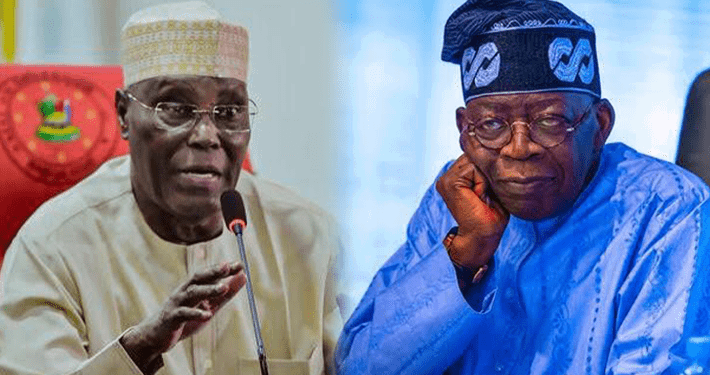
The Presidency on Sunday dismissed former Vice President Atiku Abubakar’s criticism of President Bola Tinubu’s economic policies, insisting that the administration’s reform agenda has put Nigeria on the path of recovery rather than fiscal recklessness.
In a statement titled “Facts, Not Fear: A Point-by-Point Response to Atiku Abubakar on Nigeria’s Reform Journey,” Special Adviser to the President on Information and Strategy, Bayo Onanuga, accused the former vice president of relying on outdated data and presenting a distorted picture of the country’s economic reality.
According to Onanuga, Atiku’s criticisms were anchored on developments in the 2024 fiscal year and failed to acknowledge the progress recorded since then.
He argued that economic reforms are gradual processes whose benefits should not be judged solely by the initial hardships they create.
“It is curious that in the middle of 2026, the opposition’s principal economic argument remains anchored to developments in the 2024 fiscal year. Economies are dynamic. Reforms are processes, not events,” Onanuga said.
Defending the administration’s record, the presidential aide said Nigeria’s economy had rebounded significantly since the exchange rate reforms, noting that the country’s dollar-denominated Gross Domestic Product (GDP), which dropped to about $253 billion after the currency realignment, has recovered to approximately $377 billion.
He also said Nigeria’s naira GDP increased from about N314 trillion in 2024 to roughly N530 trillion, describing the development as evidence that the economy had moved beyond the most difficult phase of the reforms.
Onanuga rejected Atiku’s allegation that the Tinubu administration was recklessly accumulating debt, arguing that borrowing should be assessed alongside a country’s economic capacity and the purpose for which the loans are obtained.
According to him, Nigeria’s debt-to-GDP ratio remains below 40 per cent, which he described as relatively modest compared to countries such as South Africa, Egypt, Ghana, Kenya, the United States and the United Kingdom.
He also maintained that the government’s debt service-to-revenue ratio had declined from nearly 100 per cent in December 2022 to below 60 per cent under the current administration.
“The more meaningful question is whether borrowing finances investments that expand productive capacity and future revenues, rather than merely postponing difficult choices,” he stated.
The Presidency also defended the removal of fuel subsidy, describing the policy as one successive governments had acknowledged was necessary but lacked the political will to implement.
Onanuga argued that the abolition of the subsidy had significantly improved revenues shared among the federal, state and local governments through the Federation Account Allocation Committee (FAAC), thereby enabling subnational governments to undertake more infrastructure and social development projects.
He added that the policy had effectively transferred greater fiscal responsibility and resources to the states, describing it as a practical demonstration of fiscal federalism.
Responding to Atiku’s criticism of the administration’s tax reforms, the Presidency denied that the government was imposing additional burdens on ordinary Nigerians.
Instead, Onanuga said the reforms were designed to reduce taxes for low-income earners and small businesses while ensuring wealthier individuals and profitable enterprises contributed a fairer share through improved tax compliance.
According to him, individuals earning N1
million annually or less, as well as businesses with annual turnovers below N100 million, stand to benefit from the reforms.
The Presidency further highlighted what it described as achievements in the health sector, saying more than 3,000 primary healthcare centres had been revitalised and over 78,000 frontline health workers retrained in the last three years.
It also noted that more than 100 public health facilities across the country now provide free caesarean sections for indigent mothers, while three world-class cancer centres have become operational in Kubwa, Enugu and Katsina.
On education, Onanuga said the government had embarked on over 11,000 projects through the Universal Basic Education Commission (UBEC) in collaboration with state governments.
He cited the Nigerian Education Loan Fund (NELFUND) as one of the administration’s flagship interventions, claiming that over 1.64 million students had benefited from tuition and upkeep loans amounting to more than ₦303 billion.
According to him, the administration had also maintained industrial harmony in public universities, allowing students to complete academic programmes without prolonged disruptions caused by strikes.
The presidential spokesman equally defended the government’s infrastructure programme, saying ongoing investments in roads, railways, power, gas, airports, housing and digital connectivity were aimed at lowering business costs and stimulating private sector growth.
Onanuga dismissed Atiku’s claim that the Federal Government had realised an undeclared oil revenue windfall of ₦7.98 trillion, describing the assertion as analytically flawed.
He explained that although global crude oil prices exceeded the benchmark used in the 2026 budget, Nigeria’s oil production remained below projections, while part of the country’s crude output had already been committed to servicing previous loan obligations.
“The convenient mistake many analysts make is to multiply the oil price by the daily crude production volume to determine revenue to the government,” he said, adding that such calculations ignored production costs, the share due to oil companies and existing crude sale agreements.
He challenged the former vice president to provide the basis for his claim of a N7.98 trillion oil windfall.
The Presidency maintained that although the reforms had imposed short-term hardships, they were necessary to correct long-standing structural distortions in the economy.
It added that the government had introduced intervention programmes, including the NG-CARES, HOPE and SOLID initiatives worth over $3 billion, alongside cash transfers targeting 15 million vulnerable households, to cushion the impact of the reforms.
While acknowledging that Nigeria’s economy was still facing challenges, Onanuga insisted that the country had moved beyond the worst phase of the adjustment process and urged Nigerians to assess the Tinubu administration based on measurable outcomes rather than political rhetoric.
He argued that the government’s reforms would continue to strengthen institutions, improve revenue generation, expand economic opportunities and ultimately deliver better living standards for Nigerians.