Isaac Samuel
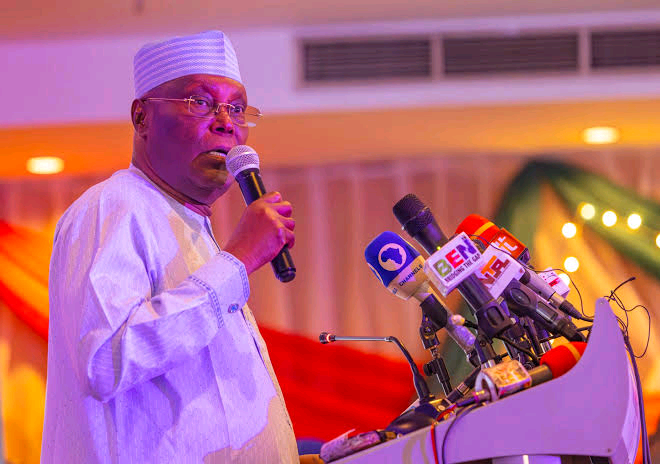
Former Vice President Atiku Abubakar has said his anticipated participation in the 2027 presidential election may be his final attempt at Nigeria’s top office, citing rising political stakes and the need to deploy his experience at a critical time.
Speaking during an interview on Arise Television on Wednesday, Atiku said, “The stakes are higher because I believe that it will be my last. I think that’s a fact.”
The former presidential candidate, who has contested the office multiple times, argued that his blend of experience and historical perspective uniquely positions him to lead the country. “I represent both the past and the future,” he said, noting that while Nigeria has witnessed leadership across generations, expectations from younger leaders have not always been fully met.
He stressed the importance of mentorship, adding that emerging politicians require guidance from experienced leaders to navigate governance challenges.
Atiku drew from his time serving under former President Olusegun Obasanjo, maintaining that governance experience is best acquired through direct involvement at the highest levels.
Responding to criticism that he represents Nigeria’s entrenched political establishment, he argued that leadership challenges in some states under younger governors highlight the need for experience at the centre.
He described the country’s governance issues as both systemic and individual, stressing that capable leadership remains essential to stabilising the polity.
Reflecting on past administrations, Atiku referenced the transition following the death of former President Umaru Musa Yar’Adua and the tenure of Goodluck Jonathan. While describing Jonathan as “a decent man,” he attributed some governance shortcomings during that period to inexperience in handling national challenges.
On his current political alignment, Atiku confirmed his role as a key promoter of a broad opposition coalition involving actors across multiple parties.
He said the alliance is aimed at strengthening electoral competitiveness and democratic practice.
According to him, the coalition is driven by a shared resolve to challenge the administration of President Bola Tinubu, which he criticised over its handling of the economy.
“Tinubu has been a very bad president, to be honest with you. I didn’t expect that from him… the way he governs the country, whether economically or otherwise, it’s a disappointment,” Atiku said.
He added that the coalition would prioritise strengthening democratic institutions, including respect for the separation of powers and constitutional governance.
Addressing concerns over possible rivalry among key figures within the alliance, Atiku expressed confidence that stakeholders would reach a consensus on a presidential candidate.
He also signalled his willingness to support any candidate that emerges through a democratic process, stating: “I will step aside for any candidate who emerges.”
Atiku added that the coalition reflects a deliberate mix of generational interests aimed at ensuring leadership continuity and providing a pathway for future political succession.