By Yusuf Bangura
The defending World Cup champions, Argentina, finally ran into an opponent—Spain—that exposed the limitations of their feisty, gritty, and blatantly opportunistic football. They went into the final as the team that had shown the strongest willpower and ability to come from behind and win.
They beat Cabo Verde 3-2 in the second half of extra time in the Round of 32, when the game seemed destined for a penalty shootout, and disposed of Egypt 3-2 in the Round of 16, after being two goals down with only eleven minutes of normal time remaining.
They also overwhelmed Switzerland in extra time, 3-1, in the quarter-finals when the Swiss had the initiative and were clearly on the verge of clinching a historic victory, and shocked England in the semi-finals, coming from behind with only five minutes of normal time remaining to win 2-1.
In all these matches, the Argentines showed unbelievable courage and an unbending will to win. They moved the ball well, counter-pressed when they lost the ball, and launched attacks rather than sitting deep or toying aimlessly with opponents with horizontal passes. They were also very physical and resorted to the dark art of tactical fouls and provocations to disturb their opponents’ rhythm, or feigned injury to curry favour from the ref.
Watching Argentina play in the 2026 tournament reminded me of Atlético Madrid, who play with a similar incredibly high passion and grit, using all the tricks in the book to gain an advantage and win matches. When Atleti play against teams that sit deep or are afraid to attack, they are beautiful to watch as they always press forward with slick passes to dominate such matches and win. However, they wilt and resort to the dark arts when they face more skilful and attack-minded teams.
Even though Argentina deployed aggressive tactics against England—bordering at times on dirty play—in the first half of their match, they completely outplayed them when England decided to sit deep and abandon the ball and midfield to the Argentine players.
Playing with grit has always defined Argentina’s football. However, there have also always been two other sides to the Argentine game: an ability to pass the ball seamlessly—which they share with Brazil and Spain—supported by a cast of skilful players who can dominate games and score goals; and a willingness to operate on the margins of the law, committing unnecessary fouls and feigning injury to win undue advantage, which they share with many South American teams.
In Argentina’s football history, this Janus-faced approach to football is referred to as “La Nuestra vs. Bilardismo”—a deep-seated ideological split that is believed to have defined Argentine football identity for nearly a century. It’s a clash between romantic, artistic football and pragmatic, win-at-all-costs realism.
La Nuestra is the romantic ideal, emphasising individual flair, artistic dribbling, short passing, improvisation, and playing with joy—or what Brazilians call Joga Bonito. It’s associated with César Luis Menotti, manager of Argentina’s 1978 World Cup–winning team, and creative footballers like Diego Maradona and Lionel Messi.
The dark arts and grit—or Bilardismo, named after Carlos Bilardo, manager of the 1986 World Cup team—on the other hand, advocate absolute pragmatism. In this style of football, winning is the only thing that matters. Players demonstrate intense tactical discipline, gamesmanship, and psychological intimidation, and use every loophole in the rulebook to gain an advantage. In other words, there is a stubborn refusal to lose, even when the team is outmatched technically.
A One-Sided Final
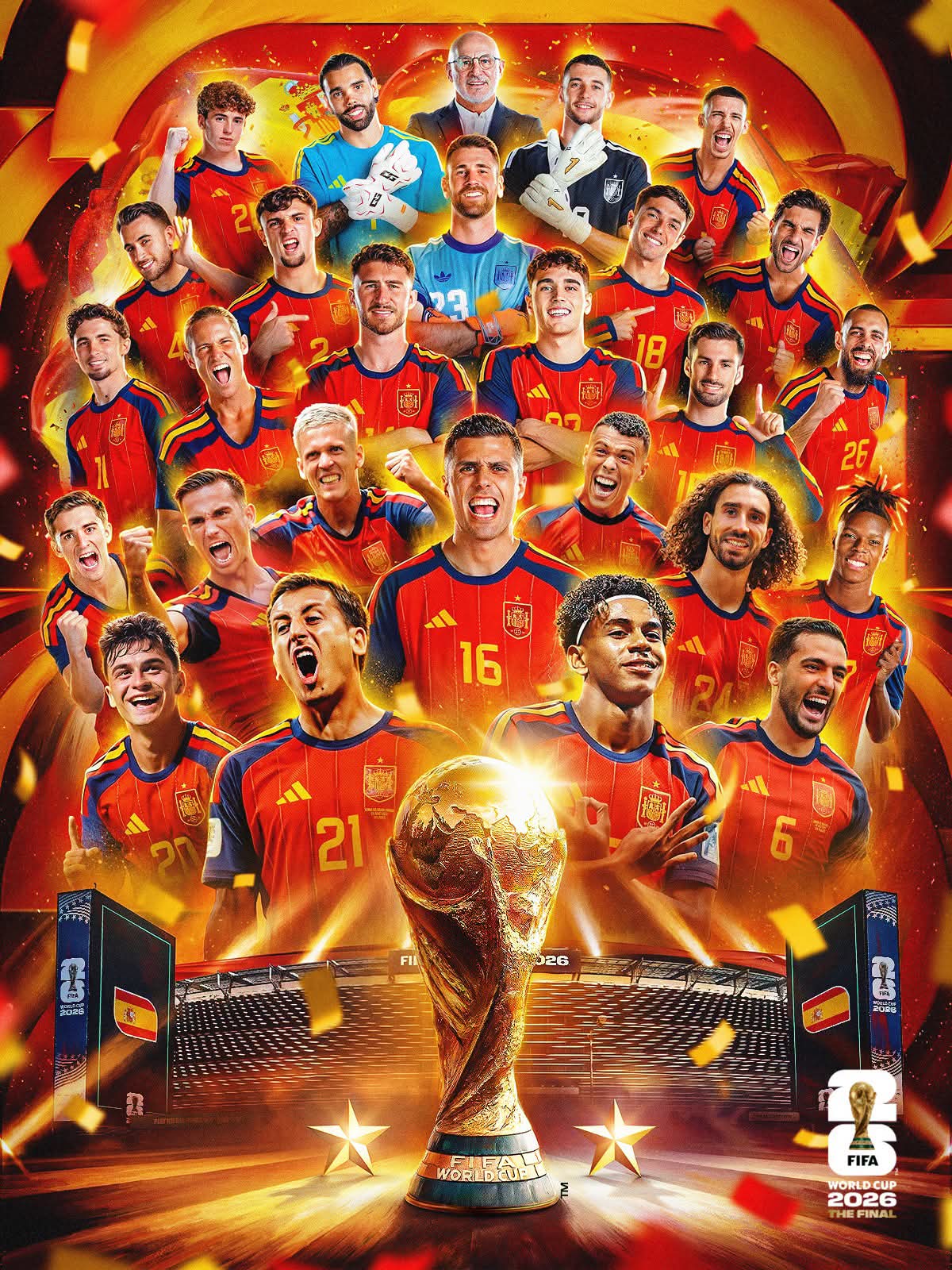
The 2026 final will be remembered as one of the most one-sided in World Cup history. Argentina were an extremely poor shadow of the team that showed guts to repeatedly come from behind, win in previous rounds, and relentlessly take the game to their opponents.
They hardly landed a glove on Spain, who absolutely controlled the pace of the game with their ball-retention, short passes, and counter-pressing. With 65% possession, Spain controlled the pitch and tempo across all 120 minutes of the match. Spain had 20 shots on goal to Argentina’s 1 (in extra time). The shots in regulation time (90 minutes) were 15–0!
The Argentine keeper, Emiliano Martínez, had a very busy night—he was forced to save 12 shots to the Spanish keeper Unai Simón’s 1. Indeed, Spain had an incredible 31 touches in the Argentine penalty box compared to the Argentines touching the ball only once in the Spanish box. It was total domination.
Even though the number of fouls committed by both teams was about the same (25 for Argentina to 21 for Spain), Argentina received six yellow cards to Spain’s zero. To counter Spain’s domination and build-up play, Argentina employed aggressive pressing and physical contact early in the game. Throughout the match, they used tactical fouls to stop quick counter-attacks or fast free-kicks. They also leveraged constant refereeing complaints and delayed play to unsettle the young Spanish players. It was an ugly contest.
The contrast with Spain’s style of play was like day and night. Spanish football is built on Barcelona’s philosophy of positional, possession-based play and instant counter-pressing when the ball is lost. Often called tiki taka, it was pioneered by Johan Cruyff at FC Barcelona and perfected by Pep Guardiola. It was this style of play that gave Spain its first World Cup title in 2010 in South Africa. The current coach, Luis de la Fuente, is a devoted disciple of this philosophy. Amazingly, eight players (a major portion) of the Spanish squad for the 2026 World Cup were drawn from Barcelona. Their chief rivals, Real Madrid, did not field any players in this year’s squad.
Spain’s dominance was so overwhelming in the match against Argentina that I almost switched off the TV after the second hydration break when their control wasn’t yielding any results. And then, in the third minute of stoppage time (90+3’), Argentina’s Enzo Fernández was sent off after receiving two yellow cards—the second for a reckless challenge on 19-year-old Spanish defender Pau Cubarsí.
With Spain playing with a man advantage in the extra 30 minutes, it was clear that the Argentine defence would at some point be breached and Spain would win the match. The game was now being played almost entirely in the Argentine half—similar to the last 40 minutes of the England-Argentina game when England retreated to their penalty box after scoring a goal in the 55th minute. Spain controlled 72% of the ball possession to Argentina’s 28% during the 30 minutes of extra time.
After many close calls, the goal finally came in the 106th minute through substitute Ferran Torres. Spain’s right-back Pedro Porro moved up the wing and delivered a deep cross towards the far post. Winger Nico Williams beat the Argentine fullback to the ball and headed it backwards in the penalty box. Torres met the falling ball and hit a powerful first-time strike into the roof of the net past Emiliano Martínez.
Messi and Yamal: The Passing of the Crown?
This match was billed as an opportunity to watch the old grandmaster, Messi, lock horns with his protégé, Yamal, whom he bathed in Barcelona when he was a four-month-old baby. A twenty-year gap separates them.
Messi did his best, but he was starved of service because the entire Argentine team couldn’t cope with Spain’s tiki-taka. He huffed and puffed, especially when Argentina went a goal down, trying many positions and looking for an equaliser, but it wasn’t his day. Based on his performance across the eight games, I thought he, not Rodri, should have been given the ‘Player of the Tournament’ award. But, unfortunately, it’s a winner-takes-all system, with Spain also winning the best keeper and young player awards.
Messi scored eight goals and provided four assists, which would have made him the top goalscorer if FIFA had followed UEFA by discontinuing the third-place play-offs, which are not really competitive. Semi-final losers should go home. Messi also had the highest number of key passes (21), the highest number of completed dribbles (25), the highest number of crosses (49), the highest number of shots (38, with 18 on target), and the highest number of chances created from set pieces (11) in the entire tournament. He did all of this at the age of 39! In addition, he’s the only player to have captained in three World Cup finals.
Yamal played an integral part in Spain’s victory, constantly tormenting the Argentine left back and delivering balls into the penalty box, even though he didn’t score. He’s now won two major international tournaments—the Euros and the World Cup, and he’s only 19.
Three images will remain with me for a long time: Yamal’s embrace of a distraught Messi at the end of the match, rubbing his back, and consoling him; Messi sitting down on the pitch like an old warrior who knew that his time was up even though he’s fought an amazing fight; and Messi shedding tears in front of the Argentine fans singing his name, apparently signalling the end of an era.
The World Cup final was not an epic, but I thoroughly enjoyed the 38 days of thrilling football, upsets, and dramatic outcomes.