By Isaac Samuel
The decision by the House of Representatives to withdraw its own State Police Bill and consider President Bola Tinubu’s executive version may ultimately become one of the most consequential legislative choices of the 10th National Assembly.
This is not because it concerns state police, but because of what it reveals about the relationship between executive initiative and parliamentary constitutional reform
Indeed, at first glance, the
development which comes barely a month after the House passed a constitutional amendment bill seeking to establish state police services across the federation appears straightforward.
Yet, behind the decision is a more complex constitutional and institutional question. The question in the mind of many observers currently is, what becomes of a reform proposal painstakingly developed through years of consultations, public hearings and legislative scrutiny when lawmakers choose to set it aside for an executive version that pursues substantially the same objective?
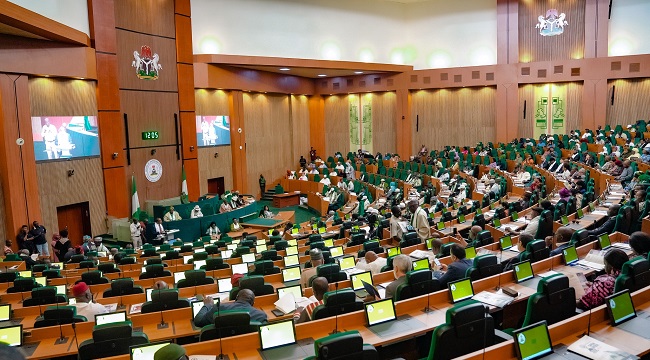
On Tuesday, the House rescinded its earlier resolution on the bill following the transmission of an executive proposal by President Tinubu.
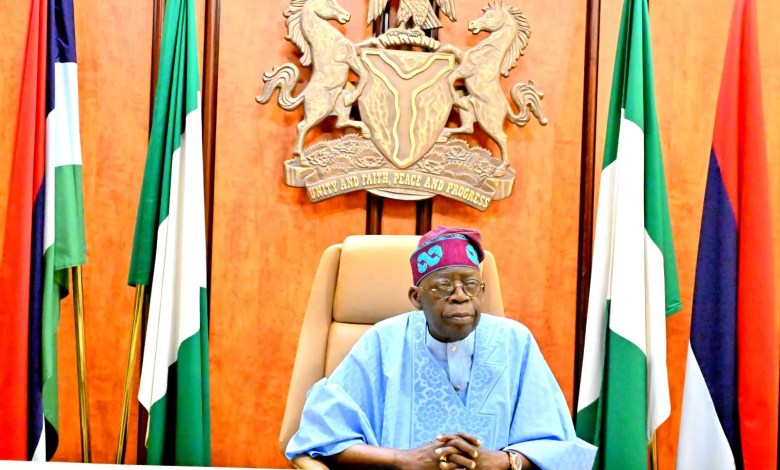
In a letter dated June 15, 2026 and read on the floor by Speaker Tajudeen Abbas, the President said the executive bill sought to create a constitutional pathway for the establishment of State Police Services across the country.
Tinubu explained that the proposal was not entirely new but built on the work already carried out by lawmakers.
“This Bill builds on the significant work already done in this regard by the House of Representatives and incorporates additional safeguards to ensure that the creation of a dual policing structure to address our nation’s evolving national security challenges can be achieved quickly and effectively to the benefit of all Nigerians,” the President stated.
The explanation, however, may open the door for debate over the fate of the extensive constitution review exercise undertaken by the National Assembly over the last two and a half years.
For much of the life of the 10th National Assembly, the Senate and House Constitution Review Committees traversed the six geopolitical zones, organised public hearings, received memoranda from stakeholders and held retreats on various constitutional amendment proposals, including state police.
The proposal eventually scaled legislative hurdles in both chambers.
On June 11, the House passed its version of the State Police Bill after about 290 lawmakers voted in support.
The bill sought to create a dual policing structure consisting of a Federal Police Service and State Police Services.
Among other provisions, the House version provided for the establishment of state police through laws enacted by state assemblies, subject to certification that such police formations meet minimum national standards.
It also contained provisions on appointments, federal intervention, oversight mechanisms and safeguards against abuse by political actors.
Following passage of the bill, the House on July 9 constituted a 12-member conference committee to reconcile differences with the Senate version.
The move had signalled the legislation was nearing the final stages of the constitutional amendment process.
But the latest decision has effectively halted that process.
Moving the motion for rescission, Francis Waive, who represents Ughelli North/Ughelli South/Udu Federal Constituency of Delta State, told lawmakers that “new facts” had emerged which necessitated a review of the bill.
According to him, the House needed to reconsider the legislation to align with national security structure.
While the executive and legislative versions appear to pursue the same objective of decentralising policing, questions have emerged over what specific differences warranted abandoning a bill that had already passed and entered the harmonisation stage.
The Presidency has argued that the executive proposal contains additional safeguards.
Notably, the House version already contained several protections designed to address longstanding concerns over state police.
The bill prohibited the use of police powers for partisan, ethnic, religious or personal purposes, provided for federal intervention in exceptional circumstances, established independent state police service commissions and subjected police operations to national standards and oversight mechanisms.
Reports from Senate proceedings on Tinubu’s version suggest that many of those provisions are also contained in the executive proposal. However, some clauses that perhaps were not in the House version were included.
While The Guardian could not obtain a copy of the bill transmitted to the House of Representatives, debates on the proposal in the Senate provide clues to some of the safeguards contained in the executive version.
Unlike previous state police proposals that faced criticism over fears of political abuse by governors, the executive bill appears to contain extensive constitutional checks designed to limit arbitrary use of state police powers.
Under the proposal, states would not automatically establish police services.
L
Any state seeking to operate a police force would first be required to enact a law creating the service and obtain certification that it meets national minimum standards prescribed by the National Assembly.
The bill also preserves a clear division of responsibilities between federal and state policing authorities. While state police would handle local law enforcement, public safety and enforcement of state laws, the Federal Police Service would retain responsibility for national security matters, including terrorism, cybercrime, organised crime, arms trafficking, border security and interstate offences.
Perhaps the most significant feature of the proposal is the attempt to address longstanding fears that governors could use state police as political tools against opponents.
The bill expressly prohibits the use of police powers for partisan, ethnic, religious, sectional or personal purposes.
Governors would also be barred from directing police authorities to target political parties, individuals, groups or associations unlawfully.
In addition, the proposal creates independent State Police Service Commissions responsible for recruitment, promotions, discipline and administration of state police personnel, thereby reducing direct political control over the institutions.
Although governors would appoint State Commissioners of Police, such appointments would not be unilateral.
Under the proposal, commissioners would be appointed based on recommendations from the National Police Council and would require confirmation by state Houses of Assembly.
The bill further grants governors authority to issue lawful directives on public safety and public order. However, state police commissioners would be protected from arbitrary directives that violate the law or policing standards.
A particularly notable provision states that a commissioner of police cannot arrest, detain, investigate or deploy force against any person, political party or group merely for criticising the government.
Under the proposal, the Federal Government may only intervene in exceptional situations, including breakdown of public order, operational collapse of a state police service, serious human rights violations, electoral intimidation or threats to national security.
Even in such circumstances, intervention must be authorised in writing by the President and remain subject to legislative oversight and judicial review.
The legislation further requires that any intervention be communicated to relevant authorities within 48 hours and remain temporary in nature.
The bill also seeks to establish uniform policing standards nationwide.
The National Assembly would be empowered to prescribe minimum requirements covering recruitment, training, discipline, use of force, firearms management, complaints procedures, accountability mechanisms and professional conduct.
However, the controversy surrounding the decision featured prominently during the National Assembly Open Week on Tuesday.
Defending the move, Speaker Abbas argued that the executive bill was more comprehensive than the House version.
“His Excellency the President has now transmitted to the National Assembly an Executive version of the State Police Bill, one that is more robust and more comprehensive than the version this House earlier passed,” Abbas said.
He disclosed that the proposal emerged from a committee inaugurated by the President and chaired by former Speaker of the House and current Chief of Staff to the President, Femi Gbajabiamila.
Abbas also sought to address concerns about transparency, particularly from Nigerians who had questioned why lawmakers were moving to consider a bill that had not yet been made publicly available.
“To the thoughtful citizens and to the Members who have observed that they are yet to see the draft Bills and who fear that this matter is being settled beyond public view, I offer this reassurance: nothing here is concealed. The Bill will pass through Public Hearing and open scrutiny,” he said.
Senate President Godswill Akpabio also defended the process, stressing that work on the state police proposal did not begin with the President’s intervention.
“These constitutional amendments on state police, a lot of people are not aware that we have worked on it for the past two and a half years. We’ve gone to all the regions in Nigeria. We have done public hearings across the world,” Akpabio said.
He noted that both chambers had conducted consultations and retreats in different parts of the country before arriving at the current stage of the process.
However, while leadership of the National assembly has defended the proposal, the central question now confronting the National Assembly is if lawmakers had already built consensus through years of consultations and legislative work, why was it necessary to withdraw their own bill rather than amend it during the harmonisation process?
Beyond the constitutional amendment bill, President Tinubu recently inaugurated a Presidential Working Group on the National Policing Bill to prepare the legal framework for implementing state police if the constitutional amendment succeeds.
The committee, chaired by Gbajabiamila, includes the Attorney-General of the Federation, National Security Adviser, Inspector-General of Police, President of the Nigerian Bar Association and representatives of state governors.
The move suggests that the administration is seeking not only constitutional backing for state police but also a comprehensive legal framework for its implementation.
Beyond all these, the next few days in the National Assembly would determine whether the President’s decision to transmit a fresh State Police Bill was necessitated by substantive gaps in the legislature’s version or whether a bill already at the harmonisation stage could have been amended without restarting the process.