Isaac Samuel
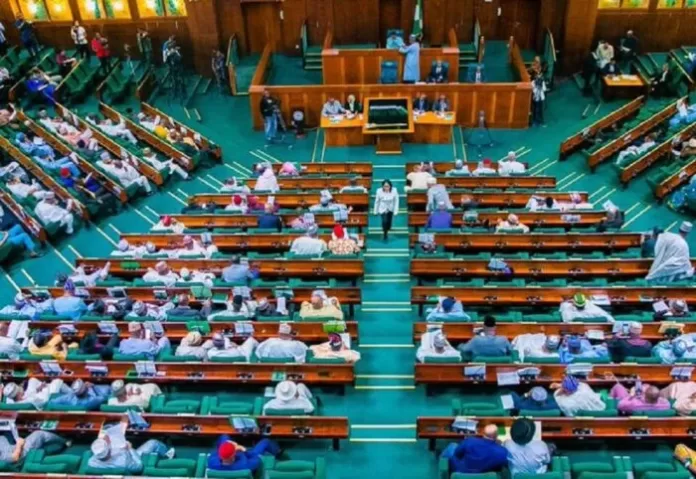
The House of Representatives on Thursday passed President Bola Tinubu’s Constitution Alteration Bill seeking to establish State Police Services across the country, despite a walkout by members of the Minority Caucus who accused the leadership of the House of breaching constitutional and parliamentary procedures during its consideration.
The bill, titled “A Bill for an Act to Alter the Constitution of the Federal Republic of Nigeria, 1999 to Provide for the Establishment of State Police Services and for Related Matters (HB. 2797),” was not considered clause-by-clause at the Committee of the Whole before securing the constitutionally required two-thirds majority.
Presenting the report, Deputy Speaker and Chairman of the House Committee on Constitution Review, Benjamin Kalu, described the proposal as a landmark constitutional reform aimed at strengthening Nigeria’s security architecture by creating a dual policing system comprising the Federal Police Service and State Police Services.
He commended President Tinubu for transmitting the Executive Bill to the National Assembly, saying the President had consistently supported state policing since his days as governor.
According to Kalu, the bill is designed to bring policing closer to the people, improve intelligence gathering, strengthen community policing, enhance coordination among security agencies and enable governments to respond more effectively to evolving security challenges.
Before voting commenced, Speaker Tajudeen Abbas announced that 311 members were eligible to participate in the exercise, comprising 211 members of the All Progressives Congress (APC), 65 lawmakers from other political parties physically present in the chamber and 35 members participating virtually through the House’s electronic platform.
He noted that the Constitution required the support of at least two-thirds of members, amounting to 240 votes, for the constitutional amendment to pass.
Following the consideration of the bill’s 26 clauses, the House approved the legislation.
However, members of the Minority Caucus staged a walkout from the chamber in protest shortly before the conclusion of the exercise.
Addressing journalists after the walkout, Minority Caucus spokesman, Afam Ogene, alleged that the Speaker, while presiding over the Committee of the Whole, disregarded the provisions of Section 9(2) of the 1999 Constitution governing constitutional amendments.
Ogene argued that the attendance register signed by lawmakers remained the only legitimate basis for determining members present during legislative proceedings and questioned the inclusion of lawmakers who participated electronically.
“We were shocked to hear names being read out that we do not know where they came from. The way of determining members present in a sitting is through the register. That is why members sign it every legislative day,” he said.
He also accused the speaker of denying lawmakers the opportunity to raise constitutional points of order and propose amendments during the clause-by-clause consideration of the bill.
Also speaking, Minority Leader Kingsley Chinda maintained that the caucus was not opposed to the establishment of State Police but objected to what he described as a failure to comply with constitutional and parliamentary procedures.
According to him, the House Standing Orders require each clause of a constitutional amendment bill to be voted on separately by a two-thirds majority of members.
“We are not against State Police. Whatever will help address insecurity in this country, we will support. But every action of Parliament must follow due process,” Chinda said.
He alleged that the Committee of the Whole merely read the long title of the bill before putting it to a voice vote, without allowing lawmakers to debate each clause or move amendments.
Chinda further claimed that he was ruled out of order while attempting to raise a constitutional point of order.
The Minority Leader argued that the protest was intended to protect the integrity of the National Assembly and the rule of law, insisting that the caucus remained committed to supporting a constitutionally sound framework for State Police.
With the House’s approval, the constitutional amendment bill will now be transmitted to the 36 State Houses of Assembly, where it must secure the approval of at least 24 legislatures before being forwarded to President Tinubu for assent.
If ratified, the amendment will establish State Police Services alongside the Federal Police Service, while the Nigeria Police Force will transition into the Federal Police Service until the new policing structure is fully implemented.