By Yusuf Bangura
Egypt is crying foul, blaming the referee for their painful exit from the World Cup after squandering a two-goal lead and cruising towards a historic victory against Argentina. Reports indicate they have officially lodged an appeal, accusing the referee of bias.
The Egyptian Football Association (EFA) is reported to have strongly criticised the double standards in the use of VAR—specifically highlighting inconsistency in the reviewing of footage. It questioned why VAR intervened to disallow an Egyptian goal due to a buildup foul on an Argentine player, but was not used to check a penalty appeal on Mohammed Salah just seconds before Argentina scored the 93rd-minute winner.
Reports also indicate that EFA President Hany Abo Rida has requested that the referee and his crew be investigated and excluded from officiating any further matches in the tournament.
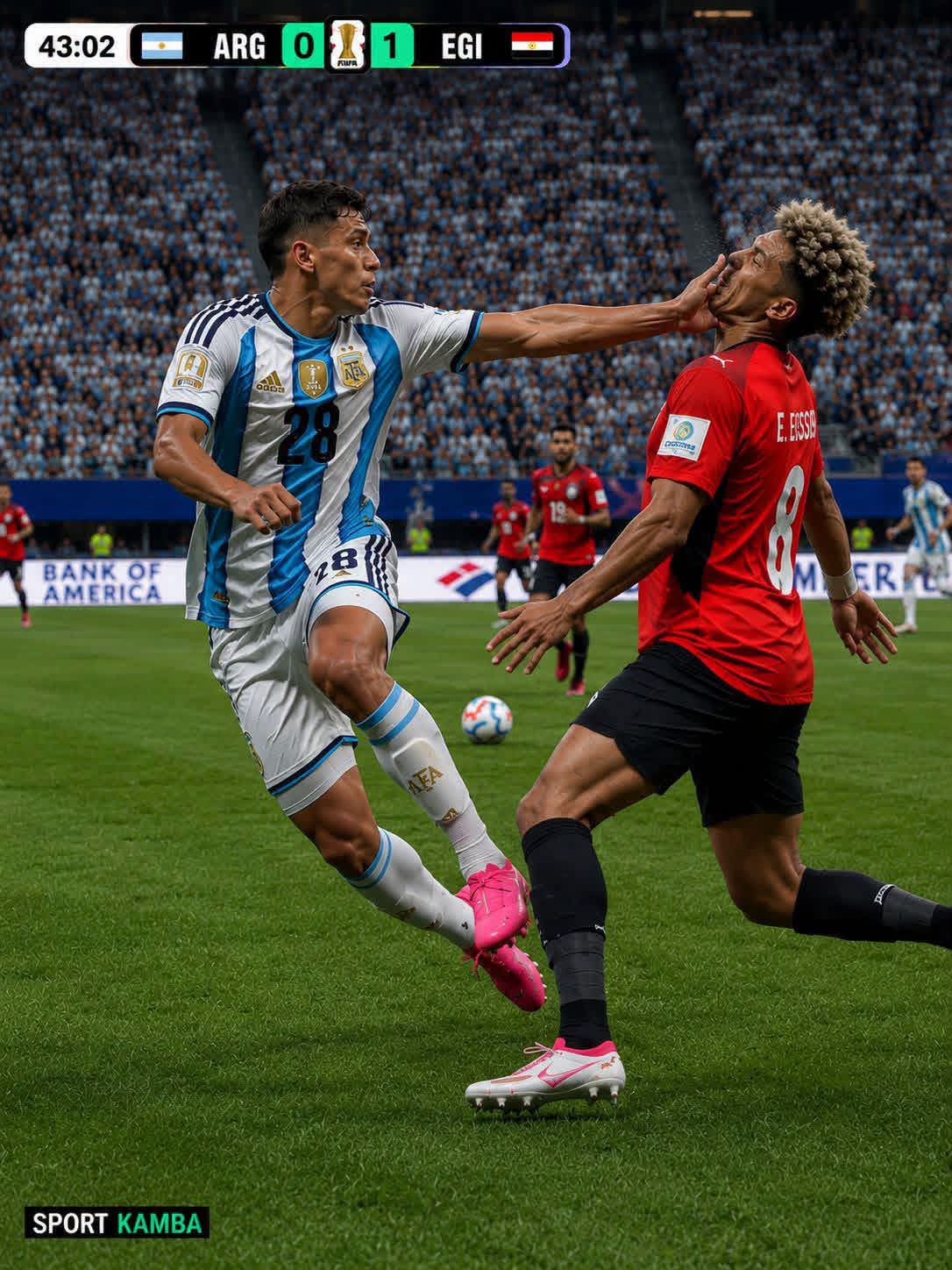
The Egyptian coach, Hossam Hassan, further alleged that he asked the referee to stop the match—using FIFA’s newly implemented anti-racism protocol—by crossing his arms above his head to signal racist abuse by an Argentine player, but the ref did not respond or halt play to investigate the incident.
In his press conference after the match, Hassan didn’t hold back, asserting that external interests strongly wanted to keep the defending champions and Lionel Messi in the tournament.
Accusations of bias in favour of Argentina because of Messi, and Portugal because of Ronaldo, have been persistent in this tournament. For instance, Messi should have been sent off in Argentina’s first match in the group stage against Algeria’s captain, Aissa Mandi, when his studs struck Mandi directly on the back of his calf and Achilles tendon, which many pundits considered a dangerous, red-card offence. In addition, Ronaldo’s three-game ban resulting from a World Cup qualifying match was partially suspended by FIFA—a decision which many saw as a blatant bias in favour of the biggest names to appear in the tournament.
A Painful Exit
Egypt has appeared in only four World Cup tournaments—1934, 1990, 2018, and 2026. In the first three of those appearances, they were either eliminated in the first round or at the group stage. I didn’t actually fancy them to go far in this tournament based on their earlier performances, which were largely average and uninspiring.
But they put up a spectacular display in their Round of 16 match against Argentina, breaking open the Argentine defence many times with brilliant counterattacking football and demonstrating much oomph and determination. When Egypt scored their second goal, I truly believed they had Argentina on the ropes and the game in the bag.
Although the Argentines passed the ball better than the Egyptians, they didn’t look like they would score. Messi was tightly marked—even missing a penalty—and the Argentinian wingers were fully contained by the Egyptian left and right backs. I just didn’t see where Argentina’s goals were going to come from.
But then the momentum of the match shifted incredibly in Argentina’s favour in the 79th minute when, trailing 2–0, they executed an absolute blitz to secure their spot in the quarter-finals after scoring three goals in 13 minutes. Cristian Romero’s powerful header in the 79th minute, Messi’s thunderbolt strike in the 83rd minute, and another header by Enzo Fernandez in the second minute of second-half stoppage time (90+2’) were all it took to destroy Egypt’s and Africa’s dream.
Seeing Messi break down in tears was profoundly shocking—a humbling reminder of how close Egypt came to ending a dynasty. It proved that even with a 2022 World Cup trophy and a mountain of titles to his name, the hunger to survive and win for his country remains entirely undiminished.
Losing a game that seemed done and dusted in the dying minutes is incredibly cruel and painful. It’s even more painful when one realises what Egypt was on the verge of achieving: apart from defeating the world champions in a knockout stage, Egypt’s victory would have sent them to their first-ever quarter-finals and marked the first time Africa would have had two quarter-finalists in a World Cup tournament.
Therefore, the frustrations of the players, coaching staff, and EFA administrators are clearly understandable. When Argentina scored the winning goal in the 93rd minute, the Egyptian bench exploded in fury over the unawarded penalty call on Salah that generated the counter-attack for the goal. Their goalkeeping coach, Saafan Elsaghir, had to be physically restrained by his colleagues as he tried to confront the referee. He was given a straight red and had to be escorted away from the technical area. The head coach, Hassan, and the goalkeeper also received yellow cards for intense protests and venting frustrations at the referee and linesmen.
The situation was still tense even after the final whistle. A heated exchange of words took place near the touchline between the Egyptian coach and Messi, requiring security and players from both sides to intervene and separate them.
Egypt have themselves to blame for squandering a two-goal lead
The Egyptian accusation of racism has not featured in discussions of the match among pundits. If, indeed, an Argentine player covered his mouth to racially abuse an Egyptian player, that is clearly a violation of the new anti-racism rule, which empowers the ref to give a straight red to the offending player. It’s not clear, however, whether the offended player or players protested on the field.
When the Argentine Gianluca Prestianni, who plays for Benfica, covered his mouth with his shirt and abused Vinícius Júnior—the incident that led to the new rule—in the Champions League match between Real Madrid and Benfica in Lisbon this year, Vinícius stopped playing and walked over to his team’s bench for a few minutes to draw attention to the incident because the referee hadn’t seen it. Play was stopped for ten minutes.
Setting the racism accusations aside, Egypt should focus on why they squandered a two-goal lead in the last fifteen minutes of the game, rather than blame the referee for losing the match. The question many football analysts are asking is: Why didn’t they slow the game down, put up a solid defensive block, and use all the tricks in the book—like time-wasting, aggressive marking without conceding too many fouls, and keeping the ball in the corner flag area—to frustrate their opponents?
These are the tricks that top European and South American teams use to win matches in the dying minutes when they have an advantage. African teams have to learn how to apply these tactics, which are very common in top-level European club football where most African players play.
It was also heartbreaking to see Senegal exit the tournament because of poor match management when they were two goals up against Belgium in their Round of 32 match with only ten minutes of normal time remaining.
The discussion among pundits around Egypt’s complaints has centred on two events. The first is the disallowed goal by Egypt. Egypt scored a goal, but it was ruled out for a foul by the referee and VAR because an Egyptian pulled an Argentine’s shirt in the buildup. Play was allowed to continue after the foul, allowing Egypt to score. The rules allow for play to continue if there’s doubt about a foul, which can then be checked once the action is completed. There was clearly a shirt-pull in the buildup, and the pundits I’ve listened to agree it was a foul.
Views are split on the second complaint. Salah was said to have been fouled in the Argentine penalty box, falling to the ground following a collision. The referee didn’t award a penalty; Argentina immediately mounted a counterattack and scored. While Salah clearly fell to the ground when he collided with an Argentine player, VAR didn’t think it warranted a penalty, as play was allowed to continue. We weren’t shown the incident in slow motion, so it’s difficult to tell whether it was a genuine foul or simply two players colliding and one diving for a penalty.
The fact that VAR didn’t ask the referee to stop the match and take a look on the monitor suggests the VAR officials were not convinced it was a foul. Egypt is reportedly alleging that VAR didn’t check the incident. It’s difficult to prove this. VAR usually alerts refs to take a relook on the monitor when it’s convinced there is a clear and obvious error after examining an incident on the monitors. Play continues if it’s not convinced the ref should re-examine a situation.
This is not to suggest that referees and VAR are irreproachable—the game is riddled with refereeing and VAR errors. But the big picture is this: African teams have to learn how to protect their leads when they’re clearly dominant—especially in the dying minutes of a match. The sloppy way Egypt went out of this World Cup, when they had a clear lead, is unacceptable.