By Marcel Okeke
All of a ‘sudden’, the first six months of year 2026 is gone, marked by the good, the bad, and the ugly. With respect to the Nigerian economy, there were a lot of activities—dictated by domestic and external policies, politics and headwinds. Indeed, more than at any other time in recent years, the first six months of 2026 was hallmarked by geopolitical tensions, a carryover of aspects of two years’ budget, a crude oil windfall, spikes in petrol prices, enactment and implementation of new tax laws, sustained tight monetary policy by the Central Bank of Nigeria (CBN), and resurgence of rising inflationary pressure.
As has become normal with the President Bola Ahmed Tinubu-led administration, the 2026 Appropriation Bill got late presentation and approval by the National Assembly. The N68.32 trillion budget titled “Budget of Consolidation, Renewed Resilience, and Shared Prosperity” was assented to only on April 17, 2026 by Mr. President—clearly after the first quarter of the year was gone. This final figure shows an upwards revision of over N9.09 trillion from the initial N58.47 trillion proposal by Mr. President.
The National Assembly also approved the extension of the capital component of the 2025 budget—shifting its implementation deadline from March 31 to June 30, 2026, “to allow ministries, departments and agencies (MDAs) to complete ongoing projects without fiscal interruption.” Incidentally, however, the June 30 deadline has again been shifted to September 30, 2026. Unfortunately, with so much outstanding in the 2024 and 2025 capital budgets, not much has happened yet about 2026 budget implementation.
But the most significant influence on the Nigerian economy in the first six months of 2026 remains the impact of the geopolitical tension in the Middle East that snowballed into a tripartite war involving the United States of America and Israel on one hand and Iran on the other. As the war got full blown at end-February 2026, the price of crude oil began a surge: rising rapidly from below US$70/barrel to close to US$120/barrel in a matter of weeks, before declining again to about US$70 by close the half-year.
Although Nigeria as a major oil producer/exporter, and member of the Organization of Petroleum Exporting Countries (OPEC) was reaping from the oil windfall, the country was also importing refined oil products whose prices have also risen in the international market. This scenario soon translated into sharp increases in the prices of petrol (Premium Motor Spirit, PMS), diesel, Kerosene, Jet-A1 (plane fuel), among others.
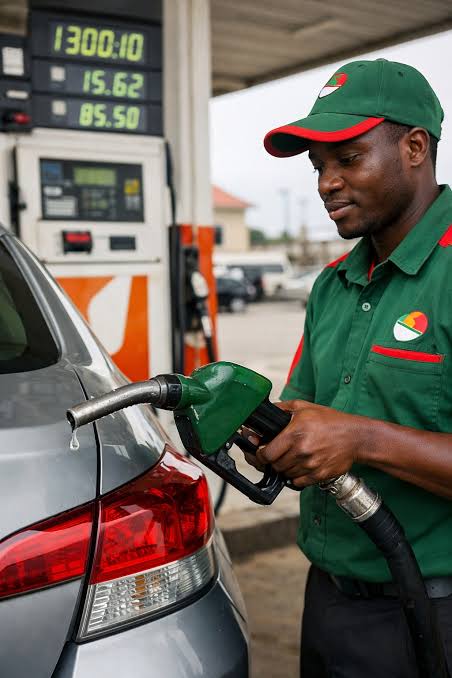
Specifically, the price of PMS that was at about N800/liter by end-February suddenly jumped to above N1000/liter; and almost hit N1400/liter in many locations across the country. Concomitantly, cost of transportation and logistics, house rents, prices of foodstuffs, among others, all shot up to dizzying heights. All these led to a sharp reversal of the inflationary trend, which had seen the Consumer Price Index (CPI) drop significantly from almost 35 per cent at end-2024 to about 15 per cent in January 2026.
CPI figures from the National Bureau of Statistics (NBS) for March, April and May 2026 clearly show that inflation rate has resumed an upward trajectory—with May figure standing at 15.93 per cent. The reverse scenario was the case with exchange rate of the local currency in the foreign exchange (FX) market. The exchange rate of the Naira against the dollar and other hard currencies was generally stable, especially in the official FX market funded and managed by the CBN.
Without a doubt, a major factor that supported the exchange rate stability was the build-up in Nigeria’s external reserves, which surpassed the US$50 billion threshold for the first time in several years. The oil windfall, remittances from Diaspora Nigerians, and huge inflows from foreign portfolio investment (FPI)—all boosted the stock of external reserves. Thus, the country’s external reserves hit a whopping US$51.29 at end-June, exceeding the CBN’s 2026 target and representing a 35.35 per cent year-on-year increase.
It needs be pointed out that the huge FPI inflow during the first half 2026 was as a result of the tight monetary stance of the CBN—which sustained a very high interest regime locally. For upwards of three years (but particularly during the period under review), the apex bank kept the benchmark interest rate in the economy—Monetary Policy Rate (MPR)—high; leaving it at 26.5 per cent.
With this backdrop, the apex bank offered highly attractive rates to patrons of its financial assets—Treasury Bills, Bonds, etc. This, in part accounted for the preponderant amount of FPI in the surging capital importation into the country during the first half of 2026. CBN and NBS data show that FPI accounted for more than 95 per cent of foreign capital inflows into the country during this period; with foreign direct investment (FDI) accounting for barely 2.5 per cent during the first quarter 2026.
The upshot of this scenario has been inaccessibility and unaffordability of credit facilities to a large chunk of businesses in the country. With the high MPR as guide, deposit money banks (DMBs) offered effective (lending) interest rates in the range of 30 to 37 per cent per annum. In this tight monetary environment, most businesses, especially the micro, small, and medium-scale enterprises (MSMES), got scorched—and not a few closed shops.
A key event in the Nigerian economy during the first half 2026 was the rounding up of banks’ capital raising in pursuit of higher new capital base ordered by the CBN. The exercise which commenced in March 2024 came to a close in March 2026, with about 33 banks (of varied sizes) breasting the tape successfully. The fresh capital raising by these banks from the Nigerian Exchange (NGX), and the influx of investors to the capital market to hedge against ravaging inflation and Naira depreciation, kept the stock market bullish almost all the time.
Although it is not yet ‘Uhuru’ for the Nigerian economy, the first half 2026 was largely a ‘mixed grill’—with some indicators pointing in the right direction. However, with the build-up to politicking and electioneering in the second half, towards the general elections early in 2027, the economy is gradually taking the backbench in the scheme of governance. The widespread insecurity in the land is yet also a drag on meaningful economic progress. It has indeed become an existential threat!
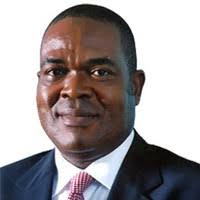
The author, Okeke, a practicing Economist, Business Strategist, Sustainability expert and ex-Chief Economist of Zenith Bank Plc, lives in Lekki, Lagos. He can be reached via: obioraokeke2000@yahoo.com (08033075697) SMS only