By Marcel Okeke
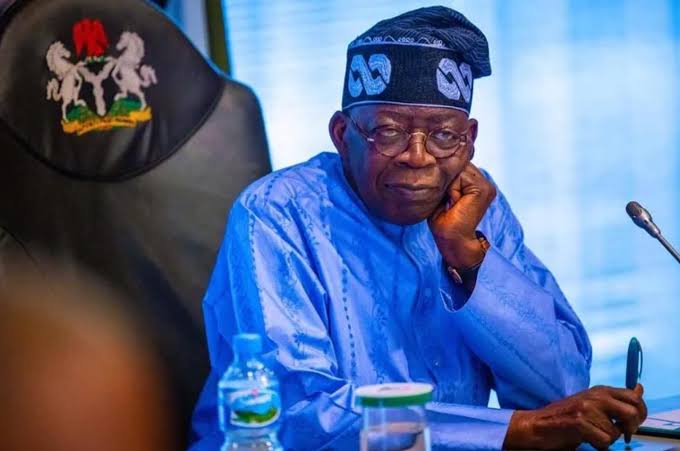
All of a sudden, a lot of promises are being made by the powers-that-be, assuring Nigerians of imminent (and urgent) alleviation of the lingering pains of astronomically high cost-of-living that has been their lot for a number of years now. The other day, President Bola Ahmed Tinubu, and the governors of the 36 states met, and announced to Nigerians that effective October 1, 2026 (66th Independence Anniversary Day), cost of transportation would be lowered across the land.
The President met with the governors under the aegis of the Nigeria Governors Forum (NGF), and they unanimously agreed to achieve reductions in transportation costs across Nigeria, through the expansion of the National Affordable CNG (Compressed Natural Gas) Transit Program. This meeting was held on August 27, 2026; two weeks earlier, President Tinubu had assured that Nigeria’s public refineries will work again, and “operate profitably, following a comprehensive structural and operational reset.”
Mr. President gave this assurance when he received the president of the Nigeria Union of Petroleum and Natural Gas Workers (NUPENG), Salimon Oladiti, and members of the union at the Aso Rock Villa, Abuja. Specifically addressing the concerns of the NUPENG delegation, President Tinubu said “the refineries you mentioned are going to come back to work. We are just building a very firm reset and structural reworking of the economy.”
President Tinubu continued: “Ordinary flame and smoke of a refinery does not mean it is working, until it is profitable and yields value for which it is built.” Still making more promises, Tinubu said in his October 1, 2026 address that “our priority is to bring down the cost of living; we will achieve this by lowering the cost of producing and moving the things Nigerians consume.”
In the address titled “From Reforms to Prosperity,” Tinubu said “We have passed through our own Red Sea…the Promised Land before us is a Nigeria of abundance and opportunity; a nation where prosperity is broadly shared.” He further promised a Nigeria where: “factories have reliable power; businesses can obtain credit; and young people can find productive work.”
Without a doubt, most of these promises are a rehash of many aspects of Tinubu’s manifestoes during the build-up to 2022 Presidential elections. They all go to show that a lot of hopes or expectations of Nigerians as Tinubu’s four-year first-term runs to its twilight have remained forlorn. A few examples of the Tinubu promises exactly this same time (October 2022) four years ago would underpin the trend.
In an 80-page policy document that highlights Tinubu’s eight-point agenda, he had promised to “build a Nigeria, especially for our youth, where sufficient jobs with decent wages create a better life.” Tinubu promised that Nigeria would “manufacture, create, and invent more of the goods and services we require. Nigeria shall be known as a nation of creators, not just of consumers.”
Some more of Tinubu’s promises in the manifesto include that under his watch Nigeria shall “continue assisting our ever-toiling farmers, through enlightened agricultural policy that promotes productivity and assures decent incomes, so that farmers can support their families and feed the nation.” He also promised to “Train and give economic opportunity to the poorest and most vulnerable among us. We seek a Nigeria where no parent is compelled to send a child to bed hungry, worried whether tomorrow shall bring food.”
Tinubu also promised to “Generate, transmit and distribute sufficient, affordable electricity to give our people the requisite power to enlighten their lives, their homes, and their very dreams”; and to “Make basic healthcare, education, and housing accessible and affordable for all.” And most importantly, Tinubu promised to “Establish a bold and assertive policy that will create a strong yet adaptive national security architecture and action to obliterate terror, kidnapping, banditry, and all other forms of violent extremism from the face of our nation.”
Even a cursory look at this plethora of promises would show that hopes of Nigerians hinged on them are either fully dashed or yet remain hanging—four years after the “renewed hope” was written. No doubt every opportunity for President Tinubu to speak these days is turned into a fresh manifesto-making chance, or to do a rehash of the ‘old’ promises. Mr. President speaks as someone in panic or desperate mode, struggling with the repetition of almost all he had promised from inception.
This accounts for why he literally summoned the 36 state governors (in August) to force down their throats emergency measures to alleviate crisis in the transportation sector. But Mr. President’s deadline (October 1) has come and gone, without cost of transportation dropping even in the major towns and cities across the country. The CNG plants and lorries upon which the crash in transport fares was hinged are scattered in a few places across the country—too few to make any impact!
Contrary to President Tinubu’s promise to “generate, transmit and distribute sufficient, affordable electricity…,” the power situation in Nigeria has deteriorated to such an extent that the seat of power—Aso Rock Villa—has had to resort to using solar energy. The national power grid collapses almost every other day! Nigeria, unfortunately, still carries the unedifying epithet of a ‘generator economy’, meaning that every economic agent relies on (privately-owned) generating set for their daily engagements.
In the area of agriculture, the farmers President Tinubu promised to package and support so they “can support their families and feed the nation,” are rather facing existential threat. Farmers in all the country’s ‘food basket’ regions have almost completely been exterminated or driven out of their ancestral farmlands by terrorists and bandits. They now sojourn in internally displaced peoples (IDPs) camps scattered across the country.
Consequent upon this is a lingering and very painful food crisis. This reflects in the ever-high and soaring food inflation, as always shown by the consumer price index (CPI) computed by the National Bureau of Statistics (NBS). Pervasive hunger, and impoverishment have since remained the lot of millions of Nigerians—even as Mr. President believes he has crossed the ‘Red Sea,’ and cruising with the people to the ‘Promised Land.’
With the 2027 presidential elections around the corner, this is really a season of promises, manifestoes, and forlorn hope for the people!
The author, Dr. Okeke, a practicing Economist, Business Strategist, Sustainability expert and ex-Chief Economist of Zenith Bank Plc, lives in Lekki, Lagos. He can be reached via: obioraokeke2000@yahoo.com (08033075697) SMS only
The author, Okeke, a practicing Economist, Business Strategist, Sustainability expert and ex-Chief Economist of Zenith Bank Plc, lives in Lekki, Lagos. He can be reached via: obioraokeke2000@yahoo.com (08033075697) SMS only