Toba Alabi
Since the Russian invasion of Ukraine on 24 February 2022, I have written more than fifteen articles examining different dimensions of the war. Expectedly, scholars, strategists, political scientists and international relations experts have interrogated its causes, trajectory and likely consequences. Our perspectives on the conflict are inevitably diverse and, in some cases, fundamentally opposed. This diversity is, indeed, one of the enduring virtues of scholarship, because intellectual progress is often achieved through the contestation of ideas and the critical examination of competing explanations.
However, at this historical juncture, I believe that two fundamental questions should occupy the attention of scholars and policymakers. The first concerns the lessons that can be learned from the war, particularly in relation to strategy, military power, international alliances and the changing character of warfare. The second concerns the more urgent question of how the war can be brought to an end in order to reduce the enormous human suffering and prevent the conflict from developing into a wider confrontation between nuclear powers.
Lessons from the War
The First Lesson: The Importance of Strategic Calculation
The first lesson is that before embarking upon an act of aggression or invading another sovereign state, a political and military leader must undertake a comprehensive assessment of the likely costs, risks and consequences of war. The decision to go to war requires not merely an assessment of military capabilities but also an understanding of the adversary’s political will, societal resilience, alliances, geography, logistics, economic capacity and potential external support.
Classical strategic thinkers such as Sun Tzu and Carl von Clausewitz devoted considerable attention to the relationship between political objectives and military means. Clausewitz, in particular, emphasized the political character of war and the importance of understanding the interaction between military operations and political objectives. The experiences of the United States in Vietnam and the Iraqi invasion of Kuwait in 1990 provide important reminders that military superiority does not automatically translate into the achievement of political objectives. The United States ultimately withdrew from Vietnam without achieving its principal political objectives, while Iraq suffered a decisive military defeat after its invasion of Kuwait.
The Russian invasion of Ukraine provides another important illustration of the consequences of strategic miscalculation.
Whatever assumptions informed President Vladimir Putin’s decision to invade Ukraine, the subsequent course of the conflict demonstrated that Russia could not achieve a rapid and decisive victory. Ukraine demonstrated a considerable willingness to resist, while the United States, NATO and the European Union provided extensive military, economic and political support to Kyiv.
Russia’s previous military interventions in Georgia, Chechnya and Syria may have contributed to an expectation that military pressure could produce relatively rapid political results.
Ukraine, however, presented a fundamentally different strategic environment. Its population demonstrated considerable determination to resist, while its geographical position in Europe meant that the conflict had profound implications for the security architecture of the European continent.
The central lesson is therefore clear: military power must always be evaluated within its wider political and strategic context. An apparently superior military force may encounter unexpected difficulties when it confronts a determined population supported by powerful external allies.
The Second Lesson: War Rarely Develops According to Initial Expectations
A second lesson is that wars frequently develop in ways that are fundamentally different from the expectations of those who initiate them. The initial Russian objective appears to have envisaged a relatively rapid campaign that would compel the Ukrainian government to accept Moscow’s demands. The failure to achieve such an outcome transformed the conflict into a prolonged war of attrition.
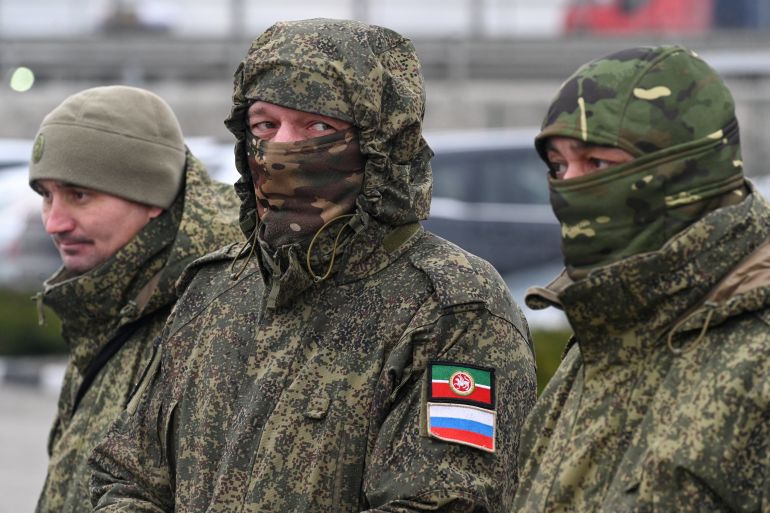
By the time Russia announced a partial mobilisation of approximately 300,000 reservists in September 2022, the decision demonstrated the extent to which the war had become more demanding than initially anticipated. Russia had suffered significant military casualties, while Ukrainian resistance, supported by Western military assistance, had prevented Moscow from achieving its original strategic objectives.
The Ukrainian counteroffensive and the recovery of territories previously occupied by Russian forces further demonstrated the fluid nature of the battlefield. The Russian decision to declare the annexation of four Ukrainian regions in September 2022 did not resolve the territorial question. Instead, it added another layer of political and legal complexity to an already complicated conflict.
The broader lesson is that military success cannot be measured simply by the territory captured at a particular moment. The sustainability of military operations, the capacity to reinforce troops, the morale of combatants, the resilience of the population and the ability to sustain international support are equally important components of strategic power.
The Third Lesson: Nuclear Weapons Remain a Major Deterrent
A third and perhaps more disturbing lesson concerns the continuing importance of nuclear weapons in international security. The war in Ukraine has demonstrated that nuclear deterrence remains a fundamental feature of the contemporary international system.
Russia possesses one of the world’s largest nuclear arsenals, while the United States, Britain and France are also nuclear powers. Ukraine, by contrast, surrendered the nuclear weapons inherited from the Soviet Union after its independence. The existence of nuclear weapons has placed a significant constraint on the willingness of NATO to intervene directly in the war.
The conflict has therefore largely remained a confrontation in which Western states provide Ukraine with weapons, intelligence, training and economic assistance without formally entering the war as combatants against Russia.
This distinction is strategically significant. A direct military confrontation between NATO and Russia could rapidly create circumstances in which the risk of nuclear escalation would become considerably greater.
The danger cannot therefore be dismissed. Any conflict involving a major nuclear power carries consequences that extend beyond the immediate battlefield.
The possibility, however remote, of escalation involving nuclear weapons should compel the international community to exercise the greatest possible restraint.
The ultimate lesson is that nuclear weapons continue to perform a paradoxical function in international politics. They deter direct war between major powers, yet their existence also means that a conventional conflict involving nuclear states carries potentially catastrophic consequences for humanity.
The Fourth Lesson: War Has Global Economic Consequences
The fourth lesson concerns the global economic consequences of war. Although Ukraine and Russia have borne the greatest direct costs of the conflict, its consequences have extended far beyond their borders. Disruptions to agricultural production, energy supplies, international trade, shipping and commodity markets have affected economies across Europe, Africa, Asia and other parts of the world.
Russia and Ukraine have traditionally been important suppliers of energy, food and agricultural commodities to international markets. The disruption of these supplies contributed to concerns about food security, inflation and energy prices, particularly in developing countries that depend heavily on imported food and energy.
Africa has been particularly vulnerable to these disruptions because many African countries are dependent on imported wheat, fertilizers and other agricultural inputs. The conflict therefore illustrates an important characteristic of contemporary international relations: no major war remains entirely confined to the territory where it occurs. Economic interdependence has created a world in which conflict in one region can generate significant consequences in distant parts of the globe.
One likely long term consequence is the restructuring of Europe’s energy relationship with Russia. The war has accelerated European efforts to diversify energy supplies and reduce dependence on Russian oil and natural gas.
Thus, even after the cessation of hostilities, the economic relationship between Russia and many European states may not return to its pre war configuration.
The Fifth Lesson: NATO Has Regained Strategic Relevance
The fifth lesson concerns the continuing importance of the North Atlantic Treaty Organization. Prior to the Russian invasion of Ukraine, NATO faced considerable internal debate about its strategic purpose, burden sharing and future direction.
The war, however, revitalised the alliance and strengthened the argument that NATO remains a central institution of European security.
The Russian invasion has encouraged greater defence cooperation among NATO members and has contributed to the expansion of the alliance. Finland and Sweden, for example, subsequently abandoned longstanding policies of military non alignment and sought membership of NATO, reflecting the extent to which perceptions of the European security environment had changed.
The conflict has therefore demonstrated that military alliances remain important instruments of international security. At the same time, it has reinforced the argument that countries outside the major power blocs must develop stronger political institutions, economic resilience and strategic autonomy.
For developing countries, particularly in Africa, the lesson should not simply be to align with one major power or another. Rather, African states should strengthen their collective capacity, diversify their international partnerships and formulate pragmatic economic and security policies capable of protecting their national interests in an increasingly competitive international system.
The Sixth Lesson: The Political Future of Vladimir Putin
The sixth lesson concerns the political consequences of prolonged warfare for the leadership of Vladimir Putin and the future political direction of Russia.
Putin has dominated Russian politics for more than two decades. His political system has been characterised by highly centralised executive power and restrictions on political opposition. The continuation and eventual outcome of the war will inevitably influence his political standing, although predicting the future of any political leader during an ongoing conflict is inherently difficult.
For political leaders who initiate major wars, the termination of the conflict can become as important politically as the decision to begin it. A leader who presents a war as necessary for national security or national greatness may find it difficult to accept an outcome that can be interpreted domestically as defeat or humiliation. This creates what scholars of international conflict sometimes describe as a commitment problem: the political leadership may become increasingly reluctant to compromise because the domestic political costs of doing so appear too high.
The attack that damaged the Kerch Strait Bridge linking Russia and Crimea in October 2022 was particularly significant symbolically because the bridge had become an important representation of Russia’s control over Crimea. The incident demonstrated that the war had the potential to reach targets that were politically and strategically significant to Russia.
Ultimately, however, Putin’s political future will depend upon several variables, including the military trajectory of the war, the Russian economy, elite cohesion, public opinion, Western sanctions and the ability of the Russian state to sustain its war effort. It would therefore be premature to predict his political demise solely on the basis of battlefield setbacks.
How Can the War Be Ended?
The more difficult question is how the war can ultimately be brought to an end. Both Russia and Ukraine have powerful reasons for continuing the struggle. Ukraine seeks to defend its territorial integrity and sovereignty, while Russia seeks to protect what it considers its strategic interests and the territorial gains made during the conflict.
The longer the war continues, however, the greater the human, economic and strategic costs become. Thousands of lives have already been lost, millions of people have been displaced and enormous physical infrastructure has been destroyed. The continuation of the conflict also increases the possibility of miscalculation and unintended escalation involving Russia and NATO.
The first requirement for ending the war is therefore the recognition by all parties that a military solution may not provide a sustainable answer to the underlying political problems.
Even when one side achieves significant battlefield advantages, the political consequences of a prolonged conflict can remain unresolved.
There is consequently a need for sustained diplomacy involving not only Russia and Ukraine but also influential external powers. Turkey has already demonstrated its potential usefulness as a diplomatic intermediary, while China and India possess considerable political and economic influence that could potentially contribute to a broader diplomatic initiative. Other states and international organisations could also play supporting roles.
A successful peace process would have to address several difficult questions. These would include territorial disputes, Ukraine’s security guarantees, the future relationship between Ukraine and NATO, sanctions against Russia, the reconstruction of Ukraine, the treatment of displaced populations and mechanisms for preventing a recurrence of the conflict.
Such negotiations would undoubtedly be difficult. Nevertheless, diplomacy becomes most important precisely when the positions of the belligerents appear irreconcilable. The objective should not necessarily be to produce an immediate comprehensive settlement but to establish a framework through which the parties can progressively reduce hostilities, negotiate confidence building measures and ultimately arrive at an acceptable political settlement.
Conclusion
The Russo Ukrainian War is one of the most consequential geopolitical conflicts of the twenty first century. It has demonstrated the continuing relevance of conventional military power while simultaneously exposing the enormous limitations of military force in achieving political objectives. It has also demonstrated the enduring importance of nuclear deterrence, military alliances, economic interdependence and strategic calculation.
Perhaps the most important lesson is that there are no simple victories in contemporary warfare.
A state may possess enormous military capabilities and yet discover that political objectives cannot easily be imposed upon a determined adversary. Equally, military resistance may succeed in preventing defeat without necessarily producing an easy path to peace.
The international community must therefore remain focused on diplomacy. The objective should be to prevent the conflict from evolving into a wider confrontation between Russia and NATO and, above all, to eliminate the possibility of nuclear escalation.
Humanity has already witnessed the catastrophic consequences of major wars. In the nuclear age, the responsibility of political leaders is even greater. The world cannot afford a conflict that develops beyond the capacity of states to control it. The ultimate objective must therefore be a negotiated peace that recognises the sovereignty and security of states while addressing the legitimate security concerns that contributed to the conflict.
The alternative is too frightening to contemplate: a prolonged war of attrition, a widening confrontation between major powers and the possibility of nuclear escalation. At a time when the world is already confronted by numerous security challenges, preventing such an outcome should be the collective responsibility of the international community.
Toba Alabi is Professor of Political Science, Defence and Security Studies.
08036787582