Isaac Samuel
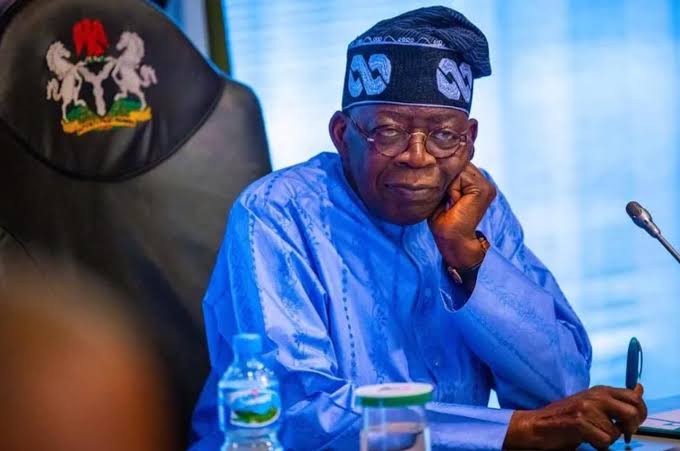
The Presidency has dismissed reports suggesting that President Bola Ahmed Tinubu is facing a criminal case in the United States, saying the ongoing litigation before a federal court in Washington, D.C., is a civil dispute over access to government records.
Special Adviser to the President on Information and Strategy, Bayo Onanuga, in a statement on Thursday said the case before the United States District Court for the District of Columbia concerns requests made under the US Freedom of Information Act (FOIA) and does not amount to a criminal charge or finding against Tinubu.
The clarification followed renewed public attention to the case involving American transparency activist Aaron Greenspan, who has sought records from several US government agencies relating to Tinubu.
The case, Greenspan v. Executive Office for U.S. Attorneys et al., Civil Action No. 23-1816, was filed in 2023.
Court records show that Greenspan sought documents from agencies including the Federal Bureau of Investigation (FBI), Drug Enforcement Administration (DEA), Central Intelligence Agency (CIA), Internal Revenue Service (IRS), Department of State and Executive Office for US Attorneys.
The litigation has its roots in FOIA requests made by Greenspan in 2022 and concerns records that he says relate to a federal investigation involving Tinubu and another individual, Abiodun Agbele, in the early 1990s.
According to the Presidency, Tinubu was subsequently permitted by the court to participate in the proceedings as an intervenor.
It said some of the US agencies initially relied on what is known as the “Glomar response” — a position under US law that allows an agency to refuse to confirm or deny whether responsive records exist where acknowledging their existence could itself cause harm.
The Presidency said the court subsequently granted summary judgment in favour of the CIA, Executive Office for US Attorneys, Department of State, Department of Treasury and IRS, removing them from aspects of the proceedings.
The remaining dispute involves records held by the FBI and DEA and whether portions withheld or redacted by the agencies should be released.
The Presidency said the two agencies have produced 399 pages of records, with portions redacted pursuant to exemptions contained in US law.
It said the exemptions cited by the agencies include protections for grand jury material and other information covered by statute; attorney-client and attorney work-product privileges; law-enforcement records; personal privacy; confidential sources; and investigative techniques.
Tinubu, the Presidency added, had also asserted his privacy rights under FOIA Exemption 7(C), on the advice of his lawyers.
“The release or withholding of records under FOIA does not, by itself, establish criminal liability,” Onanuga said.
He stressed that the dispute concerns access to government records and the application of statutory exemptions.
The Presidency said the plaintiff has until September 11, 2026, to file opposition and reply to the processes filed by the defendants and the presidential intervenor, while the FBI, DEA and Tinubu have until September 18 to respond to any processes filed by Greenspan.
The controversy has brought back into public discussion allegations surrounding Tinubu’s activities in the United States in the early 1990s.
Court records from the FOIA litigation show that Greenspan’s requests were linked to documents concerning an alleged federal investigation into an international drug-trafficking and money-laundering operation.
A 2025 ruling by Judge Beryl A. Howell said the litigation concerned requests for criminal investigative documents relating to Tinubu and Agbele.
In an April 2025 ruling, Howell ordered aspects of the agencies’ refusal to disclose records to be reconsidered, finding, among other things, that previous government disclosures had undermined the FBI and DEA’s ability to rely on a blanket Glomar response for certain investigative records.
The ruling did not convict Tinubu or determine that he committed drug-trafficking offences.
The latest phase of the dispute has focused on how much of the records already identified by the FBI and DEA can legally be disclosed.
Recent reports said the FBI had also been allowed to submit sensitive material to the court privately for an in-camera review, while Tinubu and the US government opposed disclosure of portions of the records.
The controversy has coincided with renewed circulation of a February 4, 2003 letter from the US Consulate in Lagos to then Inspector-General of Police, Tafa Balogun.
Contemporary reports and later references to the document say the letter stated that an FBI National Crime Information Center check conducted following a Nigerian police inquiry returned no records of criminal arrests, wants or warrants for Tinubu. The letter identified Tinubu’s date of birth as March 29, 1952.
The 2003 correspondence has subsequently been cited by Tinubu’s supporters as evidence that he had no criminal record in the United States. However, it relates to an FBI records check conducted at that time and is distinct from the present FOIA litigation over records held by US agencies.
The Presidency, in its Thursday statement, sought to draw a similar distinction, arguing that the existence of government records or a dispute over their disclosure should not be interpreted as evidence of criminal liability.
It also rejected recent claims by Washington-based lobbyist Karl Von Batten-Montague-York concerning the proceedings, saying neither he nor his client, former Vice President Atiku Abubakar, is a party to the case.
“The litigation is a civil records-disclosure dispute under FOIA. It does not constitute a criminal charge, trial, or judicial finding against President Tinubu,” Onanuga said.
He urged Nigerian media organisations and the public to distinguish between the court proceedings and political commentary surrounding the case.
The case remains before Judge Howell, who is expected to determine the legality of the disputed redactions and withholdings based on the applicable US law and arguments presented by the parties.