By Babafemi Ojudu
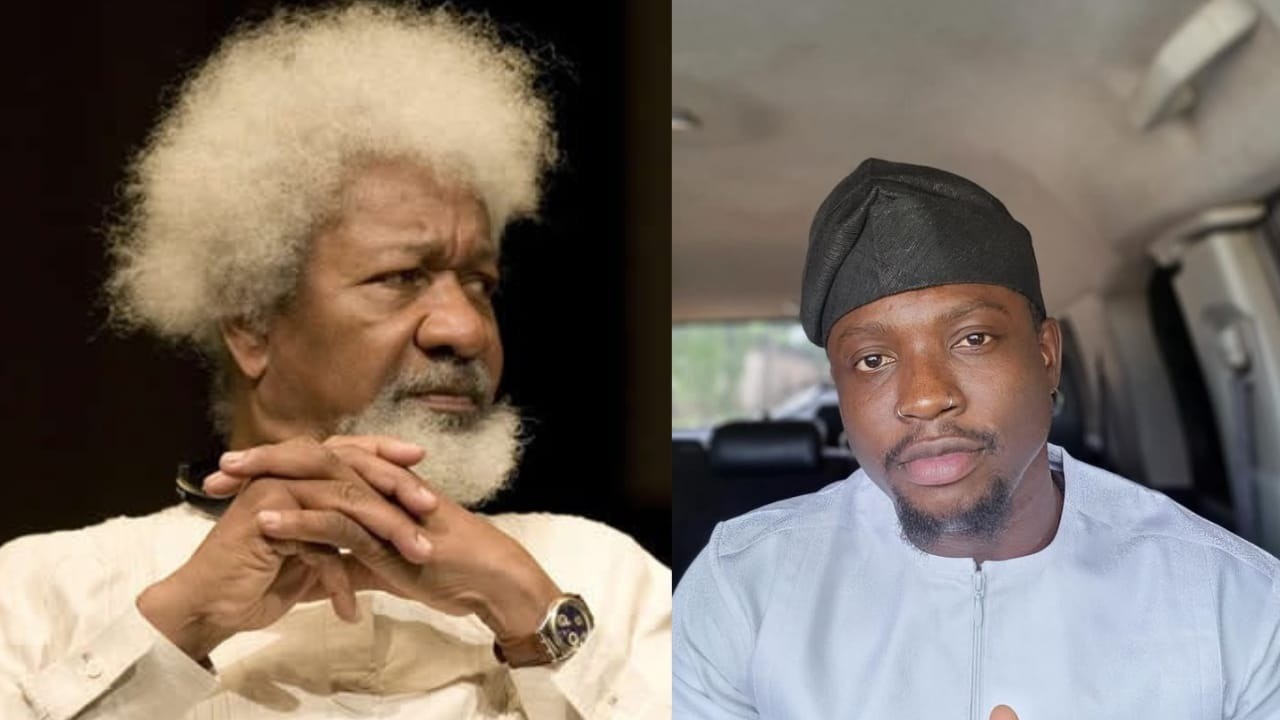
I commend the Nigerian Bar Association for inviting Martins Vincent Otse, popularly known as VeryDarkMan, to participate in its Annual General Conference in Port Harcourt.
Here is a young man who commands the attention and following of millions of Nigerians, particularly young people, in a deeply troubled country. Whether one admires him, dislikes him or disapproves of his methods, he has become an important voice in our national conversation. Surely, one of Nigeria’s foremost professional bodies should be interested in understanding the phenomenon he represents.
Is the objection that he is unconventional? That he does not dress like the typical conference speaker? That he speaks in a manner unfamiliar to the courtroom or lecture hall? Or is it that he approaches issues in ways that cannot be found in a textbook?
Institutions must be careful not to confuse polish with relevance, academic credentials with social influence, or respectability with wisdom. A person may not speak the language of the elite and yet articulate the anger, frustration and aspirations of millions. Indeed, one reason for the widening gulf between our institutions and our young people is that the establishment too often listens only to people who look, dress and speak like members of the establishment.
VeryDarkMan may be abrasive. He may sometimes be excessive. He may occasionally get his facts or methods wrong. Those are legitimate grounds for criticism and interrogation. But they are not reasons to pretend that he does not exist or that his influence is insignificant.
An invitation is not an endorsement. It is not an honorary law degree, nor is it an admission into the rank of Senior Advocates of Nigeria. To invite someone to speak is simply to create an opportunity to hear him, question him, challenge him and understand the constituency whose attention he commands.
What, after all, is the legal profession about if not the disciplined hearing of different sides? Lawyers defend the principle that even the most unpopular person deserves to be heard. It would therefore be strange if the Bar became afraid of listening to an unconventional citizen because his appearance, language or manners do not conform to elite expectations.
The NBA conference should not be merely a gathering at which distinguished lawyers speak to other distinguished lawyers in a vocabulary familiar only to themselves. The law does not operate in a vacuum. It interacts daily with public anger, social media, citizen journalism, misinformation, defamation, police abuse, mob justice, institutional failure and the restless energies of young people. VeryDarkMan sits, sometimes uncomfortably, at the intersection of many of these issues.
His appearance therefore presented lawyers with an opportunity to interrogate several important questions. Why do millions of young Nigerians trust social-media activists more than established institutions? Why do citizens increasingly take their grievances to online personalities instead of the police, courts, regulators or traditional media? What does his popularity tell us about the collapse of public confidence in official channels of redress? Where should the law draw the line between citizen advocacy, defamation, harassment and the public interest?
What happened at the conference itself vindicated the NBA’s decision to invite him.
When VeryDarkMan declared that if anyone attacked him, he would kill the person, the moderator immediately called him to order. He was firmly reminded that grievance, anger or even a sense of being wronged does not give any citizen a licence to take another person’s life.
The law does not permit an individual to become complainant, judge and executioner in his own cause. Except within the narrow and strictly defined limits of lawful self-defence, no citizen may justify killing another. Even the death penalty can be imposed only by a court of competent jurisdiction after due process and carried out strictly in accordance with the law.
Similarly, when he asserted that all members of the military were corrupt, he was corrected and made to understand the danger of such sweeping generalisations. Some military personnel may commit acts of corruption, just as some lawyers, journalists, politicians and members of every other profession may be corrupt. Those individuals should be identified, exposed and prosecuted where evidence exists. But it is unjust to condemn an entire institution and every person serving in it with one broad brush.
Those exchanges demonstrated precisely why engagement is preferable to exclusion. Had the NBA refused to invite VeryDarkMan, he might have continued making such declarations before millions of followers without the benefit of immediate and informed correction. At the conference, however, his assertions were tested against the law, challenged by knowledgeable professionals and corrected in public.
That is civic education in action.
The lawyers heard directly from a powerful social-media voice, while VeryDarkMan and the millions who follow him were exposed to the discipline, restraints and protections of the law. The dialogue worked in both directions. He was not invited to teach lawyers the law; he was invited to share the experiences and attitudes prevalent among a significant segment of society. In turn, the lawyers had an opportunity to demonstrate what the law permits, what it forbids and why those boundaries matter.
This also answers those who believe that inviting a controversial figure amounts to surrendering a platform to him. A serious institution does not invite people merely to applaud or decorate them. It invites them so that their ideas can be examined, their experiences understood and, where necessary, their excesses corrected.
Serious institutions elsewhere have long understood this. The United Nations invited the teenage climate activist Greta Thunberg—who held no public office and possessed no conventional diplomatic credentials—to address world leaders because she had mobilised a generation around climate change. Her youth, blunt language and unconventional methods did not disqualify her. They were among the reasons the institution needed to hear her.
The Oxford Union has similarly built its reputation by inviting influential and sometimes controversial figures from outside conventional academic and political circles. Its purpose is not merely to provide a platform for approved opinions. It also enables members to question and challenge people with whom they disagree. The underlying principle is simple: engagement is not approval, and exposure is not endorsement.
Even the American Bar Association has brought actors, artists, activists and people with lived experience into its programmes when their contributions illuminate questions of justice. This recognises that justice cannot be fully understood through statutes, precedents and legal doctrine alone. It must also be examined through culture, experience and the realities of the people whom the law is supposed to serve.
I sometimes wish an earlier generation of Nigerian lawyers and other professionals had invited Fela Anikulapo-Kuti to address them while he was alive. Perhaps the elite would have gained a better understanding of the man, his rebellion and the philosophy behind his music.
Many dismissed Fela because of his appearance, lifestyle, language and unconventional behaviour. Yet beneath that exterior was a fierce critique of military dictatorship, police brutality, corruption, colonial mentality and the abuse of power. Fela was not always right, and one did not have to approve of every aspect of his life to recognise the questions he forced Nigeria to confront.
Unfortunately, our society often waits until its dissenters are dead before discovering that beneath their rough language was a message deserving attention. We reject them when they are alive, sanitise them when they are dead and then quote them at conferences they would probably not have been invited to attend in their lifetime.
The same principle applies here. One need not canonise VeryDarkMan. One need not endorse everything he has said or done. But a society that refuses to listen to influential voices because they are rough around the edges learns nothing about the currents moving beneath its feet.
Far from embarrassing the NBA, the exchanges at the conference showed the Association performing one of its most important public duties: confronting popular but dangerous assumptions with legal knowledge.
VeryDarkMan came with the language of the street and the instincts of an activist. The lawyers responded with the restraints of law, the demands of evidence and the discipline of reason. Each side was exposed to the world of the other.
The NBA did not diminish itself by inviting him. On the contrary, it demonstrated the confidence of an institution willing to step outside its professional enclosure and engage the untidy realities of contemporary Nigeria.
Let unconventional voices speak. Let lawyers listen, interrogate and challenge them. And let those voices, in turn, listen to the lawyers.
That is how a living society conducts dialogue. That is how citizens learn. That is how institutions remain relevant.
Senator Ojudu is a veteran journalist

Babafemi Ojudu, CON, is a journalist, political scientist, former Senator, and former Special Adviser to the President on Political Matters.