By Yusuf Bangura
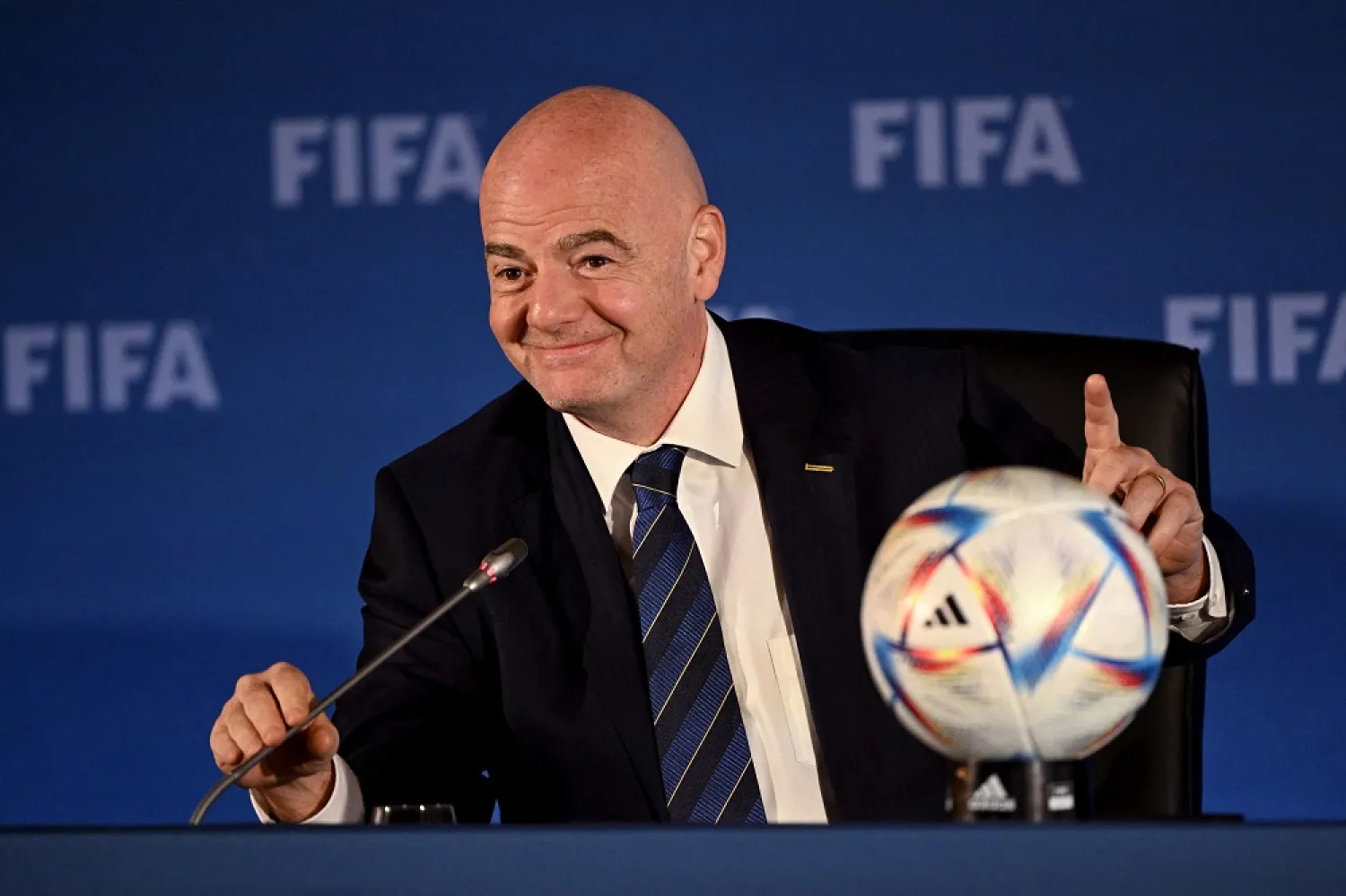
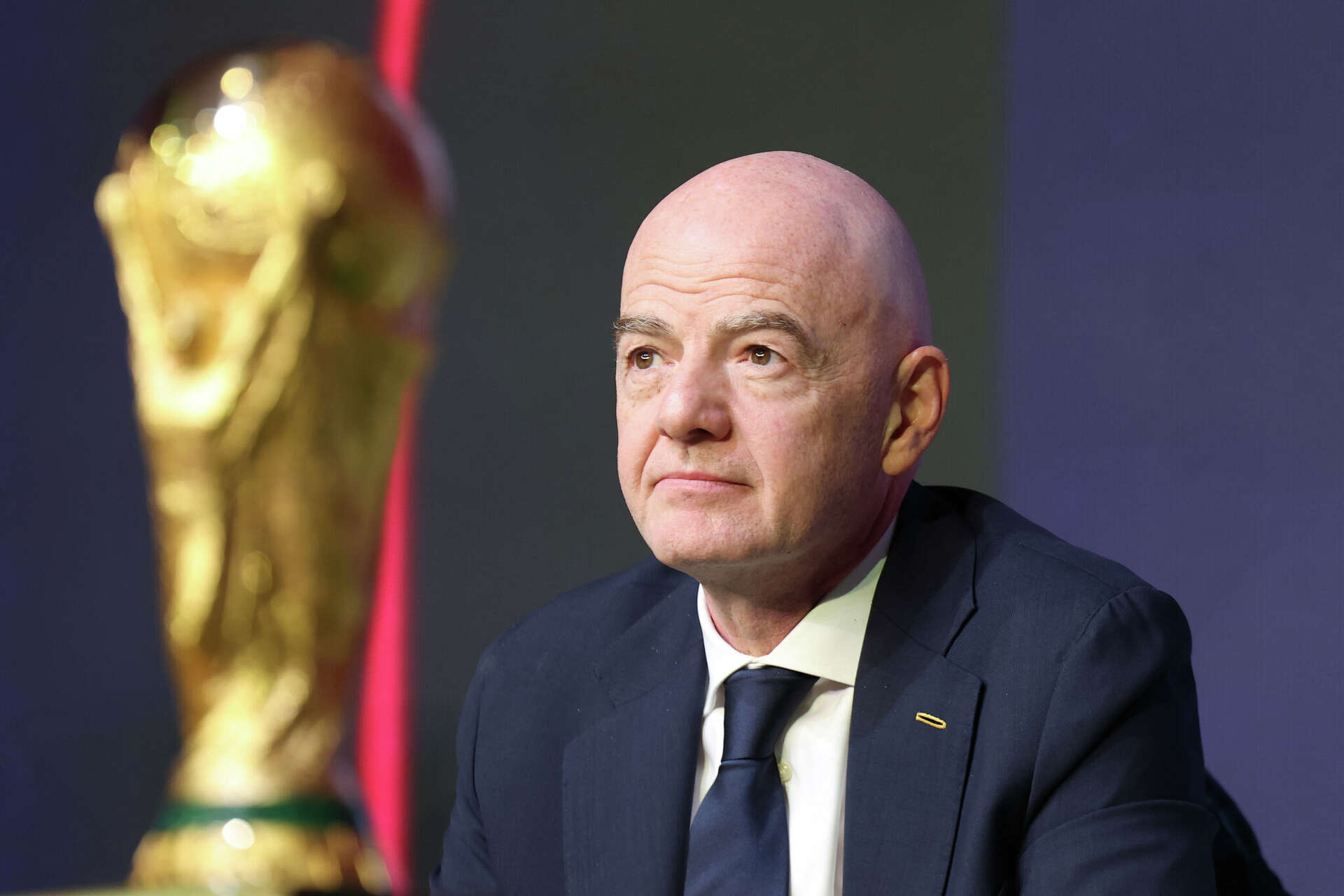
FIFA President Gianni Infantino has opened a can of worms that may poison—and ultimately kill—the World Cup as we know it. He has proposed a plan to the association’s 211 member federations that will fundamentally change how the World Cup is organised.
Under his proposal, FIFA would offer private capital stakes in a subsidiary solely responsible for running the commercial side of future tournaments. But UEFA, one of the six confederations, would have none of it. In a statement released on Thursday after its emergency meeting, it strongly and unequivocally condemned the move, declaring that “the World Cup is not for sale” and “no part of it should ever be surrendered to private investors.” It accused Infantino of not only “a profound failure of leadership, but an abdication of FIFA’s duty as the custodian of world football.” Its 55 member associations voted unanimously to boycott all FIFA tournaments if Infantino proceeds with his plan.
CONCACAF (North, Central America and Caribbean) and the Asian Football Confederation (AFC) have also criticised the proposal, although they haven’t gone as far as threatening to boycott FIFA tournaments. Both slammed FIFA for its lack of transparency in developing the proposal, and CONCACAF also questioned why FIFA would need private equity investment immediately following the “most profitable FIFA World Cup in history”.
FIFA, it should be underscored, is an international non-governmental organisation under Swiss law. This means it has no private shareholders who are paid dividends. Instead, it must reinvest its revenues back into the game through its 211 members, primarily by building pitches, funding youth academies, and supporting the operational costs of smaller national teams.
The World Cup is Highly Profitable
Why has Infantino decided to sell the game to private investors when it is doing so well financially? That financial success may be precisely why investors want in. The 2026 World Cup generated more revenue for FIFA than any tournament in its history—roughly $11 billion from the event alone, driving FIFA’s projected total for the 2023–2026 cycle to $13 billion.
This surge was largely driven by sky-high ticket prices and matchday hospitality, which jumped from around $950 million for Qatar 2022 to over $3 billion in 2026, alongside massive stadium capacities and an expanded 104-match schedule.
No other single-sport tournament compares. The previous record-holder, the Qatar 2019–2022 cycle, generated $7.57 billion. On a per-event basis, the World Cup easily outpaces its peers: the Paris Olympics brought in about $5 billion, while a single Super Bowl weekend generates roughly $1 billion.
Unsurprisingly, private capital wants a piece of a venture that generates record returns every four years. Infantino’s close ties with Trump and his relentless push to maximise FIFA’s revenue were likely key drivers behind the policy change.
The proposed commercial subsidiary—FIFA Forward Enterprise—is valued at $20 billion and reportedly will be led by Thrive Capital, the firm founded by Joshua Kushner (brother of Trump’s son-in-law and envoy Jared Kushner). FIFA will maintain an 80% majority stake and operational control, making a 20% minority share available to private investors for around $4.2 billion. If it’s approved, J.P. Morgan will manage the process to select investor partners.
To win over FIFA’s 211 member associations—or at least the simple majority needed for approval—Infantino is using a classic carrot-and-stick strategy aimed directly at cash-strapped smaller nations. He has promised to distribute the $4.2 billion raised from selling a 20% minority stake in the new $20 billion commercial subsidiary directly to member federations.
Each member association has been promised an immediate, one-off $20 million payout if the proposal passes. This is a game-changing figure for smaller federations, which make up the vast majority of FIFA’s voting base. Infantino has set a September voting deadline, warning that rejecting the deal means reverting to a baseline cycle package of just $2.7 billion spread across all members—a steep roughly 75% reduction in prospective funding.
One would have thought that FIFA would open a new chapter in integrity and transparency after the financial scandals that rocked the organisation in 2015 and led to the ousting of its president, Sepp Blatter. Instead, as Blatter’s successor, Infantino seems to operate as an oligarch—amassing vast power, changing the rules of the game as in the infamous Balogun red card and Trump’s intervention, shamelessly pandering to Trump by giving him a peace prize, and deepening FIFA’s notorious patron-client system in dealing with member associations. The federations and FIFA executive members were not even informed about the proposed deal before it broke in the media.
Football analysts have raised fears that privatisation will radically change the nature of the game. In pursuit of higher returns for investors, FIFA may further expand the tournament—adoption of a 64-team format has already been floated. It may also raise ticket prices and turn matches into American-style broadcasts with multiple commercial breaks. The hugely unpopular three-minute hydration breaks introduced in both halves of 2026 matches—ostensibly for player wellbeing—allowed for TV ads and may now become a permanent feature.
UEFA’s Clout
The democratic principle of “one member, one vote” informs FIFA’s decision-making process. Even the tiny British Overseas Territory of Montserrat, with a population of about 5,000, has the same vote as China and India—both with more than a billion people—as well as the richest country, the U.S., and football giants like Brazil, Spain, Argentina, France, England, and Germany. UEFA’s 55 members account for only 26% of FIFA’s total membership.
FIFA presidents have long recognised the significance of the voting power of the Global South. Before 1974, FIFA was largely run like a Euro-centric club, but things changed when the Brazilian João Havelange threw his hat in the ring for the top job in 1974. He travelled extensively around Africa, Asia, and the Caribbean, canvassing votes and striking deals.
He reportedly paid for the travel, lodging, and delegates’ fees for small and emerging nations to ensure they could attend the FIFA Congress in Frankfurt to vote and promised to expand the World Cup finals from 16 to 24 teams and subsequently to 32. When he became president, he supplied uniforms, equipment, and cash assistance to newly created football federations.
Havelange started the commercialisation of parts of the World Cup by partnering with Adidas—selling exclusive global corporate sponsorships and TV broadcasting rights. He distributed a substantial part of that revenue back to regional confederations and national associations as “development funds”. In exchange, these smaller nations re-elected him, keeping him in power for 24 years.
Blatter enhanced this patronage system when he succeeded Havelange. Under his Goal Programme, he provided hundreds of thousands of dollars to member federations for pitch construction and training centres. Even though these funds built critical football infrastructure, there was often minimal oversight, resulting in large-scale diversion of funds for personal gain.
An insidiously corrupt patron-client system was thus built into FIFA’s governance structure: FIFA provided untraceable grants, and small nations provided guaranteed votes. The entire system unravelled during the 2015 FIFA corruption scandal, leading to the arrest of dozens of FIFA officials and the resignations or bans of both Sepp Blatter and key regional figures who relied on this vote-buying system.
Infantino is due for re-election in 2027. He has used the patronage system of cash-for-votes to garner the support of most member associations. He’s reported to have quadrupled the revenues distributed to national associations even before the proposed $20 million privatisation money is factored in. It’s not surprising that he already has more than enough votes to keep his job.
Does UEFA’s pushback stand any chance of unravelling his privatisation plan. Football analysts have highlighted one key arsenal in UEFA’s amour—Europe is the most successful region in World Cup tournaments. It has won 13 out of the 23 tournaments played so far. More remarkably, it has won five of the seven tournaments since 2000.
Furthermore, as I’ve pointed out in a previous blog, even though some equalisation is taking place across regions in World Cup tournaments, the business end of the tournament (the quarter-finals, semi-finals, and finals) is still heavily dominated by Europe. In 2026, six of the eight quarter-finalists were European (France, Spain, Belgium, England, Norway, and Switzerland), three of the four semi-finalists were European, and the winner was European.
It’s difficult to imagine investors putting money into a World Cup tournament when the top nations—Spain, France, England, Netherlands, Portugal, Germany, and Italy—are not in it. So, even though UEFA doesn’t have the numbers, it may stop Infantino’s soulless and greedy privatisation plan with its boycott threat, forcing the very investors he is trying to woo to pull out before a vote is even held.