Isaac Samuel
Fresh details emerged on Monday in the House of Representatives’ investigation into the controversial Presidential Foreign Investment Promotion Council (PFIPC), as the Central Bank of Nigeria (CBN) and the Office of the Head of the Civil Service of the Federation (OHCSF) acknowledged processing official requests from the council before its legal status came under scrutiny.
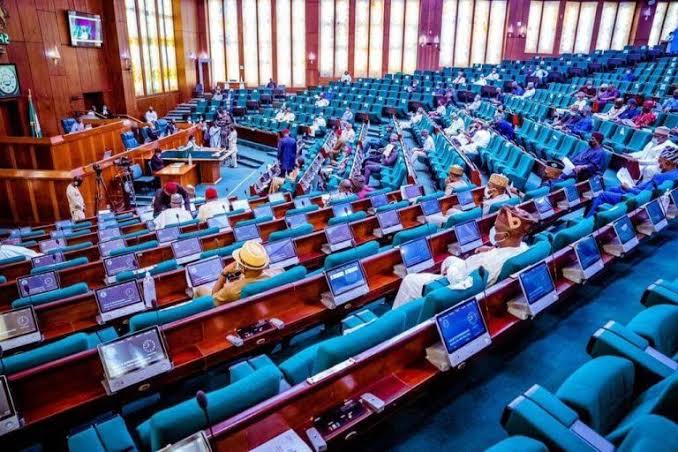
The revelations came during the hearing of the House Ad-hoc Committee investigating the controversial inclusion of the unestablished council in the 2026 Appropriation Act.
While the CBN disclosed that it opened two foreign currency accounts for the council on the directive of the Office of the Accountant-General of the Federation (OAGF), the Head of the Civil Service of the Federation, Didi Esther Walson-Jack, admitted that her office failed to adequately verify documents presented by officials of the council before issuing it an authorised establishment.
Presenting the CBN’s submission, Director of Banking Services Department, Hamisu Ibrahim, said the apex bank received a mandate dated July 29, 2025, from the Office of the Accountant-General directing it to open two domiciliary accounts for the Presidential Economic Advisory Council/Presidential Foreign Investment Promotion Council.
According to him, the accounts comprised one United States dollar account and one British pound sterling account.
“We received a mandate from the Office of the Accountant-General of the Federation to open two domiciliary accounts, one in dollars and the other in pounds, for the Presidential Economic Advisory Council/Presidential Foreign Investment Promotion Council,” Ibrahim said.
He told lawmakers that the CBN was not required to request an enabling Act before opening the accounts.
“We don’t ask for an enabling Act. We received a mandate from the Office of the Accountant-General of the Federation to open the accounts for the council,” he said.
Ibrahim, however, clarified that although the accounts were opened, they remained dormant throughout.
“The accounts have never been operated. There has never been any inflow or outflow. No foreign exchange allocation was made to the council and no transaction was carried out on the accounts,” he added.
Earlier, Walson-Jack told the committee that although the OHCSF has no responsibility for establishing federal agencies, officials of the council participated in the 2025 annual manpower budget defence exercise and submitted documents, including what purported to be its enabling legal instrument and the appointment letter of its Director-General.
She explained that the request was processed alongside those of other Ministries, Departments and Agencies, leading to the issuance of an authorised establishment for 314 positions.
However, she admitted that the office later discovered that the documents presented by the council were not genuine.
“We didn’t do the best in verifying the authenticity of the document submitted to us. That we admit,” she said.
The Head of Service maintained that no civil servant was deployed to the council despite receiving a request to that effect.
“There was no deployment of staff by the Office of the Head of the Civil Service of the Federation to the council,” she stated.
She also distanced her office from the allocation of office space to the council, explaining that the office it occupied in the Federal Secretariat Phase III formed part of accommodation officially allocated to the Office of the Secretary to the Government of the Federation (OSGF) since 2003.
Following the submissions, committee chairman Yusuf Gagdi expressed concern over what he described as widespread use of fake documents by the council to obtain official recognition across government institutions.
“The fake document that has to do with this agency is too much,” Gagdi said.
He subsequently summoned the Office of the Secretary to the Government of the Federation to explain how office space under its control came to be occupied by the controversial council.
The committee also directed the Minister of Finance, the Accountant-General of the Federation, the Budget Office of the Federation, the Federal Character Commission and the National Salaries, Incomes and Wages Commission to appear before it over their roles in the activities of the council.
Meanwhile, Chairman of the Independent Corrupt Practices and Other Related Offences Commission (ICPC), Dr. Musa Adamu Aliyu, informed lawmakers that the commission had commenced investigations into the matter following President Bola Tinubu’s directive.
“We have commenced investigation as directed by the President and we have interrogated officials. Give us a few days to complete what we are doing and we will ensure we come back to present our findings,” Aliyu said.
The committee subsequently granted the anti-graft agency’s request for more time and directed it to return on July 22 or 23 with the outcome of its investigation.
The controversy began after the Presidency, through the Office of the Chief of Staff to the President, Femi Gbajabiamila, disowned the Presidential Foreign Investment Promotion Council (PFIPC) and the Presidential Economic Advisory Council (PEAC), declaring that neither body was established by the Federal Government or authorised by President Bola Tinubu.
The Presidency identified Prince Adeniyi Adeyemi Matthew, who had been presenting himself as the Director-General of the council, as the principal promoter of the scheme and alleged that he used forged government documents to obtain official recognition.
Investigations later revealed that the council allegedly secured office space in the Federal Secretariat, sought staff recruitment and deployment, opened foreign currency accounts and was allocated about N1.3 billion in the 2026 Appropriation Act despite having no legal basis, prompting parallel investigations by the ICPC and the House of Representatives.