By Sammy Etuk
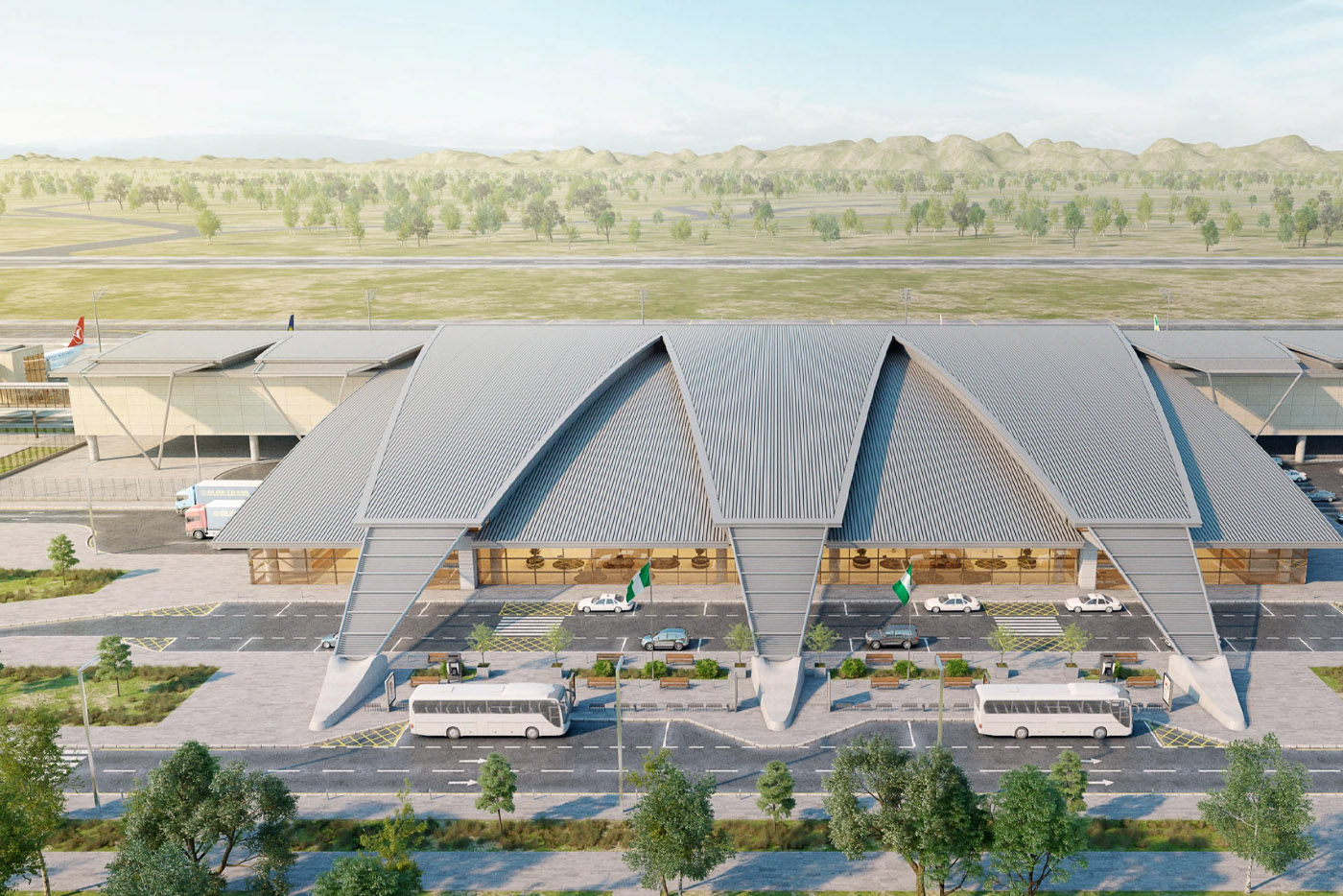
When octogenarian businessman and former Chairman of the Manufacturers Association of Nigeria (MAN), Cross River/Akwa Ibom State Branch, Otuekong Sonny Jackson Udoh, stepped into the newly completed international terminal of Victor Attah International Airport after arriving from the United Kingdom, he did not react as an ordinary traveller. He viewed the facility through the lens of decades of international business experience and extensive exposure to major aviation gateways across Europe, North America, Asia and Africa.
His verdict was direct and unambiguous: the Akwa Ibom airport terminal stands above international airports in Nigeria. Udoh described it as a world-class aviation facility distinguished by its terminal architecture, operational layout and passenger infrastructure.
«”I have travelled through many international airports over the years. What I saw in Uyo genuinely impressed me. This terminal compares favourably with airports I have used abroad, and I believe it stands above other international airports in Nigeria.”»
Unlike many public commentators whose assessments often revolve around politics, Udoh approached the airport from the standpoint of an industrialist and businessman. His evaluation was anchored on commercial sustainability, operational efficiency and long-term economic value. For him, the terminal should not merely remain an impressive government structure; it should evolve into a profitable economic asset.
«”People should understand that I am speaking as an industrialist, not as a politician. Whenever I look at any major investment, the first question I ask is whether it can create wealth, employment and enduring economic value.”»
«”A modern airport terminal should be managed with the same commercial discipline as a seaport terminal. Attractive infrastructure alone is not enough. It must generate revenue, attract investment, support industry and justify the enormous capital committed to it.”»
«”The completion of the MRO is the next logical step. Once aircraft can be maintained here, airlines will have a compelling reason to come to Uyo. That changes the airport from a passenger facility into an aviation business.”»
He commended the Akwa Ibom State Government for completing the terminal, noting that the facility stands as evidence of what can be achieved when successive administrations sustain worthwhile public infrastructure.
«”Governor Victor Attah conceived the airport. Governor Udom Emmanuel advanced the project. Governor Umo Eno completed it. That is how government should work. Government is a continuum, and every administration should build on the achievements of its predecessors.”»
Beyond its striking appearance, Udoh believes the airport’s greatest value lies in the economic opportunities it can unlock.
He observed that with professional management, meticulous maintenance and commercial discipline, the airport would emerge as an important aviation hub, while the completion of the Maintenance, Repair and Overhaul (MRO) facility would elevate it into a major aviation hub for West and Central Africa.
According to him, the MRO has the potential to transform Akwa Ibom into one of Africa’s leading aviation maintenance destinations.
He explained that airlines from Nigeria and neighbouring countries currently spend enormous amounts of foreign exchange flying aircraft overseas for scheduled maintenance. A fully operational MRO in Uyo, he noted, would retain much of that expenditure within the country, attract foreign airlines, generate substantial revenue, facilitate technology transfer and create thousands of highly skilled and support jobs.
Udoh also advised the state government to engage an internationally experienced airport facility management company to operate and preserve the terminal in accordance with global aviation standards.
He argued that modern airport infrastructure alone is never enough; sustained maintenance, operational discipline and professional facility management determine whether such investments continue to deliver value over generations.
«”This airport should never become a monument admired only for its beauty. It should be managed as a commercial enterprise that attracts investment, earns revenue and expands Akwa Ibom’s position as a preferred destination for air transportation, aircraft maintenance, logistics, commerce and investment across West and Central Africa.”