by Mohammed Bello Doka
On July 26, 2023, the world watched as Niger’s democratically elected President Mohamed Bazoum was detained by his own presidential guard. The soldiers who seized power that day, calling themselves the National Council for the Safeguarding of the Country, justified their actions by citing the “deteriorating security situation and bad governance”. What followed was not merely a coup in a distant Sahelian nation. It was the beginning of a cascade of catastrophic miscalculations that would unravel decades of regional diplomacy, fracture West Africa’s most important security alliances, and open wounds across Northern Nigeria that may take a generation to heal.
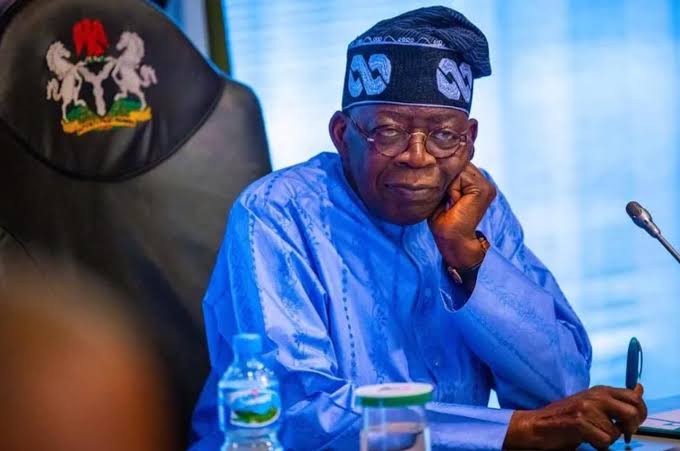
President Bola Ahmed Tinubu had been in office for barely 58 days when the Niger crisis erupted. His response was swift, decisive, and, as events would prove, devastatingly reckless. As chairman of the Economic Community of West African States (ECOWAS), Tinubu convened an emergency summit in Abuja and issued a one-week ultimatum to Niger’s military junta: reinstate President Bazoum or face military intervention. “No option is taken off the table, including the use of force as a last resort,” Tinubu declared. When the ultimatum expired, ECOWAS defence chiefs met in Ghana’s capital Accra and agreed on a “D-Day” for military action, with ECOWAS Commissioner Abdel-Fatau Musah announcing, “We are ready to go anytime the order is given”.
But the threat of invasion was never a credible military option—and Tinubu knew it. Nigeria accounts for 60 per cent of ECOWAS’s population and 78 per cent of its GDP, providing the lion’s share of the bloc’s budget and military capability. An invasion would have been a Nigerian war fought with Nigerian blood and Nigerian treasure. The economic costs would have been catastrophic for a nation already reeling from inflation and fiscal instability. The security costs would have been even greater. As the National Missioner of Ansar-ud-Deen Society, Abdurrahman Ahmed, presciently warned after meeting with Niger’s junta leader General Abdourahmane Tchiani: “Expect more bandits in Nigeria if Niger is attacked”. War with Niger, he cautioned, would be “an opportunity to strengthen insurgency, for bandits to have free rein and intensify their cross border attacks”.
The sanctions Tinubu imposed were equally self-defeating. Nigeria cut off electricity supply to Niger, which depended on Nigeria for over 70 per cent of its power. Cities across Niger—Niamey, Maradi, Zinder—were plunged into darkness, with power staying on for barely an hour at a time. Nigeria closed its land borders, crippling a cross-border economy worth hundreds of millions of dollars annually. Yet the sanctions did not reverse the coup. They did exactly what economic sanctions always do: they hurt ordinary citizens, turned them against Nigeria, and rallied them behind the junta. The seven Northern Nigerian states sharing borders with Niger incurred enormous economic losses. Nigeria was hurting itself while purporting to punish its neighbour.
The diplomatic rupture was swift and total. On August 4, 2023, Niger’s military junta formally severed diplomatic relations with Nigeria, along with France, the United States, and Togo. A spokesperson for Niger’s coup leader announced in a televised broadcast that “the functions of the extraordinary and plenipotentiary ambassadors of the Republic of Niger to France, Nigeria, Togo, and the United States are terminated”. Hours earlier, Nigeria had disconnected its electricity exports to Niger after a Nigerian delegation led by former military head of state General Abdulsalami Abubakar was denied access to the coup leader. A senior Nigerian constitutional lawyer, Onyeama Okei, urged the government to recall its ambassador but also cautioned: “Nigerians cannot cry more than the people of Niger”.
The consequences rippled far beyond bilateral relations. Mali and Burkina Faso, both under military rule following their own coups, immediately rallied behind Niger’s junta. What emerged was the Alliance of Sahel States (AES)—a mutual defence pact among the three military-led nations. In January 2024, the trio announced their formal withdrawal from ECOWAS, accusing the bloc of unfair coup-related sanctions and failing to address their security challenges. At a summit in Niamey, Niger’s General Tchiani called the 50-year-old ECOWAS “a threat to our states” and declared, “We are going to create an AES of the peoples, instead of an ECOWAS whose directives and instructions are dictated to it by powers that are foreign to Africa”. Burkina Faso’s Captain Ibrahim Traore echoed this sentiment, accusing Western powers of seeking to exploit the nations of the Sahel. The three leaders signed a confederation treaty, with Mali’s Colonel Assimi Goita declaring that an “attack on one of us will be an attack on all the other members”.
This fracture of the West African regional order has had devastating consequences for counter-terrorism. Niger had been the last stronghold for the international community to maintain regional counter-terrorism operations in the Sahel. Following the coup, all counter-terrorism cooperation was suspended. The United States cut off more than US$500 million in assistance to Niger in October 2023. France, Niger’s former colonial ruler and a key security partner, had its military cooperation severed.
Most critically, Niger withdrew its troops from the Multinational Joint Task Force (MNJTF), the regional force fighting Boko Haram and Islamic State in West Africa around Lake Chad. The Nigerian defence chief, chairman of the ECOWAS Committee of Defence Chiefs, had warned against decisions that could undermine the MNJTF’s effectiveness. Niger chose to pull out anyway. Security experts warned that the withdrawal would “create a void that will increase the likelihood of heightened terrorism and insurgency, undermine the accomplishments of the MNJTF, and emphasise the necessity of ongoing regional cooperation”. As one analyst put it, the crisis transformed what used to be “joint collaboration to fight terrorism in the Sahel region” into “‘all man for himself,’ and terrorism prospered”.
The consequences are now starkly visible across Northern Nigeria. In the North-West, banditry has reached unprecedented levels. In 2024 alone, over 3,200 people were recorded as killed, kidnapped, or injured in banditry-related incidents. Between 2021 and 2025, bandits killed over 1,500 civilians in Katsina State alone, displacing over 1.3 million people. In the North-East, Boko Haram and ISWAP have exploited the security vacuum, with Boko Haram responsible for an estimated 66 per cent of violent deaths in Nigeria in 2024—approximately 10,400 fatalities. These are not abstract statistics. They are the faces of farmers slaughtered in their fields, children kidnapped from their schools, and villages burned to the ground.
Drug trafficking and arms proliferation have flourished in the chaos. The Niger coup disrupted long-standing links between trafficking networks and state-embedded actors, but rather than diminishing the drug trade, it simply reshaped it. Northbound trans-Sahelian trafficking routes now underpin a substantial minority of cocaine exports from West Africa to Europe. Terrorist groups, including Islamic State in the Greater Sahara, JNIM, and Boko Haram, operate across Niger’s borders with increasing impunity. The porous nature of these borders encourages the movement of criminal elements, including terrorists, bandits, kidnappers, armed militias, and violent herdsmen.
Tinubu’s approach represents a fundamental departure from Nigeria’s historic foreign policy. For decades, Nigeria’s foreign policy was built on non-interference, Afro-centrism, and diplomatic primacy. Under Tinubu’s predecessor, Muhammadu Buhari, Nigeria maintained deep personal, family, and ethnic ties with Niger, investing billions in cross-border infrastructure and affirming a policy of non-interference in Niger’s internal affairs. Tinubu abandoned this tradition. Instead of quiet diplomacy, he opted for public threats. Instead of building consensus, he issued ultimatums. Instead of preserving Nigeria’s role as the region’s elder statesman, he projected the image of a regional bully.
Critics have been scathing. Human rights lawyer and Senior Advocate of Nigeria Femi Falana criticised Tinubu’s interventionist posture, warning that Nigeria lacks the moral authority to intervene in neighbouring countries when its own political system is becoming increasingly challenged. Legal scholar Chidi Odinkalu described Tinubu’s threat of military intervention as “reckless and strategically unsound,” noting that Tinubu threatened an invasion “without exerting any sinews to see what could be resolved”. Columnist Olu Fasan called Tinubu “sophomoric” and accused him of playing “reckless macho politics”. Civil society groups warned that external commitments “do not overstretch our already strained military, dilute domestic security operations, or further expose vulnerable communities at home”.
Nigeria’s reputation as the leader of West Africa lies in tatters. The country that once spearheaded ECOMOG interventions in Liberia and Sierra Leone—interventions that restored peace and democracy—now finds itself unable to prevent the disintegration of the very regional bloc it helped create. The 66th ECOWAS summit in Abuja convened with Mali, Burkina Faso, and Niger notably absent. What was once a community of 15 nations is now fractured, with the AES states forming a rival bloc that has explicitly rejected ECOWAS’s authority. As one analyst observed, Tinubu’s “greatest success also revolved around its greatest failure”—the threats created panic in the sub-region, frightened the new military regimes, and forced them to break away.
The tragedy is that none of this was inevitable. The coup in Niger did not pose an imminent threat to Nigeria’s security. A more measured diplomatic approach—one that respected Niger’s sovereignty while quietly working behind the scenes for a democratic resolution—might have preserved the relationship, kept Niger in the fight against terrorism, and prevented the regional rupture that has now occurred. Instead, Tinubu chose confrontation. And in doing so, he opened the gates of hell on Northern Nigeria and West Africa at large.
The terrorists are not waiting for diplomatic niceties. The bandits are not pausing for ECOWAS summits. The drug cartels are not respecting borders. While Nigeria’s attention was consumed by threats of invasion and sanctions, the real enemies of the region were strengthening their positions, forging new alliances, and exploiting the chaos that Tinubu’s policies created. Today, Northern Nigeria burns. The Sahel bleeds. And the dream of a united, peaceful West Africa recedes further with each passing day.
This is the legacy of a threat that should never have been made. This is the price of reckless macho politics. This is the gates of hell—and Tinubu himself held them open.
So when next President Tinubu or his supporters blame his enemies for rising insecurity in Nigeria, tell them to look into the mirror. The enemy is staring right back at them.