By Farooq A. Kperogi
I was initially disinclined to write about the alleged attempted coup to dislodge President Bola Ahmed Tinubu from power because the Defence Headquarters (DHQ) has publicly denied it and characterized news reports suggesting that it did happen as “false and misleading.”
News of the coup attempt was first exclusively reported by Sahara Reporters. The report came two weeks after the Director of Defense Information, Brigadier General Tukur Gusau, signed an October 4 news release that said 16 officers had been arrested and would face “military justice” over “issues of indiscipline and breach of service regulations.”
The military’s investigations, Gusau said, found that the 16 officers’ grouse “stemmed largely from perceived career stagnation cause by repeated failure in promotion examination, among other issues.”
That, at first glance, appeared to be an ordinary disciplinary matter. Armies, like all bureaucracies, struggle with ambition, thwarted aspirations, and internal politics.
Sahara Reporters took that explanation and detonated it. The platform reported that the detained officers were not disgruntled mid-career soldiers sulking over promotion bottlenecks. They were alleged coup plotters. Then things escalated.
Then things escalated. Premium Times, which is famous for exercising editorial restraint and avoiding sensational political speculation, confirmed the thrust of the report. “The report is true,” Premium Times quoted a “military source familiar with the matter” to have told them.
Daily Trust independently corroborated the same details. Both could not have lightly risked their reputational capital by echoing Sahara Reporters without high-confidence sourcing.
Premium Times even repeatedly amplified its story across social platforms in a manner that signaled editorial certainty rather than sensational opportunism.
But beyond throwing around lazy, sterile, stereotyped, ready-made adjectives to dismiss the report of the coup, the Defense Headquarters hasn’t said anything of substance to dispute the facticity of the reports about the coup. No counter-facts. No evidence contradicting the reporting. Denial, in institutional crises, loses persuasive power when it fails to offer credible, granular alternative explanations.
The implausibility of the denials reached comedic levels when authorities attempted to explain President Tinubu’s abrupt cancellation of Nigeria’s Independence Day parade. They claimed the president needed to attend a sudden, unspecified bilateral meeting abroad and that the parade would distract the Armed Forces of Nigeria from fighting terrorism and banditry.
That justification collapsed under the most cursory scrutiny. Independence celebrations do not jeopardize counter-insurgency operations. Moreover, no emergency diplomatic engagement materialized that week. Institutions do not peddle obvious falsehoods to hide nothing. The more laughable the cover story, the more likely the secret is real.
Matters intensified when Sahara Reporters released the names of the alleged plotters. Premium Times and Daily Trust again verified key elements of the revelation. The Defence Headquarters, usually swift to debunk anything unflattering, stayed mute. Silence, in this context, was not golden. It was incriminating.
Then came the political earthquake: President Tinubu dismissed and reshuffled top military leadership. The timing was too convenient to be coincidence. Reshuffling service chiefs in the immediate aftermath of coordinated reporting on a coup attempt looks less like routine personnel management and more like crisis containment. These clocks do not run independently. They strike in synchrony.
One additional ripple deepened the intrigue. Sahara Reporters disclosed that security forces raided the home of a former governor, Timipre Sylva, on suspicion of involvement in the alleged plot. His spokesperson confirmed the raid.
Nothing further illuminates the seriousness of a situation than the government’s decision to search the home of a former senior federal official who is close to the northern political establishment.
The logical inference, supported by mounting circumstantial evidence, is that Nigeria experienced a coup attempt that did not reach critical mass. The authorities are managing information not to reassure the public, but to avoid panic, prevent copy-cat adventurism, and preserve a veneer of stability for investors and international partners. Political communication by the state has been characterized by opacity rather than candor.
But the surface drama pales beside the subterranean danger. The ethnic and religious composition of the alleged conspirators raises existential questions about Nigeria’s fragile national fabric. Media reports indicate that the detained officers are overwhelmingly northern Muslims from Niger, Nasarawa, Katsina, Gombe, Bauchi, and Jigawa, with only two officers from Plateau and Delta States breaking the pattern.
Whether this distribution emerged by coincidence or design hardly matters. Perception often outweighs empirical truth in moments of national strain.
Had the coup succeeded, Nigeria would have sleepwalked into catastrophe. The South would have interpreted it as a northern Muslim repudiation of a southern presidency. Old suspicions, suppressed but never extinguished, would have surged back into public consciousness.
It would have felt like June 12, 1993 revisited, only with uniforms and guns instead of decrees and judicial machinations. The last time Nigeria faced a crisis of southern electoral legitimacy invalidated by military fiat, the nation nearly splintered.
Peace was restored only when northern elites agreed that a Yoruba president was necessary to stabilize the federation in 1999. That moment, painful and imperfect, was a rare episode of elite consensus for national survival.
A northern-led coup against a Yoruba president today would have ignited resentments more combustible than those of the 1990s. The wounds of June 12 have not fully healed because symbolic injustices linger long after material conditions improve.
Nigerians may be suffering intolerable hardship and spiraling insecurity today, yet economic distress does not erase group memory or neutralize grievance politics. People seldom tolerate perceived humiliation of their collective identity, even when their pockets are empty. In crises framed as existential, identity routinely overwhelms material interests.
This is the cardinal danger that the authorities appear eager to downplay. Nigeria is not merely a geographical expression, to borrow Chief Obafemi Awolowo’s once-controversial phrase. Nigeria is a precarious compact among ethnicities, religions, histories, and anxieties.
Military adventurism, when layered upon identity fault lines, becomes political arson. It is not an assault on one administration. It is an assault on the delicate architecture that keeps the republic intact.
This moment demands two sober reflections.
First, the military must confront its internal contradictions, promotion culture, and factional tensions transparently and responsibly. Armed forces that cannot discipline discontent ethically and lawfully inadvertently invite disloyalty and adventurism. The aborted plot is only a symptom.
Second, the government must resist the reflex to smother inconvenient truths. Secrecy accelerates suspicion. Nigeria’s citizens have matured politically; they can process national challenges without descending into chaos. Shielding the public from reality infantilizes the electorate and breeds cynicism.
Federal cohesion today rests on credibility rather than coercion. The Nigerian constitution is only as strong as the public trust that undergirds it. Democratic legitimacy cannot be defended with half-truths and clumsy denials. It must be upheld with transparency and accountability.
Something serious happened in those barracks. Nigerians can feel it in the tone of the denials, the choreography of the shake-ups, the eerie quiet of usually voluble institutions. The government’s instinct to suffocate the story is understandable, yet it is also counterproductive. The more the truth is suppressed, the more combustible it becomes.
The great paradox of power is that strength grows from candor, not concealment. Nigeria has survived crises more convulsive than this one. It can survive this, too. Survival requires confronting the truth head-on, acknowledging the fissures, and recommitting to democratic stability as a non-negotiable national imperative.
A nation that tiptoes around its dangers invites its downfall. A nation that stares them in the face earns its future. Let Nigeria choose the latter.
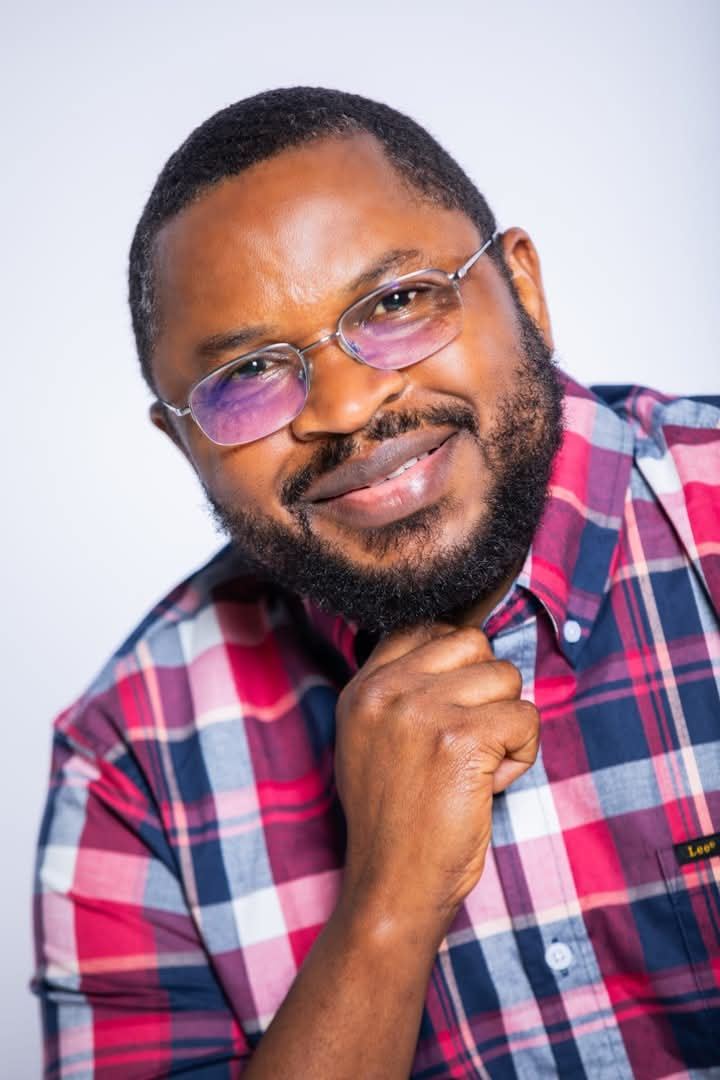
Farooq Adamu Kperogi is a Nigerian-American professor, author, media scholar, newspaper columnist, blogger and activist. He was a reporter and news editor at many Nigerian newspapers including the Daily Trust, Daily Triumph and the now defunct New Nigerian.