By Dr. U. N. Anderson
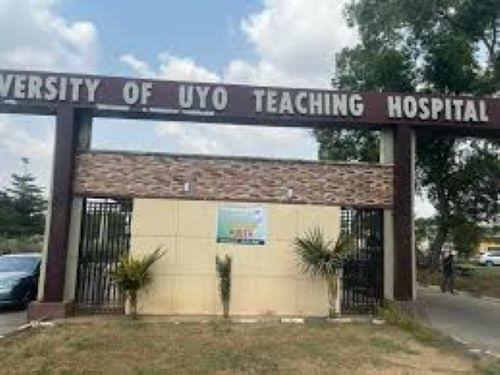
Professor Eyo Effiong Ekpe is the Deputy Chairman, Medical Advisory Committee (D-CMAC) of the University of Uyo Teaching Hospital (UUTH), Uyo. He is a Professor of Surgery and an Honorary Chief Consultant Cardiothoracic Surgeon — a man widely regarded within and outside the hospital community as calm, disciplined, humane, and of impeccable character.
The events surrounding his arrest and public humiliation today raise serious questions about the instrument of justice, the rule of law, and public order in Nigeria. In every civilized society, there are standard procedures guiding law enforcement operations and the execution of justice. Sadly, what occurred today at UUTH fell far below those standards.
The day had started normally enough. After my call hours, as I drove from my call room to my duty post, I noticed an unusual atmosphere within the hospital environment — one devoid of the serenity and calmness that ordinarily characterize a typical working day. The entire premises had been engulfed in tear gas. Staff, students, patients, and visitors were all outside seeking safety. The hospital gate had been shut, and the entire environment had descended into chaos and pandemonium.
Alarmed, pulled over, went out of my car and I hurried to find out what had happened, and what I heard shocked me deeply.
Officials of the Economic and Financial Crimes Commission (EFCC) — an agency expected to uphold the rule of law — reportedly stormed the D-CMAC’s office in large numbers, arriving in vans, some masked and others unmasked, in a manner more befitting hired thugs than officers of the law. They allegedly confronted Professor Ekpe over a letter they claimed had been sent to him and to which he had not responded. In the course of trying to understand the reason for their visit and how the matter could be resolved amicably, he was reportedly harassed, assaulted, and physically manhandled.
As the commotion escalated, other administrative staff members were drawn to the scene. Witnesses claim the EFCC officials began beating, hitting, and assaulting anyone who questioned their methods or attempted to intervene.
Worthy of note is the fact that the agency reportedly came without an arrest warrant. Neither had Professor Ekpe, at any time prior to today, been formally invited to the EFCC office for questioning. In response to the unfolding situation, hospital security personnel and staff attempted to prevent the officials from forcefully removing him from the premises by locking the administrative entrance and hospital gates.
This further escalated tensions.
According to other eyewitness accounts, the EFCC operatives allegedly assaulted several individuals, including the Director of Administration of the hospital, the Chairman of the Nigerian Medical Association (NMA), Akwa Ibom State Branch, the Chairman of the Medical and Dental Consultants’ Association of Nigeria (MDCAN), and other respected members of the society who attempted to mediate.
As though this were not enough, reports indicate that, upon being prevented from leaving the hospital, the operatives began firing gunshots and releasing tear-gas canisters into the crowd, with little regard for repeated pleas from hospital leadership, including the Chief Medical Director (CMD) and other stakeholders.
Most disturbing was the apparent disregard for the sanctity of the hospital environment — a place housing some of the frailest among us: asthmatic patients, critically ill cardiac patients, oxygen-dependent ICU patients, emergency cases, and vulnerable individuals whose conditions could easily have been worsened by the chaos and tear gas.
In the process, the hospital’s security structure was overwhelmed, and Professor Ekpe, alongside several staff members, was reportedly dragged into EFCC vans and driven away like common criminals. This was after no fewer than five staff members had allegedly sustained injuries severe enough to require emergency medical attention.
Ironically, reports suggest that Professor Ekpe was released not long after the incident, yet he remains uncertain about the exact basis for the intimidation, assault, and commotion unleashed upon him, hospital staff, patients, and the larger community.
It has also been gathered that the EFCC’s interest stemmed from a letter purportedly written using the hospital’s logo and letterhead by an individual with medical knowledge, but bearing a name not recognized within the hospital system. The hospital management had reportedly verified that the letter did not originate from UUTH. As of the close of work yesterday, Professor Ekpe was said to have been fully engaged in academic and administrative duties — teaching students while simultaneously attending to his official responsibilities trying to get to the bottom of the case — only to be subjected to public humiliation the following day.
Had the EFCC formally invited Professor Ekpe for questioning, he could have honored the invitation. Had they approached the matter calmly and respectfully, he might willingly have accompanied them. Had adequate time been allowed for the impersonation concerns to be properly clarified, the matter could likely have been resolved amicably.
Instead, what unfolded was a disturbing display of force, intimidation, and institutional recklessness — a gross act of institutional indiscipline, irresponsibility, and disregard for public order.
While the Nigerian Medical Association has reportedly convened an emergency meeting, commenced an indefinite strike action, demanded an unreserved apology to Professor Eyo Ekpe, the Chairman of the NMA Akwa Ibom State Branch, and the entire medical community, and instituted legal action against the EFCC seeking damages amounting to One Billion Naira (₦1,000,000,000), the EFCC has reportedly denied wrongdoing despite widespread public outrage and circulating evidence.
We now wait to see how events unfold.
It is, however, the opinion of this writer that hospitals are sacred environments dedicated to the preservation of life and should never be subjected to violent invasions by security agencies. The incident, if accurately represented, was barbaric, degrading, inhumane, and a gross violation of the sanctity of the hospital environment. It endangered both staff and patients while undermining the dignity of the medical profession.
More troubling still is the perception that an institution entrusted with enforcing truth, accountability, and lawful conduct could descend into such alleged impunity and then deny responsibility in the full glare of the public.
Dr. Anderson is a Resident Doctor in UUTH