By ETIM ETIM
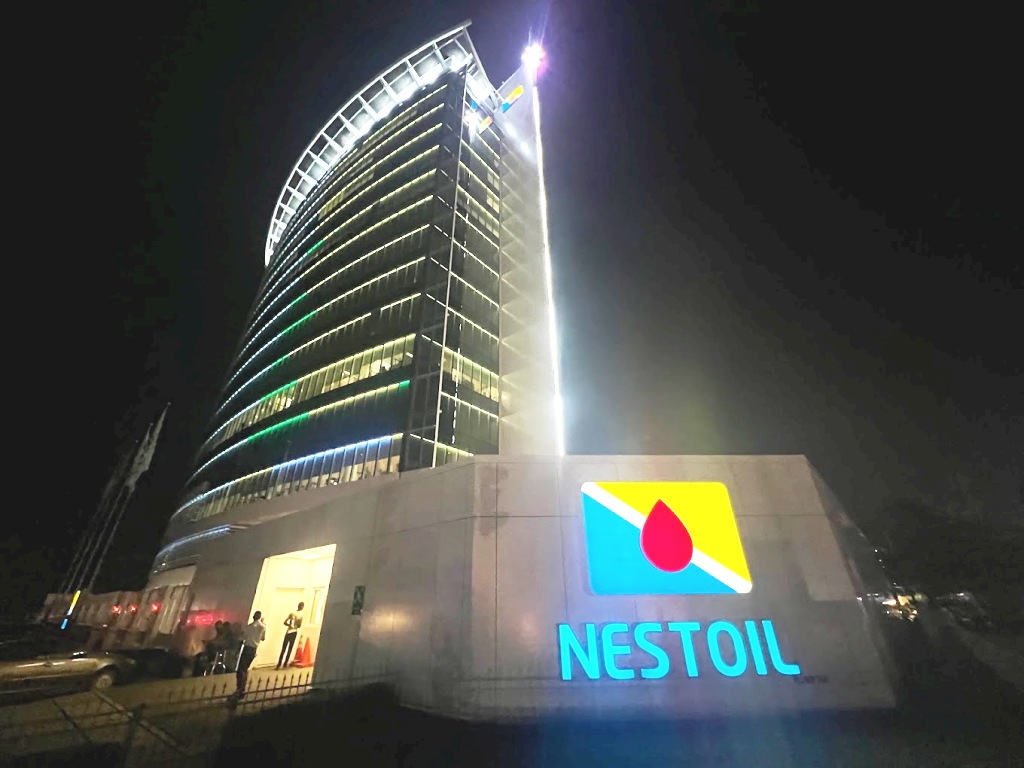
One of the first lessons I leant in my banking career is that when a debt is too big, the lender is at the mercy of the debtor; and if the debt becomes bad, the debtor could become a tormentor-in-chief to the lender. This an important credo in risk management business that every trainee must take to heart. It is now playing out in public between Nestoil Limited and three of the five systemically import Nigerian banks: Access; First Bank and UBA. For some days this week, Nestoil, a hydrocarbon exploration and production company, has been insulting, threatening, intimidating, denigrating and abusing the management and Boards of these three banks in paid newspaper ads. Nestoil is infuriated that the banks are blaming their inability to pay dividends this year on the oil company’s N2.9 trillion debt that has gone bad.
Nestoil is accusing the banks of sponsoring newspaper and social media stories titled ‘’Nestoil bad loans halt UBA, First Bank and Access Bank dividend payments as banking sector stability is threatened’’. The publications portray Nestoil as an irresponsible debtor whose actions are a threat to the health of the banking sector. But an Access Bank director told me that the bank was not part of the said publication and failure to pay dividend has nothing to do with Nestoil. On Wednesday, Access Bank told investors that ‘’although dividends were recommended at both the half-year and full-year stages in 2025, CBN approvals were not obtained due to specific regulatory requirements. The half-year constraint under Section 7.1 of CBN Guidelines for Financial Holding Companies has since been resolved following the completion of the approved Private Placement. At full-year, the constraints relate to Section 19(8)(c) of BOFIA relating to limits on foreign subsidiary investments’’. CBN restricts investments in foreign subsidiaries to 10% of Shareholders’ Funds.
Many Nigerian banks have failed in the past due to bad debts and as recently as 2007 or so, First Bank in particular had run into serious trouble due to exposure to another oil and gas company. Now, aware that the CBN and indeed the federal government will not take kindly to any act that jeopardizes the stability of our banks (in this case, the three banks are systemically important institutions), Nestoil is fighting to save face. The company writes in the advertorial published in Thisday of Wednesday, May 6: ‘’Nestoil will not tolerate – under any circumstance – being used as a scapegoat for the financial failures of FBN Holdco (First Bank); Access Bank and UBA. How is it that GT Bank and Zenith Bank (also Nestoil bankers) declared dividend for the 2025 year?’’. The rest of the advertorial is replete with uncomplimentary remarks about the banks, specifically First Bank. The advertorial accuses First Bank of incompetence and argues that their inability to pay dividends are not due to Nestoil’s indebtedness. Nestoil even questions the risk management capability of First Bank’s management and wonders why the bank is building a new corporate headquarters at Eko Atlantic, Lagos, Africa’s most expensive real estate. The advertorial goes further to warn media outlets not to publish advertorial materials issued by the banks as news items.
Clearly, the oil company is resorting to well established pattern that some debtors take. When debtors have nothing left to lose financially, some switch to intimidation as a leverage. It takes a few forms like harassment of bank staff; threatening calls; public confrontations at branches, or social media posts aimed at damaging the bank’s reputation. The goal is to make it costly or uncomfortable for the bank to pursue collection so they settle for less. Some debtors take to legal intimidation, filing frivolous lawsuits, counterclaims, or regulatory complaints to tie the bank up in process and delay foreclosure or asset seizure. It’s a time-buying tactic rather than a win on merits.
In some cases, there are threats toward loan officers or security personnel, especially where rule of law is weak. Some years ago, a bad debtor in Akwa Ibom State lured his account officer into an isolated neighbourhood and got him assassinated. As a banker, I have also had my share of harassments and intimidations when I led recovery efforts. For corporate debtors, the tactics could include threats to disrupt operations in the bank or reveal sensitive information. In all these, the debtor is trying to change the power dynamic. If the bank believes collection will be messy, expensive, or damaging to its reputation, they may accept a steeper haircut.
At the heart of the fight between Nestoil and the banks is a dispute over a N2.9 trillion ($2 billion) syndicated loan between Nestoil and the banks. The loan has gone bad and has triggered a balance sheet crisis and legal battles since late 2024. Nestoil took the loan during a period of high oil production expectations, and when those projections didn’t materialize, the loans turned non-performing. The outstanding debt is now estimated at about N2.9 trillion across multiple lenders. Nestoil, however, disputes this figure. It writes in the advertorial: ‘’To set the records straight, by no figment of imagination does Nestoil Limited owe any bank or consortium of banks $2 billion. In what market? Nestoil has nothing to do with a $2 billion debt and has no loan debt of $2 billion or N2.9 trillion’’.
I suspect that the company is disputing accumulated interest charges. But customers are well aware that when a debt is not serviced for some time, interest continue to run and in many cases, default (penalty) interest charges also kick in. These are well documented in the Offer Letter the banks must have issued to the borrower which the customer had duly accepted. In the case of a corporate organization like Nestoil, the Board of Directors must have sit and endorsed this loan. Borrowers need to understand that the money a bank gives out as loans does not belong to the bank. It belongs to other customers. So, if you refuse to pay back your loan as at when due, you could be creating widespread damage in the system.
The CBN has directed banks to fully provision for non-performing loans before paying dividends for the 2025 financial year; and in addition, the regulator requires NPLs to fall below 5% before banks can resume dividend payments, and the total impairment charges across five lenders have hit roughly N2.16 trillion. This is why the affected lenders — First Bank, UBA and Access — have suspended dividends after recording huge impairment charges. UBA booked N331 billion in loan loss provisions, while Access Holdings’ impairment charges rose 209% to N287.3 billion. Other exposed banks include FCMB, Union Bank, Ecobank and Afreximbank. But it is only UBA, First and Access that Nestoil has singled out for public denigrations.
In October 2025, the Federal High Court in Lagos issued a Mareva injunction freezing Nestoil and Neconde Energy’s assets across more than 20 financial institutions, including bank accounts, properties, and oil cargoes. A receiver/manager was appointed to take control of the assets. Nestoil has been disputing both the debt amount and the legal process.
This case has exposed systemic risk in Nigeria’s banking sector, where oil and gas lending stood at about N21 trillion at end of 2024. The case could take years to resolve given the complexity and number of institutions involved.
As a former banker, I’m filled with sadness reading Nestoil’s public statement. It smacks of mockery, derision and contempt. When a customer – whether corporate or individual -approaches a bank for a loan, they appear humble and meek. As soon as the facility is approved and disbursed, the lender begins to walk around with raised shoulders and when the loan goes bad, the borrower becomes a tormentor. When I was a regional manager of a bank, I went to see a former governor of one of the South-South States who was badly indebted to the bank. He became abusive as insisted that he had to pay his debts. ‘’This your job you seem to value so much, I will take it away from you if you continue to pester me’’, he threatened. I chuckled. Of course, he was close to the management of the bank; but I knew that I had the support of the same management. His case was always featured in Criticized Assets Committee (CAC) meetings. This guy wasted his money in a failed presidential contest immediately he finished his governorship term. Now, he’s threatening to have me fired. Indeed, a bad debtor is a dangerous specie!
The CBN should continue to support the banks and help bring pressure to bear on all those whose irresponsible credit actions are a threat to the Nigerian banking system.