Prof. Lawrence ETIM
SUMMARY
Gravity is one of the most familiar yet profoundly fascinating phenomena in the universe. From a falling apple to the motion of planets, it governs how objects interact. Over time, two great scientific minds – Isaac Newton and Albert Einstein – have provided us with different but complementary ways of understanding it. I will explain both in a very abecederian fashion with absolutely no mathematics or any symbol at all. You’ll love it.
NEWTON’S THEORY OF GRAVITY: A Force of Attraction
According to Isaac Newton, gravity is a force that attracts objects toward one another. In simple terms, every object with mass pulls on every other object with mass. This is why objects fall to the Earth and why planets orbit the Sun.
Newton’s explanation is intuitive and works extremely well for everyday situations. It treats gravity as an invisible force acting at a distance between objects.
EINSTEIN’S THEORY: The Bending of Space and Time
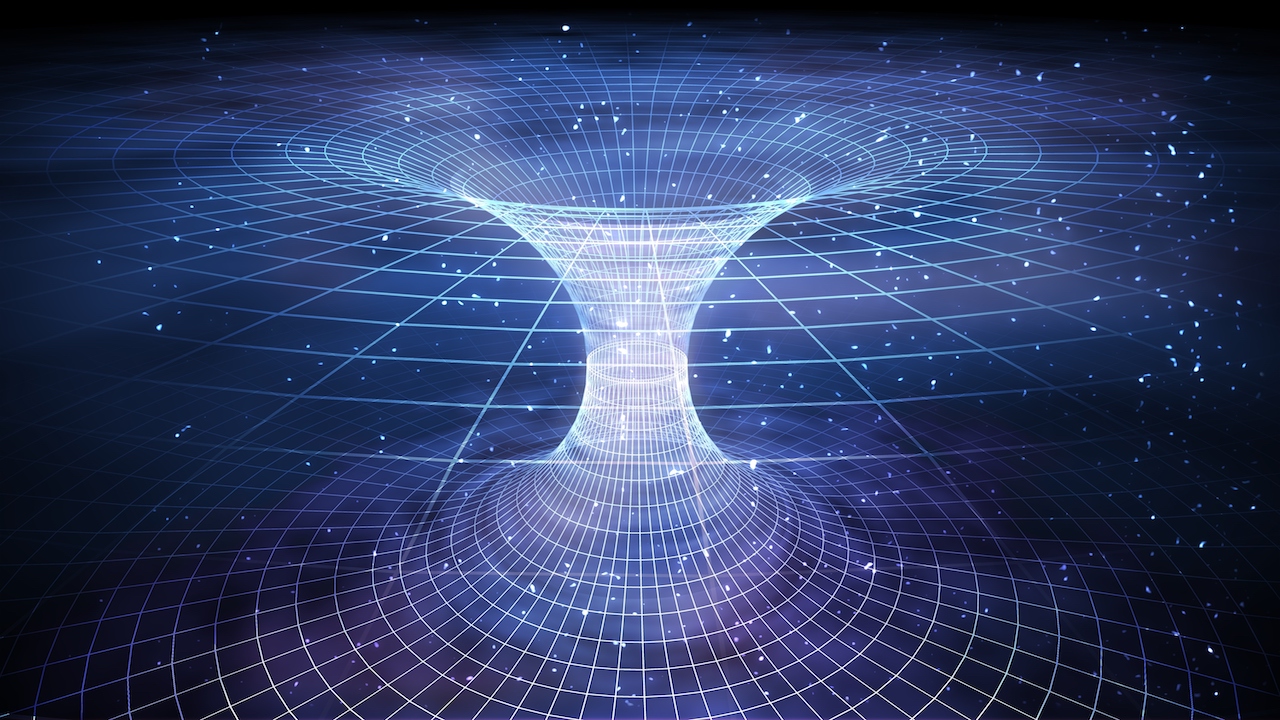
But according to Albert Einstein, gravity is not a force in the traditional sense. Rather, it is the bending of the space-time continuum.
Do not worry – I will explain what Einstein meant, and I promise there will be no mathematics.
SPACE-TIME CONTINUUM ILLUSTRATED
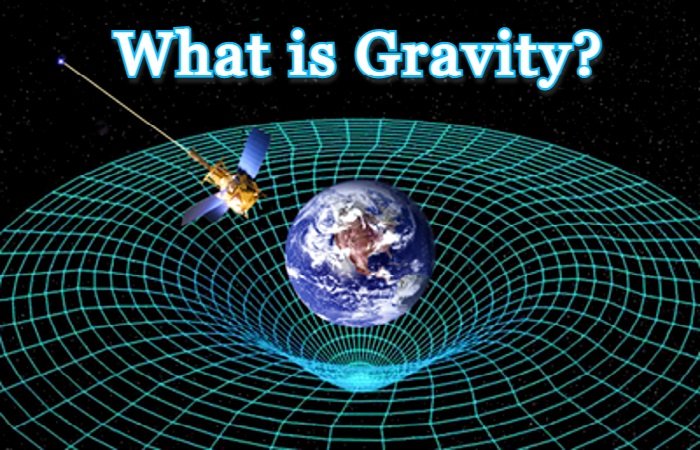
Imagine four people holding a bedsheet, each gripping one corner. The sheet is stretched out and suspended above the ground. This bedsheet represents the space-time continuum – the fabric of the universe itself.
Now, place a heavy ball at the center of the bedsheet. The weight of the ball causes the sheet to sag or bend downward. This bending represents how a massive object (like a planet or star) curves space-time.
Next, place a smaller, lighter ball somewhere on the sheet. You will observe that it rolls toward the heavier ball. According to Einstein, the smaller ball moves not because it is “pulled” by a force, but because it is following the curve created in the fabric of space-time.
In essence, MASS TELLS SPACE-TIME HOW TO CURVE, AND CURVED SPACE-TIME TELLS OBJECTS HOW TO MOVE.*
EINSTEIN’S BREAKTHROUGH AND IT’S IMPLICATIONS
In 1915, Albert Einstein developed his THEORY OF GENERAL RELATIVITY, a revolutionary framework supported by rigorous mathematics. Interestingly, he was then working in a patent office in government ministry, demonstrating that groundbreaking ideas can emerge outside traditional academic settings. Later, he got a job in a university.
Einstein’s theory goes far beyond explaining gravity. It reveals that:
• The universe is expanding
• Time slows down as an object approaches the speed of light
• The speed of light is the ultimate speed limit in the universe
•Massive objects can bend light itself
SPACE-TIME CONTINUUM EXPLAINED
Is it space-time continuum or time-space continuum⁉️ Well, scientists are in the wont of using the former.
Space is made of three coordinates: (a) up and down, (b) left to right (or right to left) and (c) front to back (or back to front. If you add time; then, that would be the fourth, making up the space-time continuum.
Space-time is a system of temporal and three spatial coordinates by which any physical object or event can be located. It is also called space-time continuum.
The graph we learnt in secondary school has two axis – Vertical axis (up and down or ordinate) and horizontal axis (left to right or abscissa). If you add another axis running front front to back, then the axes of your graph are complete. And from common sense, that’s where all physical objects or events in the world are located. But scientists agree that factoring in time as the fourth axis will facilitate the location of any object or event.
CONCLUSION: Two Views, One Reality
Newton’s theory explains gravity as a force, while Einstein’s theory describes it as the curvature of space and time.
Both are correct within their domains: Newton’s model works well for everyday phenomena, while Einstein’s provides deeper insight into the structure of the universe.
Together, they offer us a richer and more complete understanding of gravity – one of nature’s most fundamental forces.

Prof. Lawrence Etim is the Emeritus Professor of Fishery Biology and Former Dean, Postgraduates School, University of Uyo.