Isaac Samuel
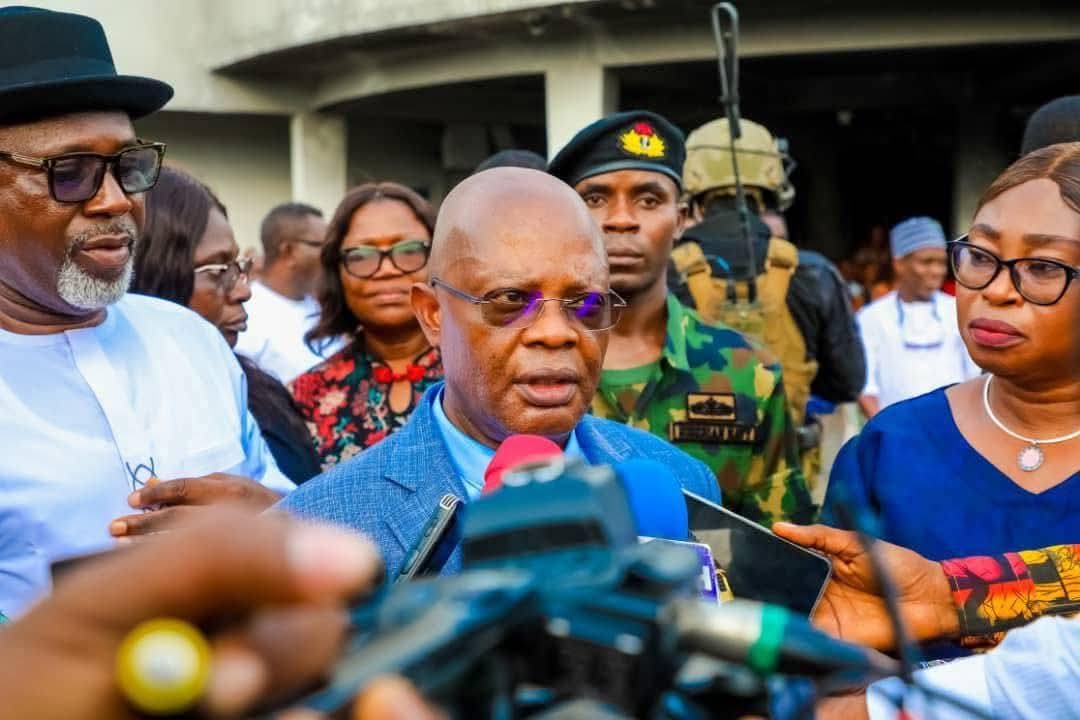
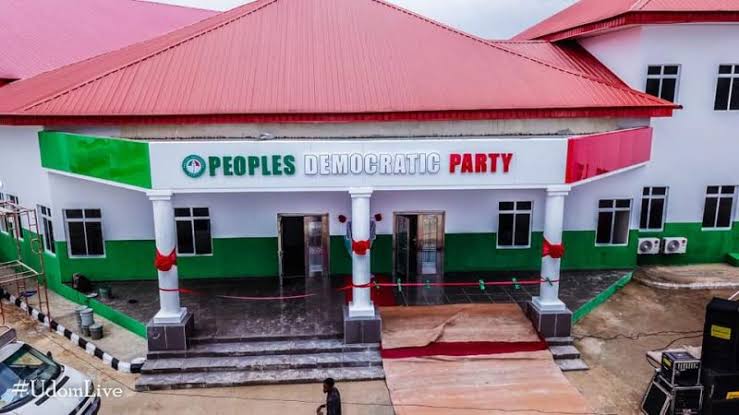
When Rivers State Governor, Sir Siminalayi Fubara, crossed over from the Peoples Democratic Party (PDP) to the ruling All Progressives Congress (APC), it was more than a personal political decision, it marked another decisive moment in the steady collapse of the PDP’s post-2023 power base.
Once a formidable PDP stronghold, the entire South-South geopolitical zone has now completely flipped to the APC.
Governors Sheriff Oborevwori (Delta), Umo Eno (Akwa Ibom), and Douye Diri (Bayelsa) had earlier defected in April, June, and November, respectively, leaving Fubara as the region’s last PDP governor—until now.
Fubara’s defection effectively ended the PDP’s 25-year stranglehold on the oil-rich South-South state.
While making the stunning announcement during a stakeholders’ meeting at the Government House in Port Harcourt, Fubara
cited his unwavering loyalty to President Bola Tinubu, saying that his move was an act of gratitude because President was singularly responsible for his political survival.
Fubara’s move is not an isolated incident. Rather, it represents the culmination of a steady erosion of the PDP’s subnational power base since the 2023 elections.
In barely two years, after the 2023 general elections, the PDP emerged from the polls with control of 13 states, retaining much of its traditional strength in the South-South, where it governed Akwa Ibom, Delta, Bayelsa and Rivers and making inroads in parts of the North-East and South-West, notably Adamawa, Bauchi, Taraba and Oyo.
The party also held Plateau in the North-Central and Enugu in the South-East, allowing it to remain a major force within the Nigeria Governors’ Forum despite losing the presidency.
The All Progressives Congress (APC), however, secured a clear numerical advantage, winning 20 governorships across the federation, with dominance in the North-West, North-Central and large parts of the South-West.
The 2023 elections also produced an unprecedented fragmentation of state power, as the Labour Party captured Abia, the New Nigeria Peoples Party (NNPP) took Kano, and APGA retained Anambra. .
At the time, this distribution suggested a politically plural landscape, one that has since shifted dramatically following post-election defections and realignments.
Beyond the South-South, the PDP’s challenges are evident across most geopolitical zones. In the South-East, the party now controls none of the five states.
The APC governs Enugu, Ebonyi and Imo, while Abia remains with the Labour Party and Anambra with APGA. The Enugu state governor, Peter Mbah who defected recently said that his decision to join the APC was his desire for a visionary partnership that would bring about transformative change to the state and the nation. Most of the governors and lawmakers who had dumped the PDP adduced similar reasons.
The South-West offers little relief for the once vibrant opposition party. While the APC controls Lagos, Ogun, Ekiti and Ondo, the PDP holds only Oyo, with Osun now governed by Accord. Even the national publicity secretary of the PDP, Ememobong admitted that the internal crisis that has troubled the party for months was the primary factor behind the exit of Ademola Adeleke, governor of Osun state
The loss of Osun, coupled with organisational weaknesses in Lagos and Ogun, has further narrowed the party’s electoral pathways in the zone.
In the North-Central, the APC dominates five of six states, leaving Plateau as the PDP’s lone outpost. There are indications that the Plateau state Governor, Caleb Muftwang of Plateau is also set to join the APC. This will make the North-Central in total control of the ruling party.
Political Adviser to the governor, Istifanus Nwansat, in an interview with newsmen on Monday in Abuja, explained that the governor’s decision to join the APC was because it’s the option with the least risk in the face of the chaos in the Peoples Democratic Party.
He explained that Muftwang’s impending defection to the APC would also align with President Bola Tinubu’s political and governance trajectory on the plateau
Indeed, the North-West tells a similar story, with APC firmly in control except for Zamfara, while Kano remains under the NNPP.
In the North-East, the PDP was faced with another major defection. Taraba State Governor, Agbu Kefas, on Sunday officially registered as a member of the APC formalising his move to the ruling party.
The PDP now has only two states, Adamawa, Bauchi with APC-controlled Borno, Yobe and Gombe and now Taraba.
Many lawmakers at the House of Representatives, Senate and subnational levels have also left the party with them citing internal disputes in the party as reasons for their defection. The crisis in the party has also led some of its leading and influential figures including Former Vice President, Atiku Abubakar to dump the party for the African Democratic Congress (ADC).
While the loss of governorships is stark, political observers argue that the PDP’s deeper problem indeed lies in its persistent leadership and structural crises.
The crisis that is leading to the near collapse of the former ruling party was triggered by leadership disputes and factional infighting that predated the 2020 polls which intensified sharply afterwards, particularly around the party’s presidential primaries and national convention.
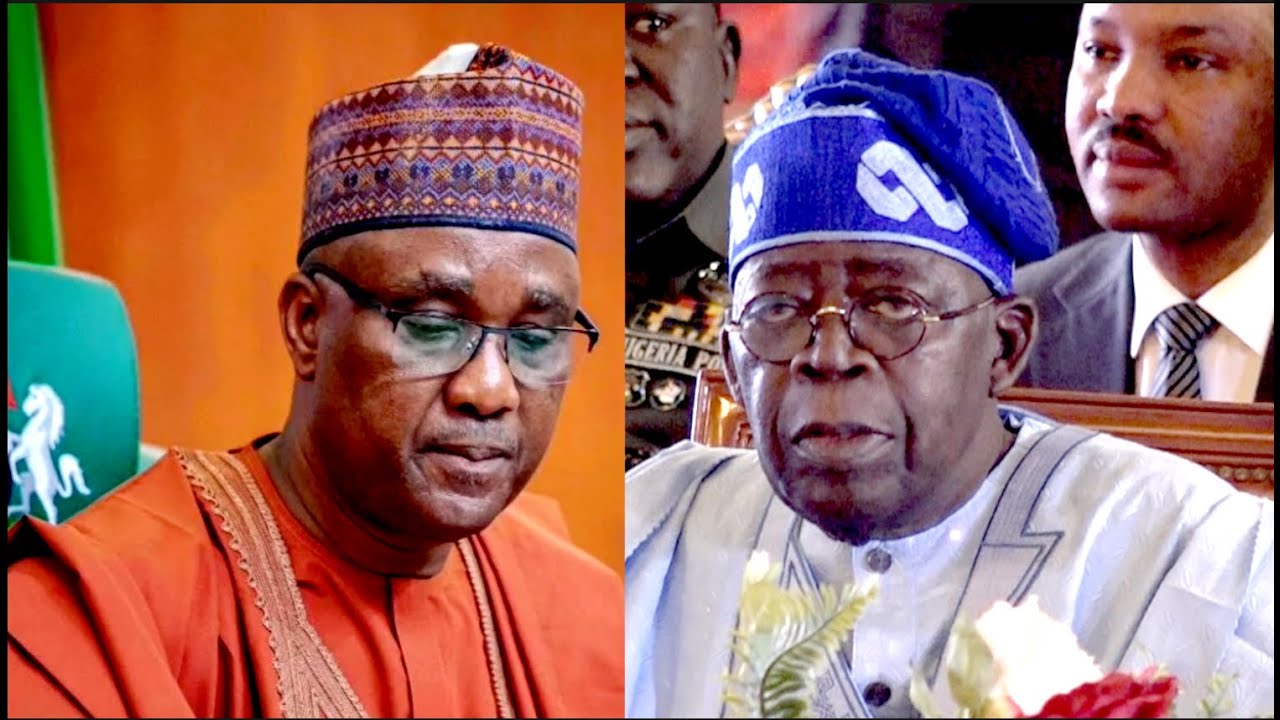
Wike, a former governor of Rivers state and now the minister of Federal Capital Territory (FCT) had a cold way with the Party Presidential candidate, Atiku Abubakar. Wike felt cheated in the way the party’s leadership then led by Iyorchia Ayu handled the presidential primary and the choice of Vice Presidential candidate of the party. The internal division led to the emergence of the G5 Governors.
The G5 self-styled as the Integrity Group of five governors refused to support Atiku Abubakar, the presidential candidate of the PDP, because they believed the presidency ought to rotate from the north to the south. In their view, Atiku Abubakar becoming President after eight years of President Buhari would amount to two consecutive presidents from the north, negating inclusivity and rotational presidency.
The governors, both openly and covertly, supported the ambition of President Bola Tinubu who was the APC candidate.
Since that time, the rifts has widened as defections gained momentum, with governors, senators and lawmakers abandoning the party for the ruling All Progressives Congress (APC) and, to a lesser extent, other parties.
The PDP crisis took another dimension in November 2025, when a faction of the party, backed by several governors including Bauchi State Governor Bala Mohammed and Oyo State Governor Seyi Makinde, convened a national convention that elected new National Working Committee (NWC) members, with Turaki emerging as chairman.
At the convention, the faction announced the expulsion of Minister of the FCT, Nyesom Wike, and several of his allies, including former Ekiti State Governor Ayodele Fayose; Samuel Anyanwu; Bature Ajibade; Mao Ohuabunwa; former Imo State PDP chairman Austin Nwachukwu; former Abia State PDP chairman Amah Nnanna Abraham; former National Vice Chairman (South-South) Dan Orbih; and George Turnah.
The move was rejected outright by the Wike-led group, which responded by announcing the formation of a parallel National Working Committee, Board of Trustees, and National Executive Committee.
Now, the party is operating with two factions. One led by Turaki and the other faction, loyal to Wike is led by Abdulrahman Mohammed, Chairman of the Caretaker Committee.
President Bola Tinubu has been accused of
of using anti-graft and security institutions to intimidate political rivals and forcing opposition governors join the APC. They also accused the President of using Wike, his FCT minister who is a member of the PDP to destabilise the party.
But that is simply an allegation, no one has put forth a concrete evidence to justify the claim. The fact is PDP is facing one of its
toughest test ahead of a major general elections. Stakeholders are worried that without the party putting its house in order, there is no way it could challenge the ruling APC and President Bola Tinubu in any future election.
Recall that in 2019, the party still commanded respect at both the presidential and governorship levels, holding 14 governorships and contesting fiercely for the presidency.
But by 2023, cracks that had been widening over the years became impossible to ignore. The party’s presidential candidate, Atiku Abubakar, failed to galvanise voters in key states, losing ground not just to the ruling APC but also to the rising Labour Party under Peter Obi.
The message was clear: PDP’s grip on its traditional strongholds was loosening.
At the state level, the story was equally grim. immediately after the 2023 elections, PDP held 13 states, but defections, internal wrangling, and the lure of APC’s growing influence meant that within two years, the party had lost eight governorships, including strategic states in the South-South and South-East.
The emergence of alternative parties like LP in Abia and APGA in Anambra further chipped away at its relevance. Going into 2027.
Observers believe that the PDP must rebuild not just its leadership and structures, but also its credibility with a new generation of voters, or risk being sidelined in what is shaping up to be a highly competitive national election.
Political analyst, Abdullahi Sambo, observed that the PDP’s ongoing crisis has created a leadership vacuum that could be disastrous for the party’s 2027 ambitions.
“The truth is the PDP is facing serious trouble. Look at what is happening. The Rivers governor just defected and i am hearing that the Plateau governor is on his way out too. If you look at what happened in 2015, governors left the party and even with a sitting President, the party lost. Now,
“The cracks are visible everywhere. If nothing is done to bring the party together, I don’t see how they can mount a strong challenge in 2027. APC is taking full advantage of the confusion.”
Convener of the Arewa Youth Political Forum, Alhaji Sani Audu, said, “What we are witnessing in the PDP is a crisis of confidence. When key leaders leave, when a party cannot manage its disputes internally, it sends a message to voters that the party lacks direction.
“The average Nigerian is watching closely and when they see instability, they begin to question whether the party can govern effectively. Wike and those causing confusion in the party must be call to order.
“People are asking themselves, what is the PDP standing for now? With governors leaving for APC and factions fighting for control, the party is losing relevance. In the North, voters are noticing the mess, and APC is clearly positioning itself to dominate again in 2027 unless PDP gets its act together fast.”