By Isaac Samuel
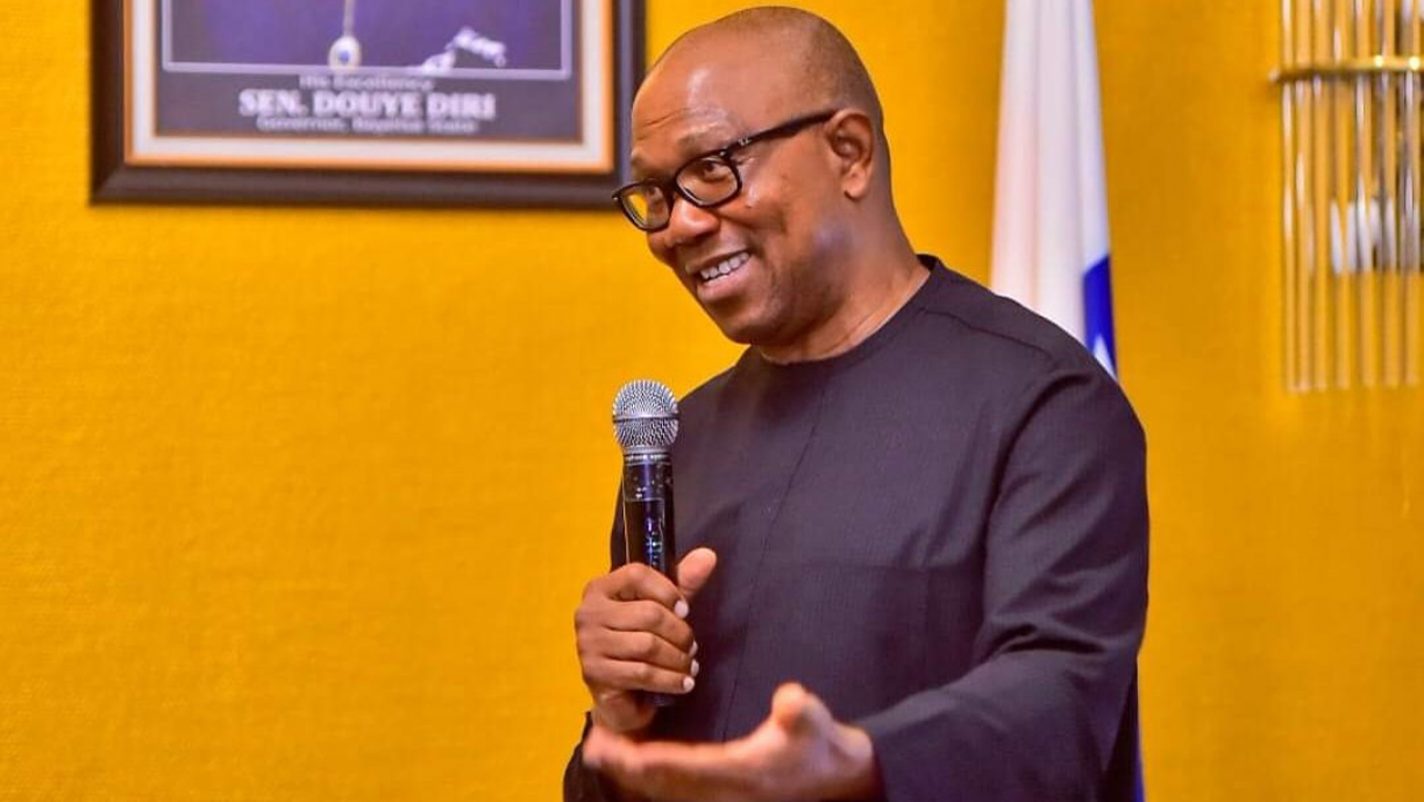
The political coalition that propelled Peter Obi to national prominence in the 2023 presidential election is facing a different reality ahead of the 2027 polls, with some of the prominent figures who helped drive his campaign now occupying different political camps, endorsing rival candidates or publicly disagreeing with his political direction.
From his former running mate, Yusuf Datti Baba-Ahmed, to campaign spokesman Yunusa Tanko, former deputy campaign manager Isaac Balami and former Labour Party governorship candidate in Anambra State, Valentine Ozigbo, several figures associated with Obi’s 2023 political project have taken different paths.
The latest development is the emergence of Tanko in the Social Democratic Party (SDP), where he was appointed National Coordinator of the Presidential Campaign Council of its 2027 candidate, Prince Adewole Adebayo, on November 11.
Tanko, who served as spokesman for Obi during the 2023 presidential campaign and subsequently became National Coordinator of the Obidient Movement, confirmed that he resigned as Obi’s Political Adviser for Northern Nigeria on October 30 before accepting the SDP appointment.
He said he had informed Obi and the National Leader of the Nigeria Democratic Congress (NDC), Senator Seriake Dickson, of his decision. Tanko also described his relationship with Adebayo as one dating back to 2023, pledging to work with the SDP candidate ahead of the next election.
Tanko was part of the people who transformed Obi from a relatively less established presidential contender into a major force in the 2023 election.
The first major departure from Obi’s political circle was that of his running mate, Datti Baba-Ahmed, whose decision to pursue a different political path exposed the growing differences between the two men.
Baba-Ahmed announced his intention to leave the Labour Party for the Peoples Redemption Party (PRP) in April 2026. Unlike some former Obi associates who moved directly into the ruling APC, the former senator chose a different opposition platform.
He also made clear that he would not automatically follow Obi’s political decisions. In an interview in June 2026, Baba-Ahmed argued that Obi should have stayed in the Labour Party to address its leadership crisis rather than move to another platform.
He said: “With due respect, he does not own my politics; he doesn’t own me. I am independent.”
Baba-Ahmed was Obi’s running mate throughout the 2023 presidential campaign.
Another prominent figure who moved away from Obi’s political camp is Isaac Balami, former Deputy Campaign Manager of the Obi-Datti Presidential Campaign Council.
Balami joined the APC after the 2023 election, citing lack of purposeful leadership in the Labour Party.
His political realignment became more visible in July 2026 when he led a delegation of former Obidient supporters to meet Seyi Tinubu in Abuja, where they declared support for President Bola Tinubu’s re-election.
Balami said the delegation comprised professionals, community leaders, support-group conveners and former members of the Obidient Movement from different parts of the country.
He also claimed that representatives of about 100 support groups were involved in the mobilisation, arguing that many former Obi supporters had become dissatisfied with neglect and lack of recognition within the movement.
Valentine Ozigbo, another prominent ally of Obi in Anambra politics, also moved to the APC in February 2025 after resigning from the Labour Party.
Ozigbo had joined the Labour Party in 2022 to support Obi’s presidential ambition after previously contesting the 2021 Anambra governorship election on the platform of the Peoples Democratic Party.
He informed Obi of his decision to leave the Labour Party, describing it as a matter of respect for their relationship and shared political journey.
But days after joining the APC, Ozigbo publicly maintained that he remained an Obidient.
He subsequently explained that his decision to join the ruling party was driven by his governorship ambition and his belief that he needed to align with the APC to pursue his political objectives in Anambra.
The movement of former campaign operatives into the APC also became more organised with the emergence of a group known as Batified Obidients in October 2026.
The group, led by Adesina Fagbenro-Byron, a former Director of Operations of the Obidient Movement, announced its decision to support Tinubu’s second-term ambition and adopt the APC as its political platform.
Fabian Chukwudoruo, its Deputy National Coordinator and former Head of Logistics of the Obi-Datti Presidential Campaign Council, also featured prominently in the declaration.
In announcing the group’s decision, its members said their experience during the 2023 campaign and subsequent assessment of Obi’s leadership had influenced their decision to change political allegiance.
Fagbenro-Byron said the group would mobilise former Obi supporters, undecided voters and other Nigerians to support Tinubu in 2027.
The group also criticised Obi’s political leadership and argued that the former Anambra governor lacked the capacity to lead the country.
However, the emergence of the group generated disagreement over its claim to represent former Obidients.
The mainstream Obidient Movement questioned the political credentials of some of its members and challenged them to substantiate the campaign positions they claimed to have held.
Another former campaign spokesman, Kenneth Okonkwo, also publicly broke with Obi after the 2023 election.
Okonkwo resigned from the Labour Party in July 2024, accusing Obi of failing to resolve the party’s leadership crisis and build a formidable political platform.
In announcing his departure, he said he no longer had confidence that Obi could build a party capable of defeating the ruling political establishment or securing an electoral mandate.
He later became a prominent figure in the African Democratic Congress, where he supported the opposition coalition that Obi initially joined ahead of the 2027 election.
However, when Obi and Rabiu Kwankwaso left the ADC for the NDC in May 2026, Okonkwo criticised their decision, describing them as political conmen during a television interview.
The departure of the late Doyin Okupe, the Director-General of Obi’s 2023 Presidential Campaign Organisation, was another major development.
Okupe, who played a central role in Obi’s emergence as the Labour Party presidential candidate, left the party in January 2024, citing ideological differences.
By September 2024, he had publicly declared support for Tinubu, explaining that his political commitment to Obi ended after the 2023 election.
He subsequently said he could no longer support Obi, criticising some of the former governor’s political statements.
Okupe, however, died on March 7, 2025.
The former Anambra governor has also experienced changes in his own political platform, moving from the Labour Party to the ADC before subsequently joining the NDC with Kwankwaso.
While some associates have followed him into new political arrangements, others have questioned his wisdom in changing platforms, while some have opted to work with rival candidates.
In all, Obi has lost some and gained some supporters. The true impacts of these movements would be known on February 6, 2027. Will he do better than the 6.1 million votes he garnered in 2023?