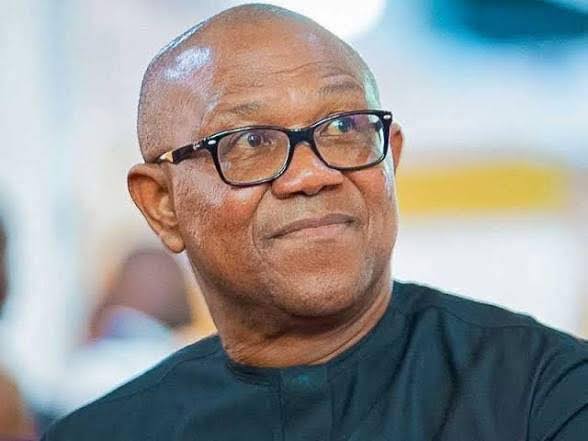
NDC presidential candidate, Peter Obi, has accused President Bola Tinubu of worsening poverty, insecurity and corruption, promising a new economic direction if he wins the 2027 election.
He spoke at the inauguration of the Nigeria Democratic Congress (NDC) Campaign Council in Abuja, noting that his alliance with former Kano State governor, Rabiu Musa Kwankwaso, would rebuild Nigeria through reforms in electricity, agriculture, education, healthcare and security.
The speech sets out the economic and political argument underpinning the Obi-Kwankwaso ticket.
But the electoral arithmetic remains complicated by Atiku’s established northern constituency and the APC’s nationwide political structure.
In the 2023 presidential election, Tinubu polled 8,794,726 votes, representing 36.61 per cent of valid votes, while Atiku secured 6,984,520 votes, or 29.07 per cent.
Obi received 6,101,533 votes, representing 25.40 per cent, while Kwankwaso polled 1,496,687 votes, or 6.23 per cent.
The election recorded 24,025,940 valid votes from 93,469,008 registered voters, with turnout at about 27 per cent. The figures show that Tinubu won by a margin of 1,810,206 votes over Atiku, while Atiku led Obi by 882,987 votes.
Kwankwaso’s 1.5 million votes in 2023 are also significant to the new alliance.
The geographical distribution of the results highlights the different strengths of the three leading contenders.
Atiku won Adamawa, Bauchi, Gombe, Kaduna, Katsina, Kebbi, Sokoto, Taraba and Yobe, alongside Akwa Ibom, Bayelsa and Osun.
His performance across much of the North-East and North-West demonstrated the strength of his established political networks, particularly in areas where the Peoples Democratic Party retained a substantial presence.
Obi, meanwhile, won all five South-East states — Abia, Anambra, Ebonyi, Enugu and Imo — as well as Delta, Edo and Cross River in the South-South. He also won Lagos, Nasarawa, Plateau and the Federal Capital Territory.
His performance demonstrated an appeal beyond the South-East, particularly in parts of the South-South and North-Central.
His challenge in 2027 is to retain these constituencies while making significant gains in regions where Atiku and Tinubu have stronger political structures.
Tinubu’s advantage lies in incumbency and the APC’s national reach.
In 2023, he won 12 states, including Lagos and other parts of the South-West, as well as several states across the North and South-South. He also secured at least 25 per cent of the vote in 27 states and the FCT, compared with 20 states for Atiku and 16 for Obi.
For Obi, Kwankwaso seems to offers a route to expanding his northern reach.
Kwankwaso’s political influence in Kano, where he won the 2023 presidential election for the New Nigeria Peoples Party, could help the NDC mobilise voters who did not support Obi in the previous election.
But there are those who believe that the alliance must demonstrate that Kwankwaso’s influence extends beyond Kano and that supporters of both politicians will rally behind a joint ticket.
It must also compete with Atiku, whose northern support base remains a major electoral asset.
Tinubu, on the other hand, is relying on the APC’s established structures and the advantages of incumbency.
Obi in his speech claimed that about 16 million Nigerians had been pushed into extreme poverty this year and accusing Tinubu of failing to translate the removal of the petrol subsidy and increased borrowing into higher productivity.
The National Bureau of Statistics’ Multidimensional Poverty Index found that 133 million Nigerians, or 62.9 per cent of the population, were multidimensionally poor.
Of these, about 86 million lived in the North and nearly 47 million in the South, while poverty incidence was 72 per cent in rural areas, compared with 42 per cent in urban areas.
A 2026 report by the United Nations Conference on Trade and Development said monetary poverty rose from 40.1 per cent in 2018-2019 to 56.2 per cent in 2022-2023, leaving about 126 million people below the national poverty line.
The report also put the proportion living below the international extreme-poverty threshold of $3 a day at 41.8 per cent in 2022.
Obi promised to tackle these challenges through an agricultural transformation programme, with processing facilities near farming communities and the development of agro-industrial clusters, particularly in Northern Nigeria.
He pledged electricity reforms, improved teachers’ remuneration, education subsidies and targeted support for critical sectors.
On security, he promised to dismantle criminal networks, identify the sponsors of banditry and kidnapping, and resettle internally displaced persons in their communities within two years.
He also proposed an amnesty offer for bandits and kidnappers, while warning that crimes committed after his inauguration would be dealt with decisively.
Obi declared that a new and productive Nigeria was possible, promising a government founded on fairness, justice, equity and inclusion.