By Marcel Okeke
In the heat of campaigns in Nigeria towards the 2027 general elections, it is quite apposite to explore some kind of relationship between the level of poverty in the country and the choices before the electorate. Already, the coinage, ‘stomach infrastructure’ has since entered Nigeria’s political lexicon to explain voters’ predilection to supporting politicians who woo them with foods or things that could help abate their hunger and poverty.
The ‘conjoined twins’—hunger and poverty—are known to have been growing in geometric proportions in Nigeria in recent years—but particularly in the past three years—since President Tinubu’s economic reforms. Not a few credible organizations and global agencies have come up with scary statistics about the upsurge in the rate of poverty in Nigeria, alongside dreadful food insecurity in the land.
In the twilight months of erstwhile President Muhammed Buhari (about 2022), the National Bureau of Statistics (NBS) had released data showing that about 133 million Nigerians were multidimensionally poor. Indeed, Nigeria has, in recent times, been labelled the ‘poverty capital’ of the world by highly informed personages and institutions. At a recent function in Abuja, the European Union (EU) Ambassador to Nigeria, and the Economic Community of West African States (ECOWAS), Gautier Mignot, said the country probably has the highest number of people living below the poverty threshold globally.
Mignot who spoke during the 2026 International Day for the Eradication of Poverty, described hunger as “one of Nigeria’s biggest challenges,” and called for “sustained efforts by the Federal Government, development partners and other stakeholders to address the country’s poverty crisis.” The EU Ambassador said: “Today, Nigeria is probably the country with the highest number of people living under the poverty threshold.”
Speaking on the theme of the event (United for Peace and Human Rights, Safe Homes for All), the EU chief said meaningful reduction in poverty was impossible without peace, security, dignity and respect for human rights. He added that households unable to meet their basic needs could hardly feel secure or fully enjoy their fundamental rights.
The latest edition of ‘Multidimensional Poverty Index (MPI)’ published by the United Nations Development Program (UNDP) and the ‘Oxford Poverty and Human Development Initiative (OPHI)’, a few days ago, revealed that both the proportion of people affected by hunger and their total number are rising at an alarming rate in Nigeria. Earlier, in April this year, the World Bank reported that Nigeria’s poverty rate had increased from 56 per cent in 2023 to 63 per cent in 2025; meaning that about 140 million Nigerians are in poverty.
The bank attributed the trend largely to household incomes failing to keep pace with rising living costs (owing to runaway inflation) and weak growth in agriculture and food production—a sector that provides livelihoods for many poor Nigerians. Hence, during the celebration of the World Food Day (October 16, 2026), it was revealed that Nigeria was far from meeting the United Nations Sustainable Development Goals (SDGs) of reducing poverty in all forms by at least half in 2030—four years away.
The Food and Agriculture Organization (FAO) in its September 2026 brief, reported that insecurity was disrupting agricultural activities in key cereal-producing states, including Benue, Borno, Kaduna, Katsina, Niger, Plateau, Sokoto and Zamfara. The FAO also estimated that about 36.3 million people faced severe acute food insecurity during Nigeria’s June to August 2026 lean season, up from more than 30.6 million during the corresponding period in 2025.
The Nigerian Economic Summit Group (NESG) in the preview of its 32^nd^ Economic Summit slated for October 26-27, 2026, has warned that worsening insecurity across the country was undermining investment, agricultural production and infrastructure development. It urged the government to combine stronger security measures with economic and social interventions to protect Nigeria’s growth prospects.
The NESG said attacks on farming communities, oil installations, electricity transmission facilities and telecommunications infrastructure were disrupting productive activities, increasing business costs and weakening investor confidence. NESG’s 32^nd^ Summit has the theme: “Growth That Works: Delivering Jobs, Productivity and Shared Prosperity”; with “Secure Nigeria: Ensuring Safety, Stability, and Resilience” as one of the subthemes.
And at a forum in London (October 21, 2026), a former president of Nigeria, Olusegun Obasanjo, said “the sharp devaluation of the naira has impoverished Nigerians and contributed to the country’s position as the world’s poverty capital.” Obasanjo who spoke at the Financial Times Africa Summit 2026 in the UK, faulted the pace and impact of the currency devaluation, saying the sharp decline in the value of the naira had significantly reduced the purchasing power of Nigerians.
“We do not live in isolation as a country. We interact with the rest of the world. And overnight, you devalue the currency by 300 per cent. The naira went from N500 to a dollar to N1,500 to a dollar,” he said. He explained that “What that meant was that every Nigerian is made poor by 300 per cent. That made Nigeria to become the poverty capital of the world, which means Nigeria has the largest number of poor people in the world.”
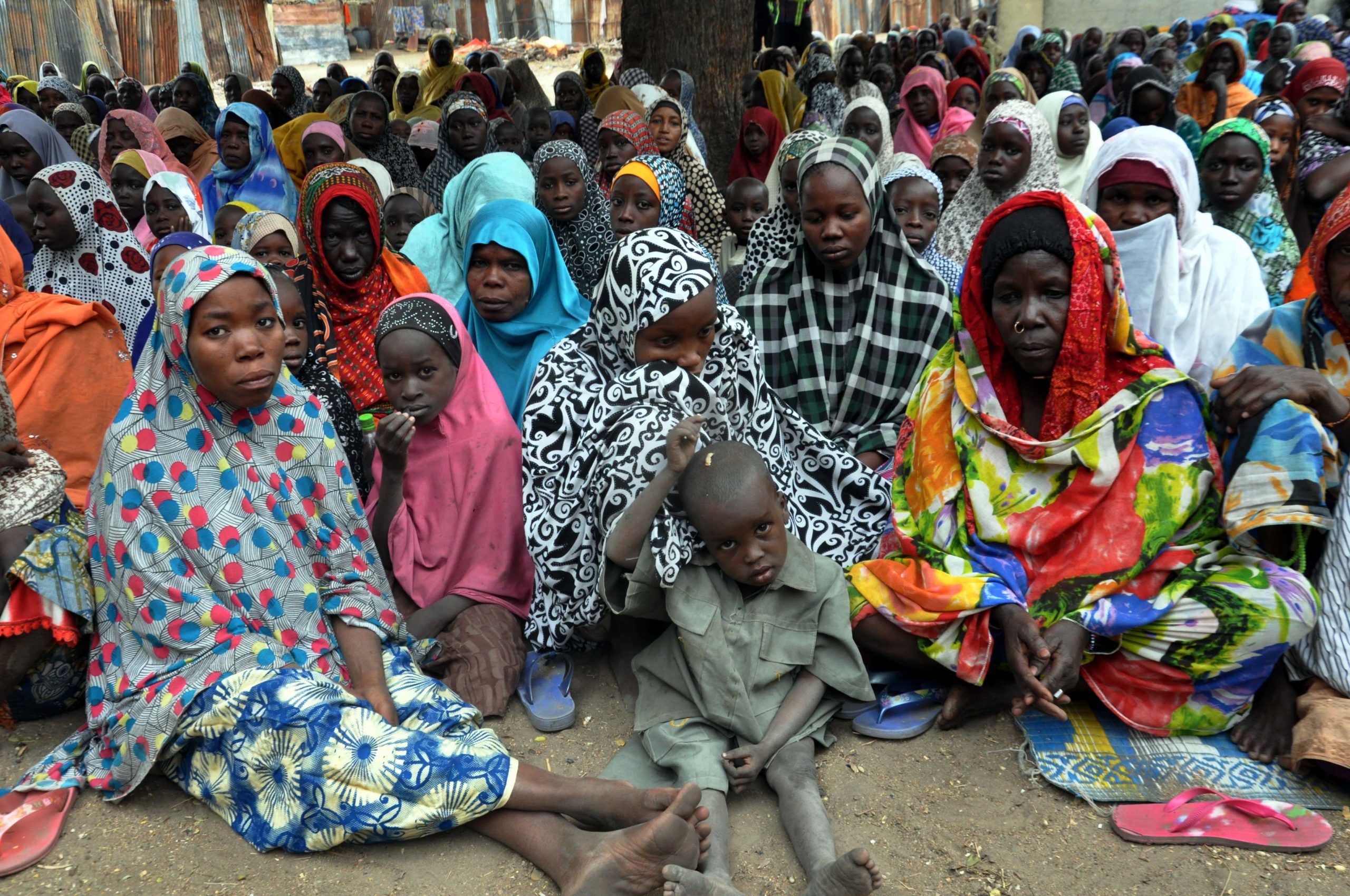
All this point to the inescapable truth that even as Nigeria is approaching a presidential election on January 16, 2027, majority of the citizenry are poor, and could be willing to accept crumbs from politicians who woo them for support/votes. In other words, poverty has been weaponized; and now being deployed to ‘extract’ votes from the electorate, willy nilly. In a country where almost four million natives have been forced by terrorists and bandits to flee to internally displaced peoples (IDPs) camps at various locations across the land, ‘stomach infrastructure’ would surely be a great incentive to secure the votes of these refugees and many other hapless voters.
In pursuit of this political strategy, virtually all manner of food items is being ‘packaged’ and labelled, and shared during townhall meetings, campaign rallies, and interactions with the congregation in places of worship and village squares, etc. In devious ways, too, the poor electorate in many locations are already being made to ‘exchange’ their voters’ cards with some measures of rice, bread, beans, yams, garri, fish, banana, tomatoes, pepper, salt, beverages, bottled water packs, etc.
Eventually, at polling centers on the D-day (election day), there would likely be massive ‘buying and selling’ of votes—as the hungry voters usually vote for the ‘highest bidder.’ The poor electorate who are facing insecurity and scorching hunger as existential threats no longer bother about political party ideologies or manifestoes. Rather than an exercise of franchise, the hungry and hapless voter now takes voting as a mere one-off transactional deal with the politicians. Unfortunately!
· The author, Dr. Okeke, a practicing Economist, Business Strategist, Sustainability expert and ex-Chief Economist of Zenith Bank Plc, lives in Lekki, Lagos. He can be reached via: obioraokeke2000@yahoo.com (08033075697) SMS only
The author, Okeke, a practicing Economist, Business Strategist, Sustainability expert and ex-Chief Economist of Zenith Bank Plc, lives in Lekki, Lagos. He can be reached via: obioraokeke2000@yahoo.com (08033075697) SMS only