Isaac Samuel
The Akwa Ibom State Government’s decision to clamp down on unapproved and unauthorized private schools has been welcomed as a timely intervention to protect the quality of education and the future of thousands of children in the state.
In a public notice dated July 27, 2026, the Ministry of Education directed all private schools operating without official approval to regularise their operations on or before August 31, 2026, warning that any school that fails to comply would be shut down, sealed and prosecuted from September 1, 2026.
Signed by the Commissioner for Education, Professor Ubong Essien Umoh, the notice said the move was aimed at ensuring that every child in Akwa Ibom receives quality education in a safe and government-approved learning environment, in line with the state’s educational development agenda.
The ministry advised parents and guardians to enrol their children only in schools approved by the government, stressing that the list of authorised schools is available at the ministry.
The action comes at a time when concerns continue to mount over the rapid proliferation of substandard private schools across many parts of Nigeria, particularly in urban slums and rural communities where regulation is often weak.
Education experts have long warned that while private investment has helped expand access to education, the growth of unapproved schools poses serious risks to children’s academic, physical and emotional development.
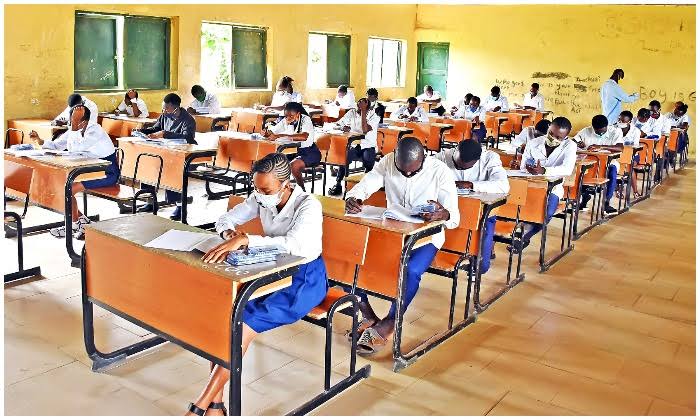
Many of such schools reportedly operate from residential buildings, temporary structures or overcrowded classrooms, often without qualified teachers, adequate learning materials, proper sanitation, playgrounds or safety measures.
Some also fail to comply with the national curriculum and minimum standards prescribed by education authorities.
The consequences extend far beyond poor examination results.
Early childhood education, which covers a child’s formative years, is widely recognised as the most critical stage of learning because it shapes cognitive development, language acquisition, emotional intelligence, creativity and social skills.
It is during these years that children develop the foundational literacy, numeracy, communication and problem-solving abilities that determine their future academic performance and life opportunities.
Research shows that children who receive quality early education are more likely to perform better in school, develop stronger critical thinking skills, exhibit better behaviour, enjoy improved health outcomes and become productive members of society.
Conversely, children exposed to poor-quality education during these formative years often struggle academically and socially, with effects that can persist into adulthood.
This is why experts argue that allowing unapproved schools to flourish undermines not only individual children but also national development.
The challenge is particularly worrying at a time when many public schools across the country are themselves battling inadequate infrastructure, overcrowded classrooms, shortage of teachers and declining learning outcomes.
If government-owned schools which are expected to serve as the benchmark are already facing significant quality challenges, permitting children to attend completely unregulated schools only compounds the crisis.
Education remains one of the strongest tools for breaking the cycle of poverty, reducing inequality and promoting national development.
However, these goals cannot be achieved if children spend their most formative years in schools that fail to meet minimum educational standards.
The Akwa Ibom initiative indeed offers a model that other state governments may wish to emulate.
Across the federation, ministries of education and quality assurance agencies should intensify inspections, strengthen licensing procedures and ensure continuous monitoring of private schools.
Schools that fail to meet minimum standards should be given opportunities to comply within a reasonable timeframe, but persistent defaulters should face sanctions in accordance with the law.
Beyond enforcement, governments should also support genuine private school proprietors through clear regulatory guidelines, professional training and transparent approval processes that encourage compliance rather than unnecessary bureaucracy.
Parents, too, have an important responsibility. Before enrolling their children, they should verify whether a school has been duly approved and whether it provides a safe learning environment, qualified teachers and facilities that support children’s overall development.
Every child deserves an education that nurtures curiosity, builds confidence and equips them with the knowledge and values needed to succeed in life.
Protecting children from substandard schools is therefore not merely an administrative exercise, it is an investment in the future of the nation.