***Says financial controls blocked release of ₦1.3bn appropriation
***Insists no payroll, procurement or overhead payment was approved
Isaac Samuel
The Director-General of the Budget Office of the Federation, Tanimu Yakubu, on Friday told the House of Representatives Ad-hoc Committee investigating the controversial Presidential Economic Advisory Council/Presidential Foreign Investment Promotion Council (PEAC/PFIPC) that not a single kobo of the N1.3 billion appropriated for the council in the 2026 budget was released or spent.
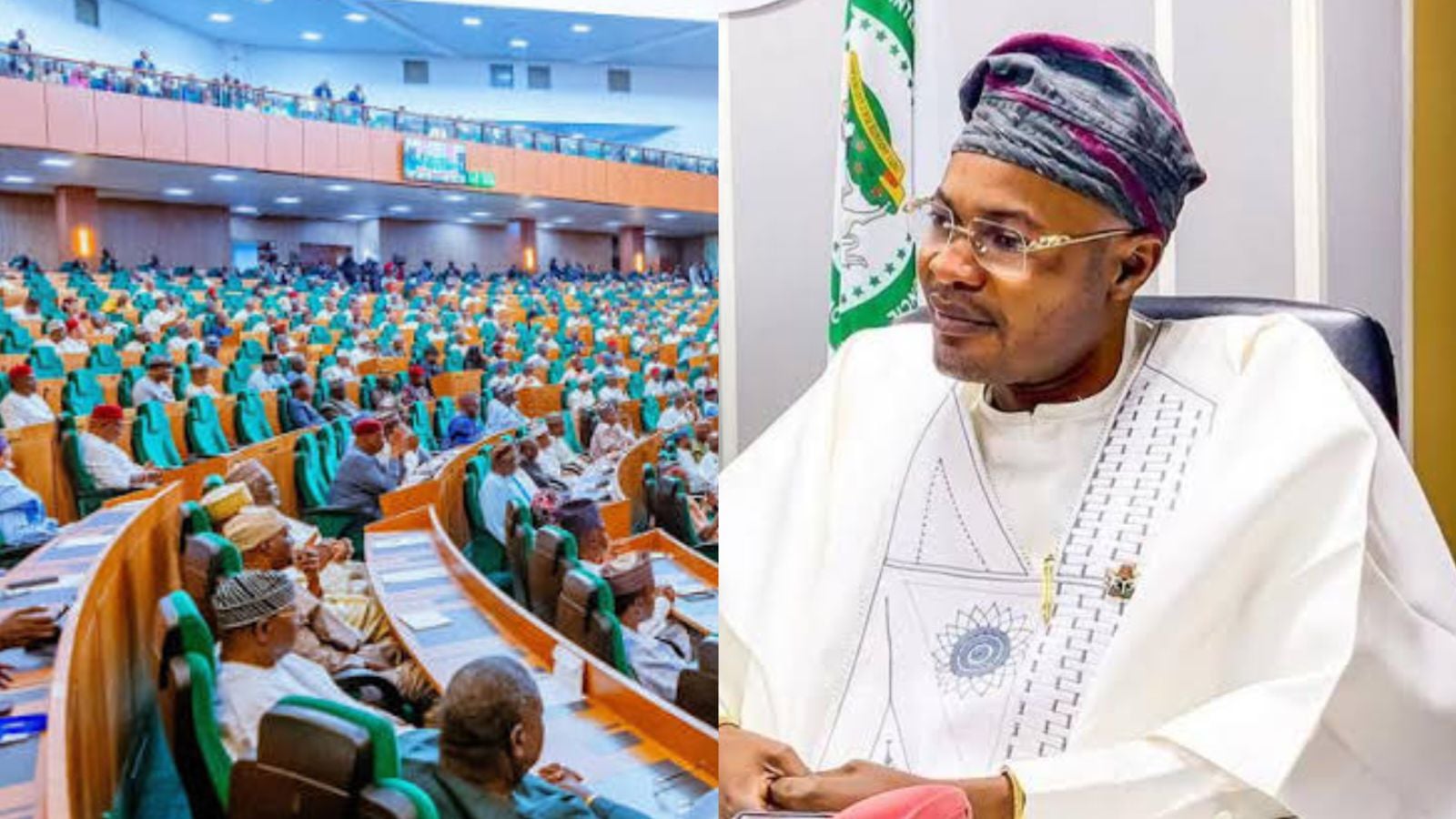
Appearing before the committee chaired by Yusuf Gagdi, Yakubu maintained that while the National Assembly appropriated funds for the council, the appropriation alone did not confer the right to access public funds, as several statutory conditions required before any payment could be made were never fulfilled.
“The public argument has often begun at the wrong point.
“An appropriation is authority in law to make provision for expenditure. It is not a cheque. It is not a warrant. It is not cash released from the Treasury.
“Before money can move, other conditions must be met”, he said.
He explained that Nigeria’s public finance system deliberately separates responsibilities among several institutions to prevent abuse, noting that while the Budget Office assesses fiscal implications and issues Financial Clearance, agencies such as the Office of the Head of the Civil Service of the Federation, the National Salaries, Incomes and Wages Commission, the Office of the Accountant-General of the Federation and the Federal Ministry of Finance each perform different statutory functions before public funds can be spent.
According to him, that chain of approvals was never completed in the case of the PEAC/PFIPC.
Yakubu disclosed that although the council requested N3.85 billion as personnel cost, the Budget Office rejected the estimate and independently computed a personnel requirement of ₦802.98 million, using only the authorised establishment, recruitment waiver and applicable public service salary structure.
He said that figure eventually formed part of the Executive Budget proposal and was later appropriated by the National Assembly.
However, he stressed that the Budget Office never issued the mandatory Financial Clearance required before recruitment and salary payments could commence.
He attributed the decision to two factors: the Appropriation Bill had not yet received presidential assent at the time the budget was prepared, while after assent, the National Salaries, Incomes and Wages Commission had yet to certify the council’s proposed staffing and remuneration structure.
“There was no Financial Clearance. There was no lawful recruitment. There was no payroll enrolment. There was no salary payment,” he said.
The Budget Office boss further explained that personnel appropriations are never paid to agencies as lump sums but are released monthly through the Integrated Payroll and Personnel Information System to verified employees.
“As a result, not one kobo of the personnel provision could lawfully have been drawn, and not one kobo was drawn,” he stated.
Yakubu also told lawmakers that the council never accessed its ₦200 million overhead allocation, explaining that overhead releases require Treasury warrants and cash backing from the Office of the Accountant-General and the Federal Ministry of Finance.
He disclosed that once questions arose in June 2026 over the legal status of the council, the Budget Office formally notified the Ministry of Finance and the Accountant-General to withhold every payment instrument relating to the agency.
Similarly, he said the council’s N300 million capital allocation never progressed beyond appropriation because no procurement process was initiated, no Ministerial Tenders Board approved any project, no Bureau of Public Procurement Certificate of No Objection was issued, and no Treasury warrant or cash backing followed.
“The legal path from appropriation to expenditure was broken at every material point,” Yakubu said.
“What has been described in some quarters as institutional weakness is better understood as institutional resilience. The controls did not discover a loss after the event. They prevented the event.”
The Budget Office insisted that there was no personnel expenditure to recover because no recruitment, payroll enrolment or salary payment ever occurred.
The House committee is investigating how the PFIPC, which has since been disowned by the Presidency as an unestablished body, secured official recognition across government institutions and was allocated ₦1.3 billion in the 2026 Appropriation Act.
The probe has already heard from the Office of the Head of the Civil Service of the Federation, the Central Bank of Nigeria and the Ministry of Foreign Affairs. While the Head of Service admitted a lapse in verifying documents presented by the council before issuing an authorised establishment, the CBN disclosed it opened two foreign currency accounts for the council on the directive of the Office of the Accountant-General, although the accounts remained dormant.
The Ministry of Foreign Affairs also told lawmakers it reported the council and its alleged Director-General, Prince Adeniyi Adeyemi, to the Office of the National Security Adviser in October 2025 after detecting discrepancies in documents submitted to the ministry.
The committee is expected to continue its investigation as it seeks to establish how the controversial council gained official recognition and found its way into the 2026 federal budget despite lacking legal backing.