By Mohammed Bello Doka
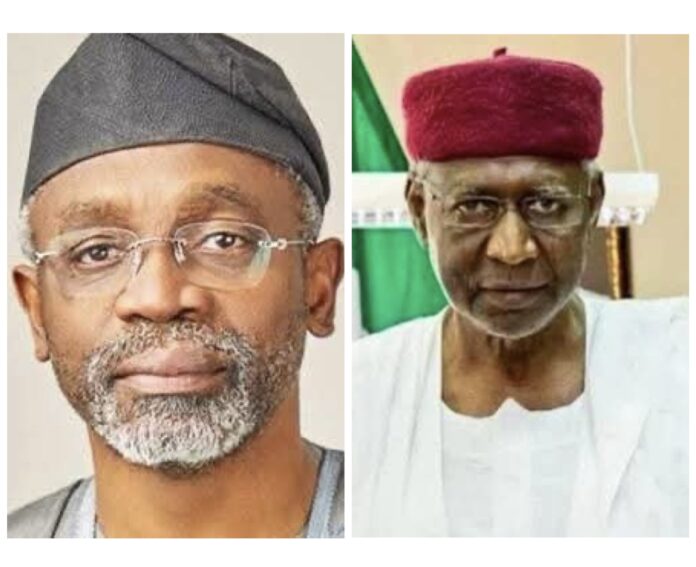
In April 2020, when Abba Kyari, former Chief of Staff to President Muhammadu Buhari, died from COVID-19 complications, the Lagos-Ibadan media establishment did not miss a beat. The man was demonised in life and, remarkably, even more viciously in death.
During his tenure, Kyari was subjected to a relentless media assault. The National Security Adviser, Babagana Monguno, had accused him in a leaked December 2019 memo of “unwarranted meddlesomeness” on national security matters, alleging that Kyari issued directives to service chiefs without the President’s knowledge. The media ran with this narrative with feverish intensity. Premium Times published the memo. Punch blared that Kyari was “affecting the success of the Boko Haram war”. Vanguard reported that Monguno had “declared war” on him.
But the media did not stop at reporting security breaches. They painted Kyari as a constitutional aberration. He was labelled Nigeria’s “de facto President”. The Yoruba World Congress, widely covered in the Lagos-Ibadan press, declared that Kyari’s “unconstitutional position as de facto president” had “seriously denuded the legitimacy of government in our country”. He was accused of boxing the Vice President into a “disrespectful corner”. He was the “leader of the Aso Rock cabal,” the man who “singlehandedly appointed” the INEC chairman, the DSS director-general, and the Chief Justice of Nigeria. Even in death, the media could not resist. An Independent headline captured the zeitgeist: “Abba Kyari: Scorned In Life, Adored In Death”—except he was not adored; he was merely mourned by those who knew him, while the media continued its posthumous crucifixion.
Now, let us turn our lens to Femi Gbajabiamila, current Chief of Staff to President Bola Tinubu. The same media that demonised Kyari for wielding power has suddenly discovered the virtues of restraint, context, and “innocent until proven guilty.”
Consider the torrent of allegations against Gbajabiamila. In August 2023, the APC Youth Wing accused him of “taking bribes to allocate appointment to political office seekers”. By October 2023, reports emerged that Tinubu’s own loyalists were pushing for his sack over the “alleged sale of appointments,” including claims that the name of the Ekiti REC was replaced with that of a former commissioner under Kayode Fayemi. The allegations of “trading off appointments” to the “highest bidder” were so persistent that President Tinubu himself was forced to publicly declare “absolute confidence in the integrity of my Chief of Staff”.
Then came the PFIPC scandal. Adeniyi Adeyemi, the self-declared Director-General of the supposedly fictitious Presidential Foreign Investment Promotion Council, alleged that he paid a staggering N400 million bribe by proxy as part of a N600 million “cash-for-appointment” deal. He further claimed that Gbajabiamila demanded a 48 per cent kickback from the agency’s N27.3 billion take-off grant. Gbajabiamila has denied these allegations, filed a N15 billion defamation suit, and appeared before the ICPC for questioning. The ICPC confirmed he was invited, not arrested.
Let us not forget the documented case in the United States. In February 2007, the Supreme Court of Georgia suspended Gbajabiamila for 36 months after he admitted to accepting a $25,000 client settlement, depositing it in his trust account in January 2003, failing to disburse it to the client, withdrawing those funds for his own use, closing his practice, and moving out of the country. He repaid the client in 2006 and admitted his conduct violated Rule 1.15(1) of the Georgia Rules of Professional Conduct.
Now, here is the brutal question: Where is the media fury? Where are the front-page headlines? Where is the “de facto President” moniker? Where are the opinion pieces demanding his resignation?
The contrast could not be starker. Abba Kyari was never accused of personal financial enrichment—no bribery, no embezzlement, no $25,000 client theft, no 48 per cent kickback demands, no sale of appointments. His crime was wielding power that the Lagos-Ibadan media establishment found distasteful. Gbajabiamila, on the other hand, faces credible allegations of direct financial corruption, including documented professional misconduct in a US court—and yet, the media tiptoes.
Instead of investigative journalism, we get “campaign of calumny” narratives. Instead of hard questions, we get headlines about how Gbajabiamila is the victim of “mischief makers”. Instead of the scorched-earth coverage Kyari received, we get whitewashing.
And yet, these same media houses wonder why Nigerians no longer take them seriously. They complain about Facebook and other social media platforms “undermining” their businesses. They cry about “algorithmic bias” and demand compensation. But the real problem is not Zuckerberg’s algorithm. The real problem is that an 18-year-old girl with a smartphone can generate more engagement on social media than five of Nigeria’s top media houses combined. Why? Because she is honest. She is raw. She is not carrying water for the powerful.
Credibility is not negotiable in today’s media space. You cannot demonise one Chief of Staff for wielding power while protecting another Chief of Staff from allegations of corruption simply because he is “one of us.” You cannot expect Nigerians to trust your reporting when your lenses are so clearly coloured by ethnicity, region, and political convenience.
The Lagos-Ibadan media establishment should look inward. The problem is not social media. The problem is not under-compensation. The problem is the loss of objectivity, the death of fairness, and the burial of journalistic integrity. Until they fix that, Nigerians will continue to scroll past their headlines and engage with the young woman on TikTok who tells it like it is.
One people, indeed. But different lenses—and the Lagos-Ibadan media knows exactly which lens it chooses to look through.
Mohammed Bello Doka can be reached via bellodoka82@gmail.com