By Marcel Okeke
Barely ten months to the end of the 48-month first-term tenure of the President Bola Ahmed Tinubu administration, the Government on Tuesday, July 14, 2026 set up an advisory committee to review its economic reforms. The Ministerial Advisory Committee (MAC) which is “to provide independent, evidence-based reviews” of the Government’s economic reforms was inaugurated by the Minister of Finance and Coordinating Minister of the Economy, Taiwo Oyedele.
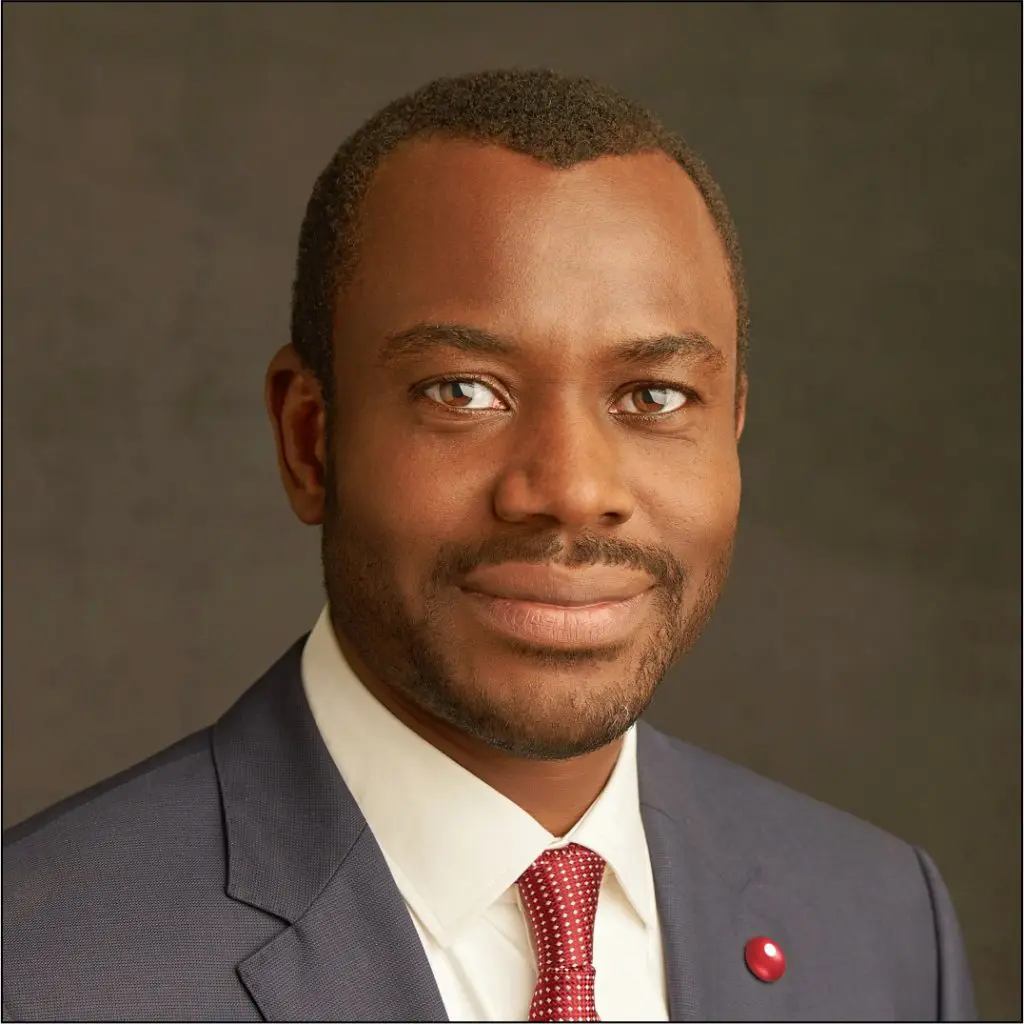
The MAC comprising economists, financial experts, bureaucrats and some technocrats, has the Managing Director and Chief Executive of Sterling Bank, Abubakar Suleiman, as chairman. At the inauguration, Oyedele charged the committee members to be bold, and urged them to “challenge existing assumptions rather than merely endorse government positions,” stressing that they “should offer external, data-driven advice to strengthen economic policymaking and ensure that reforms translate into improved living standards” for the people.
“Today is not simply about constituting another committee. It is about institutionalizing a new way of thinking, a new way of solving problems, a new way of connecting ideas with implementation and strengthening the quality of economic decision-making in service of Nigerian people,” Oyedele said. He outlined the key economic reforms of the Tinubu administration, and noted that the next phase was ensuring that Nigerians experienced the benefits.
One striking point about Oyedele’s inaugural address to the MAC was that it fully showed that, for the first time, the President Bola Ahmed Tinubu administration has chosen to “get off its high horse.” The Co-ordinating Minister for the Economy was forthright, but without the usual self-righteousness, braggadocio, and airs of omniscience usually exhibited by the current team-members of Nigeria’s economic policymakers. Without mincing words, Oyedele was able to acknowledge the limits and limitations of the Government’s economic reforms, and genuinely asked for well-informed advisory from the MAC.
It is in the light of this that we hereunder offer an unsolicited five-point memorandum that could be deployed as input in the works of the high-caliber MAC. It is quite apposite at this point to start from where “the rain started to beat us,” as a country, namely: “Fuel Subsidy is Gone.”
Firstly, the debate is no more about the desirability or otherwise of fuel subsidy removal. In the words of President Tinubu, the subsidy is gone; but the MAC should say something about the lack of transparency still shrouding the initiative and its aftermath. From the outset on May 29, 2023, how much has been saved from the subsidy removal? Where and how are the savings from the subsidy removal being invested?
Nigeria’s economic history shows that, at some point in the past, savings from reduction in fuel subsidy was pooled into a Petroleum Trust Fund (PTF), the Executive Board of which was headed by erstwhile President, Muhammadu Buhari. The PTF was set up by the Abacha government on March 21, 1995 to “channel proceeds from increased fuel prices into development projects.”
There was also the SURE-P (Subsidy Reinvestment and Empowerment) program, majorly funded with savings from reduction of fuel subsidy by the Federal Government in January 2012. The core objectives of both the PTF and SURE-P were clearly established, with a broad buy-in of the people. Both the PTF and SURE-P were deliberately put under the leadership of people with high credibility and discipline: Buhari for PTF and Dr. Christopher Kolade for SURE-P.
The second point is how to handle one of the most painful aftermaths of fuel subsidy removal—namely, sharp surge in prices of refined petroleum products (especially, Premium Motor Spirit, PMS); petrol importation versus local refining, phenomenal increases in transportation costs, foodstuffs, house rents, etc. All these concomitants or sequels of the subsidy removal gave rise to a runaway inflationary trend, such that by end-December 2024, the Consumer Price Index (CPI)—which measures the rate of inflation, had hit an all-time high of 34.84 per cent!
The issue here is no longer what the Government has done or not done to ‘drive down’ the rampaging inflation rate, the point remains that the high inflation has impoverished most Nigerians. It has made nonsense of their purchasing power! The price of PMS that was at below N200/liter before May 29, 2023, suddenly shot up to close to N1000/liter by June/July 2023. Since March 2026 when the ripple effects of the current Middle East war hit Nigeria, the price of the commodity has remained far above N1250/liter; and much higher in some places.
In the ensuing fuel-importation versus local refining debacle, the Federal Government must quickly “come clean”; stick to creating the enabling environment, and fully encourage the private sector investors to thrive. The Government cannot be a regulator and operator at the same time; nor, should it be unwittingly stifling private refiners. This is why it still leaves many Nigerians in shock that after billions of dollars and trillions of Naira have reportedly been sunk into the ‘failed’ turnaround maintenance (TAM) of the nation’s public refineries, the Government of the day is yet bent on spending more trillions of Naira on ‘repairing’ those moribund businesses. Let the refineries be “sold off” on “as-is-where-is” basis to willing and capable buyers.
Three years after President Tinubu announced the removal of fuel subsidy, must the Government continue to generously issue fuel importation licenses? As a major crude oil producer/exporter, and member of the OPEC, must the country keep shortchanging itself by frittering away its huge earnings from oil exports through massive importation of refined products? The Oyedele MAC should tell Government the bitter truth that Nigeria should forge ahead to really become a net exporter of PMS and others.
The third point is the issue of full floatation of the Naira, which is euphemistically called unification of the exchange rates of the local currency. Part of the core reforms of the Tinubu administration was to literally throw the Naira into the boxing ring against the US dollar and other hard currencies, when the country had no serious export base to back up the local currency. Thus, in no time the Naira crashed almost irredeemably in the foreign exchange (FX) market: from below N500/US$ as of May 29, 2023 to close to N2000/US$.
Although the local currency has somehow gained some strength to stay at around N1365/US$ as of today, the massive depreciation of the Naira has had so many deleterious consequences on the Nigerian economy. Had “managed float” been the fate of the Naira, rather than full floatation, the currency would have depreciated minimally, and gradually. The MAC should still review the current state of the FX market, critically consider the supply side, while insisting on more transparency in all dealings. Never again should there be room for arbitrage and round-tripping in the FX market in Nigeria.
The current oil windfall, courtesy of the lingering Middle East war, and the reported improvement in Nigeria’s crude oil production and exports, should be properly harnessed and utilized. The beefing up of the badly depleted Excess Crude Account (ECA) or the country’s Sovereign Wealth Fund (under Nigeria’s Sovereign Investment Authority (NSIA)) should be seriously considered.
Under no reason should the huge FX inflow from oil export (since the price of the commodity has remained substantially above the 2026 budget benchmark of US$65 per barrel) be allowed to be frittered away. Coincidentally, since March, Nigeria has been consistently meeting (even exceeding) its Organization of Petroleum Exporting Countries (OPEC) quota—1.5 million barrels per day! The fresh investments, and improved security surveillance around crude oil facilities (to effectively deal with oil theft) should be sustained.
The fourth issue that the MAC must deal with is the fast-spreading poverty and (youth) unemployment in Nigeria. Now is the time to constructively reject the country’s inglorious epithet as the “poverty capital of the world.” This will involve creating an enabling environment to attract investment in the real sector—including meaningfully addressing the lingering infrastructural challenges; fully removing bureaucratic bottlenecks (on investors’ paths).
Everything should be done to stem the tide of exodus of long-established businesses from Nigeria, that only turn round to use the country as a mere market outpost. The World Bank and the International Monetary Fund (IMF), among others, have warned to no end that an increasing number of Nigerians are fast falling below poverty level. This means that whatever ‘successes’ Government reforms have recorded so far, have been at the expense the wellbeing of much more people. This needs to change!
The fifth issue in this brief memorandum should be INSECURITY. Security, unquestionably, is the substratum upon which everything else thrives. Individuals, households, businesses, and governments can only function where security of life and property is guaranteed. In recent times, Nigeria has been ranked among some of the “most unsafe” places to live in the world. As this memo is being penned, the House of Representatives of the United States of America just passed a bill to withhold all assistance to Nigeria “until terror attacks are addressed.”
The Oyedele MAC is therefore coming at a very critical time, when the country is dangerously on a precipice. The riotous noise coming from electioneering, politicking and gerrymandering towards the 2027 general elections seem to have taken over the front burner of governance in the country. The reform review committee should therefore operate with the “urgency of now” to infuse fresh blood into the walking effigy, as it were.
The author, Okeke, a practicing Economist, Business Strategist, Sustainability expert and ex-Chief Economist of Zenith Bank Plc, lives in Lekki, Lagos. He can be reached via: obioraokeke2000@yahoo.com (08033075697) SMS only