Isaac Samuel
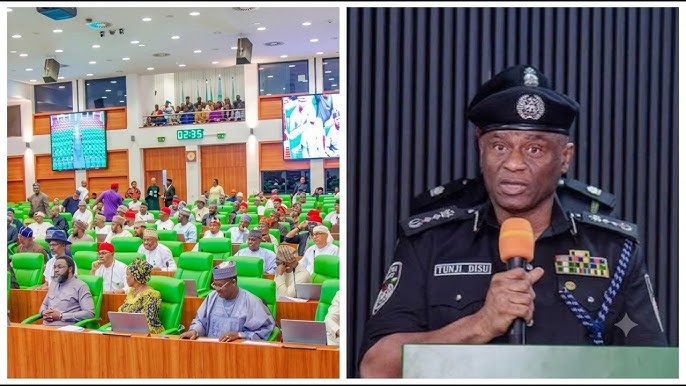
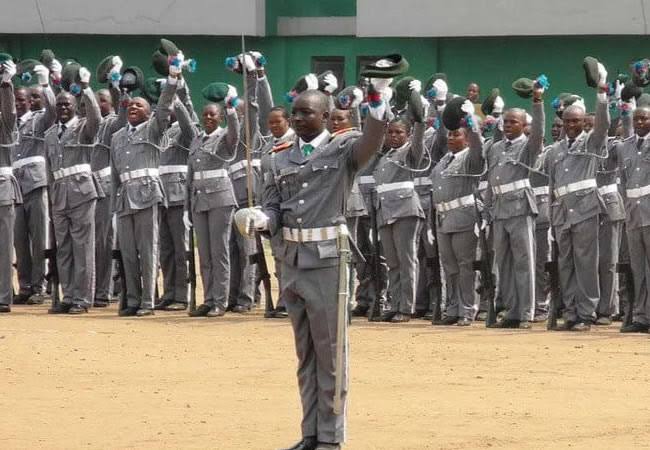
The Nigeria Customs Service (NCS) has set an ambitious revenue target of N11.074 trillion for the 2026 fiscal year as both the Senate and the House of Representatives on Monday endorsed the agency’s projections after separate budget defence sessions at the National Assembly.
While the Senate Committee on Customs and Excise approved the Service’s proposed N11.074 trillion revenue target and N1.235 trillion expenditure estimate, the House Committee on Customs and Excise also expressed confidence in the agency’s projections despite concerns over recent import tariff reductions and global economic uncertainties.
Defending the 2026 budget before the two committees, the Comptroller-General of Customs, Bashir Adewale Adeniyi, said the Service remained optimistic of achieving the target through ongoing reforms, technology-driven operations and enhanced trade facilitation.
He, however, warned that the Federal Government’s recent reduction in import duties on vehicles and continuing geopolitical tensions in the Middle East could affect revenue performance.
The proposed revenue target comprises N5.542 trillion for the Federation Account, N1.491 trillion for non-Federation revenue, N2.773 trillion from Import Value Added Tax (VAT) and N1.266 trillion from the four per cent Free-on-Board (FOB) levy.
Adeniyi explained that the projection was anchored on reforms already yielding positive results, including the deployment of the indigenous Unified Customs Information System (UCIS), otherwise known as B’Odogwu, strengthened post-clearance audits, enhanced systems audits and intelligence-led anti-smuggling operations.
“Our technology platform is now fully operational after overcoming initial implementation challenges. It has significantly improved automation across our commands and strengthened revenue collection and trade facilitation,” he said.
Reviewing the Service’s performance in 2025, Adeniyi disclosed that Customs generated N7.277 trillion, exceeding its approved revenue target of N6.584 trillion by N674.1 billion, representing 10.24 per cent above projection.
According to him, the Service could have generated even higher revenue but for several government policy interventions, including the suspension of excise duty on telecommunications services, import duty waivers on compressed natural gas (CNG) and electric vehicles, healthcare equipment, raw materials and capital machinery, delayed implementation of the Green Tax and extensive Import Duty Exemption Certificates granted by the Federal Government.
He also cited disruptions to global trade caused by the Russia-Ukraine conflict.
The Customs boss disclosed that despite the impressive revenue performance, the agency received only N808.86 billion, representing 71.46 per cent, out of its approved N1.132 trillion expenditure budget for 2025.
Looking at the current fiscal year, Adeniyi said Customs had generated about N4.043 trillion during the first half of 2026, falling below its projected mid-year target of approximately N5.5 trillion.
He attributed the shortfall largely to ongoing tensions in the Middle East, particularly around the Strait of Hormuz, which he said had disrupted global supply chains and reduced cargo throughput into Nigeria.
“The crisis has affected global supply chains and reduced cargo throughput into Nigeria. These are some of the assumptions that may affect revenue performance in 2026,” he said.
He expressed optimism that easing tensions and improving global trade conditions would improve collections in the second half of the year, noting that June recorded the agency’s highest monthly revenue so far in 2026.
Appearing before the House Committee on Customs and Excise chaired by Leke Abejide, Adeniyi identified another potential challenge to revenue generation, the Federal Government’s reduction in import tariffs on both brand-new and fairly used vehicles.
According to him, the revised fiscal measures, which took effect on May 1, 2026, significantly reduced duties on imported vehicles following stakeholders’ calls for a review of the country’s tariff regime.
“The tariff on vehicles and levies on vehicles have been reduced significantly. We believe this is one of the measures that may negatively affect our revenue performance,” he said.
He explained that although the reduction could temporarily affect revenue, the Service was obligated to implement fiscal policies approved by the Federal Government through the Ministry of Finance.
Responding to lawmakers’ concerns over whether the lower tariffs could attract cargo currently routed through neighbouring ports back to Nigeria, Adeniyi said periodic fiscal policy adjustments were necessary to stimulate trade, respond to changing economic realities and support key sectors of the economy.
He assured the committee that Customs would offset any revenue losses by leveraging technology, strengthening compliance measures, expanding post-clearance audits and intensifying anti-smuggling operations.
Speaking during the hearing, Abejide commended President Bola Tinubu for approving the reduction in import tariffs, noting that duties on brand-new vehicles had been reduced by 15 per cent, while tariffs on fairly used vehicles were cut by five per cent.
He said the policy would require about 90 days before taking full effect because consignments already at the ports would still be cleared under the previous tariff regime.
Abejide expressed optimism that the measure would encourage more importers to use Nigerian ports and improve the competitiveness of the country’s maritime sector.
At the Senate, Chairman of the Committee on Customs and Excise, Isah Jibrin, commended the Customs management for reforms that had improved revenue generation, anti-smuggling operations and trade facilitation.
He praised President Tinubu for extending Adeniyi’s tenure, saying the decision would enable him to consolidate reforms already producing results.
“I believe that within the next six months, he will have fully consolidated these reforms and placed the Nigeria Customs Service on a sustainable path,” Jibrin said.
Describing Customs as one of Nigeria’s foremost revenue-generating agencies, he urged the management to intensify efforts to meet and surpass the 2026 revenue target.
Following the budget defence, the Senate Committee unanimously approved the proposed N11.074 trillion revenue target and N1.235 trillion expenditure estimate for the 2026 fiscal year through a voice vote, expressing confidence that the Service would sustain its revenue growth despite prevailing domestic and global economic challenges.