By Osita Chidoka
This morning, I read McKinsey’s article “The AI assembly line: Strategic imperatives for CEOs” (13 May 2026), and one statistic stood out to me.
Chinese carmakers have collapsed the development cycle for a new vehicle to twenty-four months. By weaving AI into research, design, and software integration, they have lowered the barrier so dramatically that over 50 new electric vehicle brands have entered the market in 5 years.
By producing high-quality, low-cost vehicles, Chinese brands have captured more than 50 percent of their home market for the first time.
Non-Chinese joint ventures have watched their share fall from 64 percent in 2020 to roughly 43 percent today.
That is what happens when a country decides to industrialise intelligence. The question for Africa is whether we read those numbers as news from a distant country or as a prompt.
All over Africa, agriculture, food processing, environmental management, the running of our cities and the delivery of public services are all waiting for the same compression AI has brought to manufacturing in Shenzhen.
A maize farmer in Benue who can predict rainfall, detect leaf disease from a phone photo, time his harvest and price his crop against the regional market is no longer the same farmer. He is a node in a system. Multiply him by ten million, and you have begun to lift a continent.
I am not oblivious of the infrastructural obstacles in our societies; the Chinese success will not happen by wishful thinking. It rests on electricity that holds, broadband that reaches the village, data centres on our own soil, and a regulatory hand light enough to invite capital and firm enough to protect citizens. Without that scaffolding, AI is a poster on a wall.
Think of it this way. No human can outrun a tractor. No farmer can out-harvest a combine harvester. Yet we did not abolish farmers when those machines arrived. We taught them to drive.
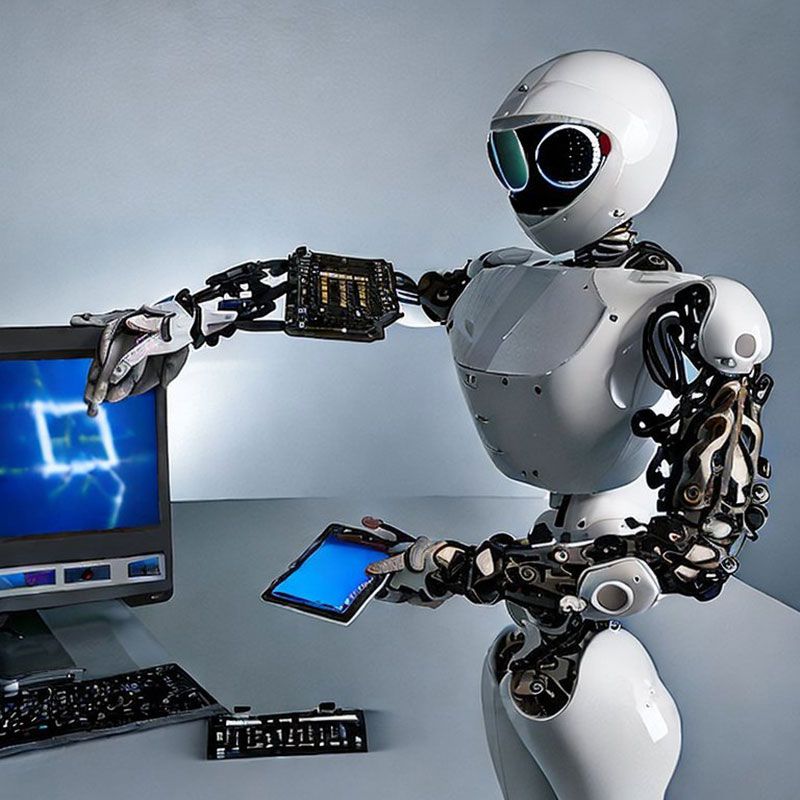
AI agents are the tractors of cognitive work. The load of the world is about to be carried by machines doing what no human can do at scale. Our children will either learn to drive them or watch others drive past.
This is why we built the Mekaria Institute of Technology and Administration.
MITA is for the eighteen to twenty-year-old standing at the crossroads after secondary school. Whether she joins us online from Maiduguri or walks into our hall in Obosi, she should leave with a diploma strengthened by global certifications, practical project work, and a credible pathway into university and the world of work.
I know the young person we describe here is the one with a phone and a path. Her cousin in a village three hours away may have neither. Reaching her is the longer task, and one we have to do in parallel, not after.
Education is being redefined in front of us. The young person who emerges with real skills will be ready for the world. The one who emerges with only a piece of paper will not.
Africa does not have the luxury of waiting to see how this settles.
The tractor is already in the field.The question is whether we will teach our young people to drive it.
Osita Chidoka is former Minister of Aviation
22 May 2026