By Farooq A. Kperogi
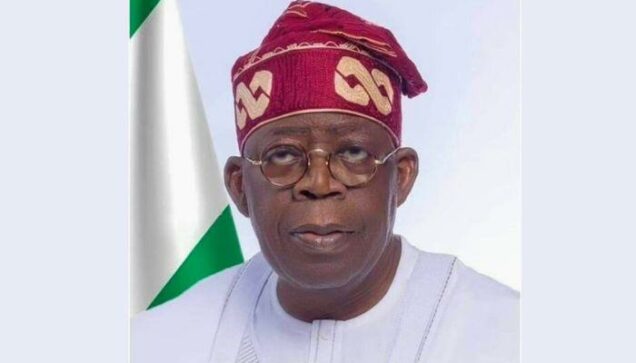
Although structural, political, and economic conditions appear to constrain any credibly concerted impediment to President Bola Ahmed Tinubu’s 2027 reelection chances, at least from my admittedly imperfect reading of the auguries, Tinubu still seems so insecure that he is borrowing a leaf from former Head of State Sani Abacha, his arch enemy, to annihilate the opposition and smooth his path to reelection.
There are at least three reasons why I think the odds are, at least for now, in Tinubu’s favor.
First, the opposition hasn’t coalesced around a single, powerful, unifying candidate, such as the APC did with Muhammadu Buhari in 2015, less than a year before the next presidential election. Meanwhile, Tinubu is already the undisputed candidate of his party and has effectively been in campaign mode, with all the advantages that incumbency confers.
Second, Tinubu’s economic policies have so pauperized a vast swath of the electorate that many voters are even more susceptible to financial inducement in exchange for their votes than at any time in recent memory. In a context where hunger and desperation shape electoral behavior, the moral calculus of voting changes.
Given that Tinubu commands a larger financial war chest than any individual opposition figure and perhaps more than all of them combined, he is better positioned to prevail in a contest defined by voter inducement. It often makes little difference to voters that the source of their hardship is also the source of the money offered to temporarily alleviate it.
Third, the institutions of the state that determine electoral outcomes inspire little confidence in their independence. INEC, which showed flashes of autonomy during Professor Attahiru Jega’s tenure, particularly in overseeing the 2015 transition, no longer enjoys the same level of public trust.
The judiciary, which ought to serve as the final arbiter of electoral disputes, is widely perceived as susceptible to political manipulation. Whether this perception is entirely fair is beside the point; what matters is that it is widespread and shapes expectations about electoral outcomes.
Given these seemingly insurmountable advantages, one might expect Tinubu to sit comfortably and await what could amount to an electoral formality. Yet his actions suggest a deep, crippling anxiety about 2027. He appears determined not just to win an election but to eliminate the possibility of a meaningful contest.
He is stealthily but systematically weakening all the political parties that could provide viable platforms for his opponents in 2027.
The Labor Party, which rode the crest of the wave of Peter Obi’s popularity to emerge from near obscurity to national prominence in 2023, has been mired in irresolvably debilitating internal crises. These crises may have internal origins, but their persistence and intensity have effectively neutralized the party as a coherent opposition force.
The Peoples Democratic Party is also deeply fractured. Through the outsized influence of FCT Minister Nyesom Wike, who retains significant leverage within the party despite serving in an APC administration, the PDP has been thrown into a prolonged internal dissension that has eroded its capacity to function as a credible opposition platform.
It would be an exaggeration to say that only APC sympathizers remain in the PDP, but it is accurate to say that its internal divisions have weakened its ability to mount a coordinated challenge.
The African Democratic Congress (ADC) had begun to present itself as a refuge for politicians displaced from the PDP, the Labour Party, and even factions within the APC. That possibility now appears imperiled by an emerging leadership crisis.
While David Mark is widely recognized as the party’s national chairman, Nafiu Bala Gombe, a former deputy national chairman, is contesting that leadership in court. Given how the courts have ruled in the past in respect of the PDP and LP, which many people suspect is induced from the Tinubu camp, it won’t come to me as a surprise if Gombe gets judicial imprimatur to displace Mark.
Allegations that Gombe is aligned with Tinubu or with interests sympathetic to him come primarily from partisan sources within the ADC and have not been independently substantiated. Still, given the pattern observable in other opposition parties, such suspicions are not entirely surprising. If the courts eventually validate Gombe’s claim, the ADC could become inhospitable to the very opposition figures who had begun to see it as a viable platform, as a safe political asylum.
The cumulative effect of these developments is that major opposition figures such as Atiku Abubakar, Peter Obi, and Rotimi Amaechi may find themselves without stable or credible party platforms on which to base presidential bids. Even if parties remain on paper, they risk becoming hollow shells, fielding “dummy” candidates who pose no real threat and merely sustain the illusion of competition. That’s banana-republic-level perversion of basic democratic norms.
This trajectory calls to mind the 1998 transition program under Sani Abacha. In that case, the regime licensed and controlled the only legal political parties, suppressed dissent, and orchestrated a process in which all five parties eventually adopted Abacha as their sole presidential candidate. It was a carefully managed political ritual dubiously designed to legitimize continued rule. Abacha didn’t get elected because he died before that could happen.
Nigeria is not under military rule, and the present circumstances are not, by any means, wholly identical. But the logic of narrowing the political field to the point where competition becomes illusory bears an uncomfortable resemblance.
There is no point in pretending to be a democracy if something as basic as the latitude to run for the office of president is strewn with avoidable cataracts and oxbow lakes, to paraphrase Nigeria’s most famous sesquipedalian Patrick Obahiagbon.
ALSO READ Salient historical mistakes some Igbo leaders made By Prof Lawrence ETIM Discussions about Nigerian history, particularly the events leading to the Civil War and the continuing agitation for self-determination, often evoke strong emotions and divergent interpretations. While many people focus on external factors that affected the Igbo people, it is equally important to examine certain decisions and actions by prominent Igbo leaders that some critics regard as STRATEGIC ERRORS or POLITICAL MISTAKES. Whether one agrees with these assessments or not, they remain part of the broader historical debate. 1. Dr. Nnamdi Azikiwe's Rejection of the Right to Secession Before Nigeria attained independence, Chief Obafemi Awolowo reportedly supported constitutional provisions that would allow any region to withdraw from the federation if it so desired. Dr. Nnamdi Azikiwe, however, opposed such provisions, favouring a stronger and more indivisible Nigerian federation. As a consequence, the Nigerian Constitution evolved without a recognised legal pathway for secession, making any attempt at breaking away from the federation constitutionally impermissible. Critics argue that this position reflected a lack of foresight, particularly in light of later political crises. Interestingly, many of those who advocate self-determination today, notably the Igbos, rarely attribute any responsibility to Azikiwe for supporting a constitutional framework that effectively foreclosed the option of lawful secession. Canada has a constitutional provision that guarantees the right of any region to break away through a plebescite. In 1992, a French speaking region Quebec narrowly missed the threshold score in a referendum that would have allowed it to break away. Ethiopia, former Soviet Union, Yugoslavia, St Kitts and Nevis are other examples of countries that provide constitutional rights for any of its region to break away. Critics say Nigeria missed such opportunity because of Zik's opposition during the pre-indepedence constitutional conference and public debate. 2. The January 1966 Coup and Its Perceived Ethnic Imbalance The January 15, 1966 military coup, led principally by Major Chukwuma Kaduna Nzeogwu, remains one of the most controversial events in Nigerian history. During the coup, several prominent Northern political leaders and senior military officers were killed, while leading Igbo military officers and politicians were spared. Ojukwu himself was living in Kano but was spared. Madiebo (who would later serve as the chief of defence staff in Biafra) and many other military officers of Igbo extraction were also spared. This apparent imbalance created widespread perceptions in Northern Nigeria that the coup was ethnically motivated, regardless of the intentions of its planners. The resulting suspicion and resentment contributed significantly to the counter-coup of July 1966. Critics contend that Nzeogwu's actions unintentionally deepened ethnic divisions and destabilised the country. They further argue that many Igbo commentators have been reluctant to subject Nzeogwu's actions to the same level of criticism directed at other historical actors. 3. The taking over of power by Aguiyi-Ironsi was uncalled for. J. T. U Aguiyi-Ironsi had no business taking over power when the president, speaker of Parliament and chief Justice of the Federation where there. These were the people (in that order) stipulated by the Constitution to take over power in the event of the absence of the Prime minister. So, it was mistaken for Ironsi to take over the reigns of power. According to critics, that action also portrayed Ironsi as being sympathetic to the coup plotters. No Igbo person has ever openly criticized Ironsi for that malfeasance. 4. General Ironsi's Failure to Swiftly Prosecute the Coup Plotters Following the January 1966 coup, Major General Johnson Aguiyi-Ironsi assumed power as Nigeria's Head of State. During his six-month administration, the principal coup plotters were not prosecuted or subjected to any judicial proceedings. To many Northern officers and political leaders, this appeared to validate suspicions that the new government was sympathetic to the coup's objectives. Whether justified or not, these perceptions further eroded trust in the federal government and intensified regional tensions. Critics therefore argue that Ironsi missed an important opportunity to reassure the country and restore confidence in national institutions. The Igbos have never blamed ironsi for such inertia. 5. The Introduction of a Unitary System of Government by Ironsi One of the most consequential decisions of the Ironsi administration was the promulgation of Decree No. 1, which sought to replace Nigeria's federal structure with a unitary system of government. By concentrating greater authority at the centre and reducing regional autonomy, the decree generated widespread opposition, particularly in Northern Nigeria. Critics maintain that the policy was politically ill-timed and insufficiently sensitive to Nigeria's ethnic and regional diversity. They also argue that it made any future attempt at regional self-determination more difficult by strengthening the authority of the central government. I'm not aware of any Igbo person clamouring for cessation today who had ever blamed Ironsi for promulgating such a retrogressive law, whose reverberations are still felt upto this moment. 6. Ojukwu and the Decision to Go to War History offers numerous examples of leaders who have faced scrutiny for taking their nations into unsuccessful wars. Critics often cite the example of General Leopoldo Galtieri the military president of Argentina, whose decision to engage the United Kingdom in the 1982 Falklands War led to military defeat and subsequent legal consequences. After the war, Argentina prosecuted Galtieri in a court of law and jailed him for 12 years for losing the war and bringing opprobrium to the country. Similarly, Lieutenant Colonel Chukwuemeka Odumegwu Ojukwu led the Eastern Region into the Nigerian Civil War following his declaration of the Republic of Biafra in 1967. With huge propaganda machinery but little arms and ammunitions, Ojukwu dragged his people and other Easterners into a three-year period of mass suffering and death. The war ended in Biafra's defeat with immense human suffering, humongous loss of life, and severe economic devastation. Critics argue that Ojukwu should have taken responsibility for the consequences of the conflict. They further contend that many Igbo people continue to celebrate his legacy while paying comparatively little attention to his strategic errors that contributed to the catastrophic outcome. Had Ojukwu been prosecuted or even criticized for losing the war, younger generations of IPOB leaders would have been more circumspect with a lesson to learn. President Obasanjo should always be appreciated for not dragging Nigeria into a senseless war with Cameroon over Bakasi Peninsula. History will for ever remember President Jonathan for knowing that his political ambition is not worth the blood of any Nigerian. 7. Nnamdi Kanu and Contemporary Separatist Agitation In contemporary times, Nnamdi Kanu emerged as the leading figure of the Indigenous People of Biafra (IPOB), advocating the creation of an independent Biafran state. His movement has generated both support and controversy. Critics argue that aspects of the agitation, including the enforcement of Monday sit-at-home orders by various actors claiming allegiance to the cause, have inflicted substantial economic losses on businesses and communities in the South-East. They further contend that violence associated with separatist activities has disproportionately affected the very communities the movement seeks to protect. From this perspective, Kanu's leadership deserves critical scrutiny alongside criticism directed at other political actors in Nigerian history. Sadly, no Igbo person has ever openly criticized Kanu. 8. Important Igbo political leaders do not support Peter Obi presidency. Is it a big mistake that many important Igbo political leaders do not support Obi's presidential bid? For instance, the governor of Anambra State Chukwuma Charles Soludo is in the wont of declaring his anti-Obi sentiments openly, declaiming that Obi will never win. The Minister of Works Engr David Umahi does not support Obi either. Obi's public campaigns are essentially plebs-driven. Critics are wondering why Igbos do not criticize their leaders for not supporting Obi. A mature assessment of history requires the willingness to examine both external injustices and internal mistakes. No ethnic group, political movement, or historical figure is beyond criticism. Understanding the successes and failures of past leaders can provide valuable lessons for future generations and contribute to more balanced and constructive discussions about Nigeria's past, present, and future.
The danger for Tinubu is that such a strategy, even if it succeeds electorally, could strip his reelection of the faintest scintilla of credibility and render his administration vulnerable to an enervating crisis of legitimacy, including possible international scrutiny. Electoral victory is one thing; perceived legitimacy is another, and the latter is harder to manufacture.
It is true that incumbents often seek every available advantage. Olusegun Obasanjo’s 2003 reelection was marred by widely reported irregularities. He was so intent on extracting electoral insurance against Muhammadu Buhari in 2003 (even though Buhari was actually unelectable at that time) that he got more votes in native Ogun State than there were registered voters. But at least he allowed Buhari to run against him on a prominent political platform.
Goodluck Jonathan also benefited from incumbency advantages. Like Obasanjo, he faced recognizable opposition candidates on functioning party platforms. Even in 2019, when Atiku Abubakar mounted a serious challenge to Muhammadu Buhari, the contest, despite its controversies, retained the basic structure of competitive politics.
Tinubu risks earning a dubious distinction as Nigeria’s only civilian president who appears unwilling to tolerate even the minimum conditions for credible electoral competition. That is a striking departure for a man whose political reputation was built, in part, on opposition to military authoritarianism.
He still has time to recalibrate. The more prudent path is to allow opposition parties to organize freely and to make his case for reelection on the basis of his record. That, more than any tactical maneuvering, is what confers durable political legitimacy.

Farooq Adamu Kperogi is a Nigerian-American professor, author, media scholar, newspaper columnist, blogger and activist. He was a reporter and news editor at many Nigerian newspapers including the Daily Trust, Daily Triumph and the now defunct New Nigerian.