Part One of a Continuing Travel Diary
By Celestine Mel
The harmattan haze had not yet settled over the Federal Capital Territory when we pulled out of Abuja on the morning of December 16, 2025. Dawn hovered in quiet indecision, neither dark nor generous with light, as my domestic staff settled into the cabin of a RAV4 Hybrid and we pointed the nose southwards. What lay ahead was not merely a 625-kilometre journey, but a moving audit of Nigeria itself—alongside its modest progress, its glaring neglect, and the stubborn resilience required to cross its heart by road.
Our exit through the Abuja–Keffi corridor was bittersweet. From the Nyanya underpass to Keffi, signs of rehabilitation were visible, enough to stir cautious optimism. A closer look, however, told a different story. The asphalt and concrete felt hurried and uneven, as though laid to meet deadlines rather than standards. It was an early sign of the patchwork engineering that would follow us for much of the trip.
Before setting out, I had carefully weighed the odds. More than twelve hours on Nigerian roads to cover what an aircraft would dispatch in forty-five minutes to Uyo or Port Harcourt. Logic argued strongly for flight while circumstances disagreed. Air tickets, especially to Uyo, were scarce and schedules unreliable; more compelling still was a deeper pull—the need to feel the country’s pulse, to sustain an annual road ritual now twelve years unbroken. I weighed the risks deliberately, especially the repeated stories of highway kidnappings. I studied Google Maps. I consulted interstate transporters. I spoke to people who knew these roads well. I followed the news closely.
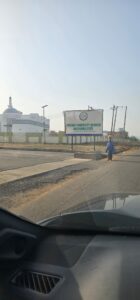
Friends were blunt in their judgment. One said he would not take such a risk for a hundreds million naira. Another dismissed me as outrightly mad. I listened, nodded, and went anyway. Because if everyone avoids the roads, how will those in authority ever know what has gone wrong? And how would this story ever be told?
Barely an hour into the journey, just before Keffi, Google Maps, which served as my digital guide, made a bold and unsettling choice. It diverted us from the familiar junction and drew us deep into Keffi town, pointing toward a 63-kilometre stretch so empty it felt forgotten by both God and government. For over an hour, it was just us, the quiet hum of the hybrid engine, and a road that seemed to lead nowhere. No trucks. No cars. Hardly any motorcycles. Only silence and an uneven surface that hinted at danger.
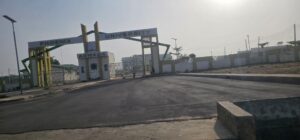
My thoughts began to race. An unbridged river? A dead end? An ambush waiting patiently? I prayed silently and forced calm onto my face so as not to alarm my maid, asleep in the front passenger seat, wrapped in cool air-conditioning and blissful ignorance. Music played. I nodded along. Inside, I prepared for the worst and hoped earnestly for the best. I trusted my God and my instincts.
This route had been chosen on purpose. The familiar Keffi–Nasarawa road had been a nightmare the previous year, when I spent three hours to cover just 61 kilometres. That memory alone was enough to make me trust a new technology-suggested path.
The unease deepened when I realized there was no GSM signal. No data. No digital trail. If something went wrong here, no one would know. My family in Abuja, due to join me a week later by air through Port Harcourt, would have no clue where to begin looking. A flat tyre. A damaged axle. One careless scrape against a hidden kerb would have been disastrous.
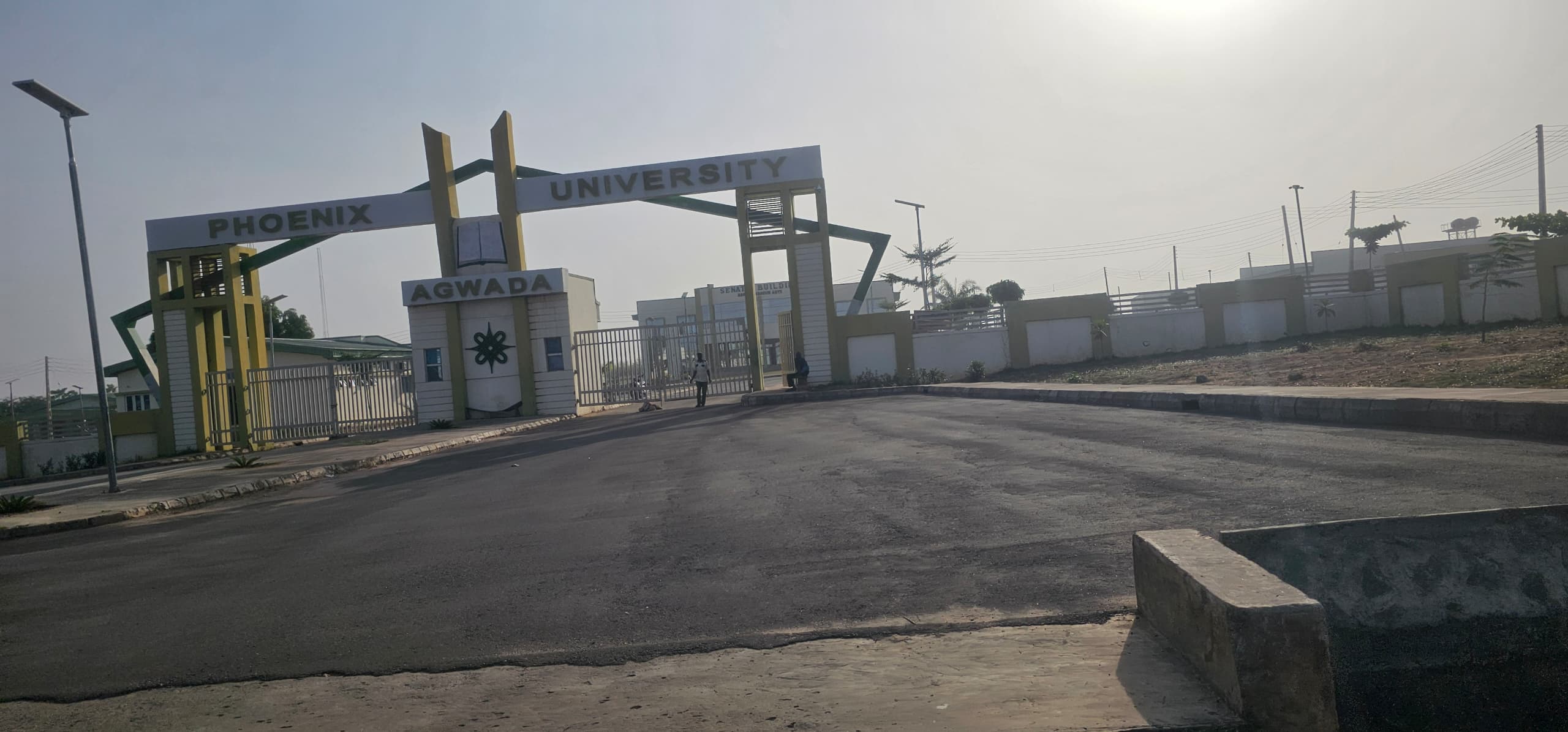
These thoughts came in waves, mixed with silent prayers, as a sprinkling of motorcycles passed in the opposite direction, their riders unreadable. A few ‘abokis’ appeared. Cows grazed calmly. The sun finally broke through the windscreen. I focused on the steady pull of the engine and pressed on. Then, like mercy after tension, houses appeared. One of them, Phoenix University, Agwada. Well-built. In a wilderness. Moments later, we burst into Nasarawa town—alive, intact, and deeply relieved.
We joined the Nasarawa–Oweto Road, one of the more thoughtful legacies of the Buhari administration. Well planned. Well intentioned. Already showing signs of strain. Poor quality work had begun to weaken what was commissioned with much fanfare in May 2023 by my man, Babatunde Raji Fashola. I remembered the optimism of that day, the relief of drivers who had long suffered. Barely two years later, ridges had appeared and the road was already beginning to sing its sad ululation.
Still, it allowed speed. I comfortably touched 140 km/h on the dash, slowing only where locals had installed aggressive speed bumps—“sleeping policemen,” determined to wake even the dead. After 92 kilometres, we crossed the Oweto Bridge at Loko and entered Benue State.
And then the tone changed.
The road toward Otukpo, hometown of former Senate President David Mark, deteriorated instantly into something biblical. Potholes became craters. Craters became gorges. The car danced unwillingly into a ‘skelewu’ parade of jolts and lunges. It took three exhausting hours to cover 153 kilometres. By the time we reached the Otukpo roundabout, the air had thickened into a choking red fog of dust from the massive works underway on the Makurdi-Otukpo–Enugu Expressway.
Despite the chaos, there was reason for “renewed hope.” A Chinese construction giant, CHEC, busy at work, appeared focused—finally tackling a road that had suffered decades of neglect. It was sobering to remember that this single route feeds the South-East and South-South. Food from the North passes here. Commerce depends on it. That it was left in such a state for so long feels less like an accident and more like wicked failure. Until now…
Security checkpoints appeared in clusters. Military. Police. Each stop cost another seven minutes as tolls were openly collected from commercial drivers. I found myself torn between anger at the corruption, yet quietly aware that paying these tolls felt safer than risking an encounter with kidnappers or armed robbers. This stretch was the hardest part of the entire journey, though it may become the easiest in a few years if the scale of construction lives up to its promise.
Enugu brought brief relief. The Obollo Afor–Enugu bypass, built by former Governor Ifeanyi “Gburugburu” Ugwuanyi and now being expanded by Governor Peter Mbah, offered smooth tarmac and room to breathe. For three hours, the road behaved as it should as we hit the Enugu–Port Harcourt Expressway, also constructed by former President Buhari. Most of the work had been done and delivered. We cruised…
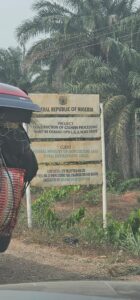
Then, Abia Tower at Umuahia forced a decision.
Ikot Ekpene lay just 43 kilometres away, but the direct route had become so bad one would not have wished his worst enemy to try it. Recently, it has become a construction-heavy death trap. Governor Alex Otti’s 24-month repair plan had only just begun. I did a quick mental calculation and chose the longer route through Aba, adding an extra 56 kilometres to the journey. The arrival time would be the same, but the car would suffer less. More importantly, I needed to feel the Alex Otti magic in Aba, which I knew as the most **putrefying** wasteland in all of Nigeria a decade ago.
Aba roads surprised me. Smooth. Calm. Almost too good to trust. After a detour at Osisioma, I turned through the silky Owerri Road, where one more lesson of the journey waited. Aba was neat, clean, and littered only with heavy-duty waste bins which were being cleared as I glided through. Wow! Aba? The real Aba? I was speechless! For the first time in my adult life, I drove through Aba peopled by clean, responsible humans, milling around **respectfully** and responsibly. And it dawned on me that indeed, everything rises and falls with leadership. Because I knew Aba during the sad, filthy days of Orji Uzor Kalu and his successor godson, Theodore Orji. I thought the town was cursed to be a cesspool of absolute decay, filth, stench, crime, and disorder. I could not have imagined the sort of Aba that I saw. But this was real. Aba is a changed town.
I navigated into Ikot Ekpene Road for my final lesson of the journey. This stretch, repaired by NNPC under the Federal Government’s tax-for-infrastructure scheme, was usable but chaotic. Houses stood boldly in the middle of outer lanes as stubborn reminders of poor planning and weaker enforcement. I was told many had been built by locals deliberately to demand compensation. When talks failed, the Federal Ministry of Works simply asked contractors to build around them.
There it was, Nigeria laid bare. Weak enforcement. Clever opportunism. Tired governance. A country arguing with itself and losing. It reminded me of 2012, when relatives urged me to build a small structure near a road rumored to be marked for construction in my community. I refused. A neighbor warned I might die poor for missing such a chance. Nearby, an Apostolic church built a fake structure, collected compensation, and used the money to erect its current building. A story for another day.
Yet through the dust, the confusion, and the weight of poor choices, the RAV4 carried me home into the green calm of my village. The longest holiday of my career had begun. I planned to rev up preparations for the much-anticipated Essien Udim Thanksgiving, Honors, and Awards Ceremony due in eleven days. My sister Maria, who had called throughout the journey, welcomed me with visible relief that the road did not consume me. I settled down for an epic battle with angels and demons, to be told in the remaining parts of this long recollection.
To be continued…
Celestine Mel, FCIB, is a chartered banker and projects lead.
He writes from Abuja, FCT.