By ETIM ETIM
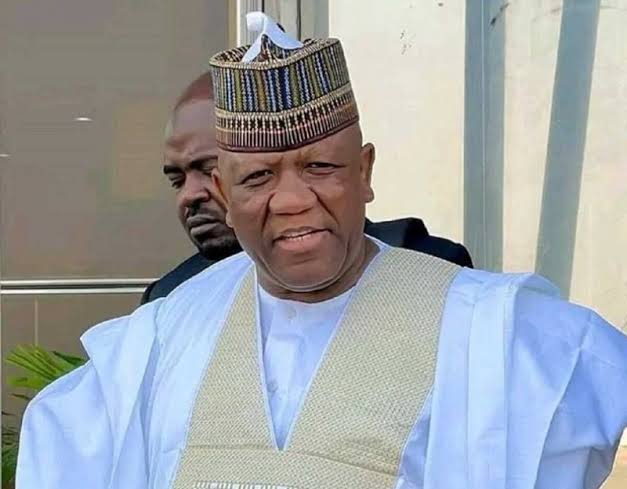
When Senator Abdulaziz Yari stepped onto the podium at the All Progressives Congress (APC) presidential campaign rally in Uyo, Akwa Ibom State, on November 6, 2026, he offered a definition of hunger that stripped away decades of economic reality. Yari is the Senator representing Zamfara West in the Senate, the Director-General of the APC Presidential Campaign Council and a former two-term governor of Zamfara State. He asked the crowd whether anyone with money in their pocket had gone to the market and failed to find rice. His conclusion was blunt: “If there’s no food in the market, that’s what we are calling hunger. But anyone who is not a lazy person, definitely he would have food on his table.”
To millions of Nigerians navigating a relentless cost-of-living crisis, the remark landed not merely as a political misstep, but as a crystallization of an enduring national divide. In framing an economic crisis as a personal failing, Yari’s words have become a potent symbol of how detached Nigeria’s ruling class has grown from the daily survival struggles of ordinary citizens. His theory reflects the Fallacy of the Full Shelf. At the core of Yari’s argument is a profound misunderstanding—or willful disregard—of basic economics. Hunger in modern economies is rarely caused by empty market stalls; it is caused by the collapse of purchasing power.
Across Nigeria, markets in Lagos, Kano, Port Harcourt, and Uyo remain stocked with grains, tubers, and produce. Yet for the civil servant whose monthly wage evaporates after a week of transportation and utility bills, or the artisan whose earnings have been hollowed out by persistent food inflation, full shelves offer no comfort. Asking citizens why they cannot buy food if they “have money in their pockets” ignores the central question facing the Nigerian household: why has honest, grueling labor ceased to put money in those pockets?
The Nigerian political elites have grown too rich from stolen resources from the treasury and money they make from illicit businesses. Whether their wealth is from stolen crude oil in the Niger Delta or illegal gold mining in the North, they have become too rich and out of touch with reality. They talk carelessly in public and deride the citizens at every occasion. History is also replete with instances of leaders who disparage the working class or dismissed the struggles of ordinary people. In this category are King William 1V of United Kingdom (1930s); Tsar Nicholas II of Russia (1894-1917) and King Charles I of England (1649).
During the onset of Depression in the US, Treasury Secretary in Hubert Hoover’s administration famously advised the President to let the economic crisis run its course to ‘’liquidate labour, liquidate stocks, liquidate the farmers’’. The advice essentially treated millions of unemployed and starving people as mere market inefficiencies to be purged.
Equally scornful, Yari’s comments did not emerge in a vacuum. They echo a recurring trope within Nigeria’s political establishment—one that seeks to absolve leadership of policy failures by impugning the work ethic of the governed. They reflect the sheer scale of contempts the elites have for ordinary folks.
Whenever economic reforms trigger severe inflation, currency depreciation, or rising energy costs, a familiar narrative surfaces from corridors of power. Rather than interrogating why productivity is stifled by erratic power supply, dilapidated infrastructure, and insecurity, the citizenry is lectured on grit and enterprise. That is when the rulers engage in shifting the burden of governance to the people. Critics and commentators were quick to point out the geography of Yari’s own political career. Having governed Zamfara State from 2011 to 2019—a state that consistently ranks among Nigeria’s highest in multidimensional poverty and where banditry has driven thousands of hardworking farmers off their ancestral lands—the suggestion that empty tables are the result of laziness rings particularly hollow. Farmers in the North-West do not lack a desire to work; they lack the security to survive a trip to their farms.
Far from being indolent, the average Nigerian worker operates in one of the world’s most demanding informal economies. From dawn-to-dusk traders in Onitsha to commercial drivers spending four hours in Lagos traffic and graduates juggling multiple side hustles, effort is the one commodity Nigeria produces in surplus. It is quite unconscionable to blame the citizens for their predicament.
Following widespread backlash from opposition figures, youth groups, and civil society, Yari’s political allies moved swiftly to clarify his remarks. Groups such as the Senator Yari National Unity Project insisted that the former governor had acknowledged the existence of hunger before speaking on the “dignity of work,” and denied that he singled out Nigerian youths as lazy.
Yet, the defence itself underscores the gulf between the political class and the public. To citizens rationing meals or pulling children out of school, semantic distinctions between calling “youths” lazy and implying that “anyone” without food on their table lacks industry, offer little solace. When public officials enjoy state-funded security convoys, generous allowances, and insulation from market shocks, lecturing the impoverished on hard work reads less like motivation and more like mockery.
Ultimately, the uproar over Senator Yari’s Uyo speech is about more than one politician’s choice of words. It reflects a deepening crisis of empathy in Nigerian governance and portrays a symptom of a broken social contract.
Democracy relies on a shared understanding between leaders and the led: citizens contribute their labor, taxes, and resilience, while the state creates an enabling environment where that labor is rewarded. When a senior architect of a national campaign reduces widespread deprivation to a lack of personal effort, it signals an abandonment of that social contract. Until Nigeria’s elite begin measuring their success not by the presence of food in the market, but by the ability of an honest day’s wage to buy it, statements like Yari’s will continue to stand as monuments to a leadership class out of touch with the nation it governs.

ETIM ETIM is a veteran journalist and PR professional with over 35 years of cognate experience.
He is the publisher and editor-in-chief of Policy & Politics (www.policyandpolitics.com.ng), an online newspaper dedicated to insightful analysis of Nigerian news and world’s report. He is also a columnist with BusinessDay and The Cable and is a regular contributor to other newspapers.
Contact: +234802 3159969 (WhatsApp Only)