Isaac Samuel
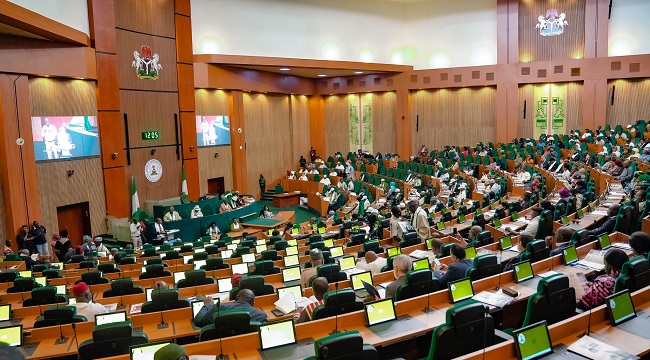
The House of Representatives has begun consideration of a bill seeking to prohibit landlords in the Federal Capital Territory (FCT) from compelling tenants to pay more than one year’s rent in advance, amid persistent concerns over rising rents and the cost of securing accommodation in Abuja.
The Federal Capital Territory Advance Rent Regulation and Tenants’ Protection Bill, 2026 (HB.2839), passed for first reading on Thursday, also seeks to establish a regulatory authority to protect tenants and landlords against unlawful rental practices.
The bill, sponsored by Paul Nnamchi (APC, Enugu), with Ahmed Doro (PDP, Katsina) as co-sponsor, proposes that landlords, estate agents, property managers and anyone acting on behalf of a landlord must not demand, receive or compel tenants to pay more than 12 months’ rent in advance as a condition for securing, renewing or continuing a tenancy.
The proposed legislation would apply to both residential and commercial tenancies across the FCT.
It also seeks to prevent landlords and agents from circumventing the proposed restriction through additional charges, compulsory service fees, artificial renewal of tenancy agreements or other arrangements designed to force tenants to pay more than one year’s rent upfront.
Under the bill, tenants would still be allowed to voluntarily offer more than 12 months’ rent in advance, provided the offer originates from the tenant and is not imposed by the landlord as a condition for granting or continuing the tenancy.
Such payments must be made without coercion, discrimination, threats or retaliation, while the agreement must be documented in writing.
The proposal is aimed at distinguishing voluntary advance payments from situations in which tenants are compelled to raise large sums at once to secure accommodation or retain their homes.
The bill proposes the establishment of the Federal Capital Territory Rent Regulation and Tenants’ Protection Authority to administer and enforce the proposed law.
The authority would be empowered to receive and investigate complaints from tenants and landlords, monitor the activities of landlords, estate agents and property managers, issue compliance notices and facilitate mediation in rental disputes.
It would also be authorised to order refunds where it determines that rent was collected in violation of the proposed legislation.
The proposed authority would maintain a public register of letting agents where registration is required and establish complaint offices and electronic reporting channels across the FCT, including satellite towns.
It would also publish periodic reports on rental practices and enforcement outcomes.
Under the proposed law, the authority could direct a landlord or agent to refund an unlawful payment within 30 days after determining that the payment breached the legislation.
The bill proposes fines of between N500,000 and N5 million for individuals who knowingly demand or receive rent above the permitted limit.
Corporate entities found culpable could face fines ranging from N5 million to N20 million.
In addition to the proposed fines, courts could order the refund of unlawful payments, compensation for proven losses and payment of lawful costs.
Beyond regulating advance rent, the proposed legislation seeks to prohibit landlords from using unlawful methods to evict tenants or recover possession of their properties.
Such practices include threats or violence, disconnection of essential services, removal or destruction of tenants’ belongings, changing locks without lawful authority and other forms of self-help.
The proposal, however, preserves landlords’ rights to recover rent lawfully due and regain possession of their properties through established legal procedures.
If enacted, the legislation would establish a framework for handling rental disputes while setting out penalties for specified violations.
The bill comes amid growing concerns over the rising cost of accommodation in Abuja, where residents have complained about high rents, arbitrary increases and additional charges imposed by landlords and estate agents.
In July 2025, residents across the FCT raised concerns over rising accommodation costs, including rent, agency fees, agreement fees and caution fees.
Some residents said the increases were forcing them to leave their homes and move to cheaper neighbourhoods, often with poorer infrastructure and longer commuting distances.
The proposed legislation seeks to address one of the immediate financial challenges facing tenants: the requirement to raise large sums of money at once before securing or retaining accommodation.
For tenants who cannot afford to pay a full year’s rent upfront, the proposed restriction could provide an alternative to compulsory multi-year advance payments if the bill becomes law.
However, the proposal has only passed the first reading stage and would still need to go through further legislative consideration before it could become law.
The latest proposal follows an earlier legislative effort to regulate rent payments in the FCT.
In 2022, a bill sponsored by former Senator Smart Adeyemi, who represented Kogi West, scaled second reading in the Senate.
The proposal sought to reduce advance rent payments from one or two years to three months, followed by monthly payments.
The renewed effort reflects continuing concerns over the affordability of accommodation and the need for a clearer regulatory framework governing relationships between landlords and tenants.
The issue is not peculiar to Abuja.
In Lagos State, a proposed Tenancy and Recovery of Premises Bill, 2025, also sought to limit advance rent payments, regulate estate agents and provide mechanisms for tenants to challenge unfair rent increases.
The Lagos proposal sought to prevent landlords from demanding more than one year’s rent from new tenants, while tenants already on periodic payment arrangements could not be compelled to pay more than three months’ rent in advance.
It also proposed measures to address excessive agency fees, illegal eviction practices and prolonged disputes between landlords and tenants.