Isaac Samuel
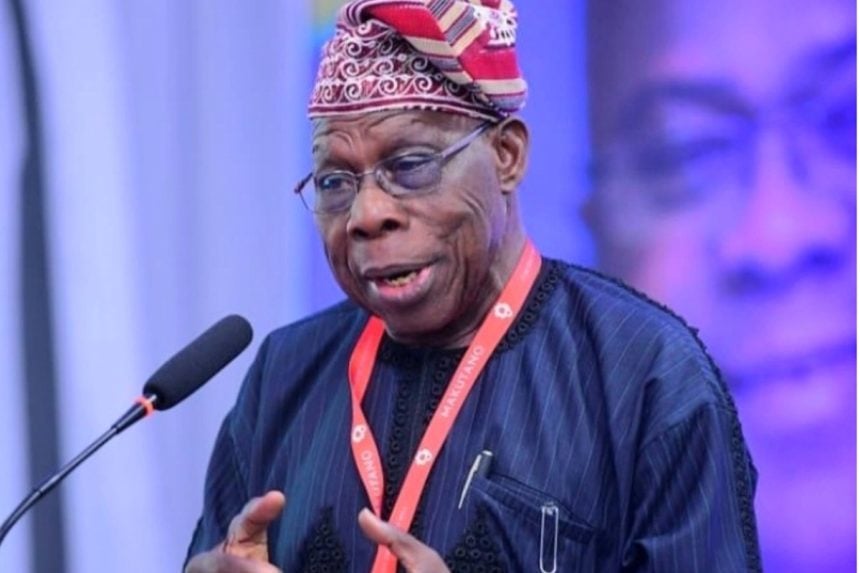
Former President Olusegun Obasanjo has criticised President Bola Tinubu’s economic reforms, saying the sharp devaluation of the naira has worsened poverty and eroded Nigerians’ purchasing power.
Obasanjo, who spoke at the Financial Times Africa Summit 2026 in London, said the naira’s depreciation from about N500 to the dollar to approximately N1,500 had significantly reduced the value of Nigerians’ earnings and savings.
According to him, the currency’s depreciation had contributed to Nigeria’s worsening poverty situation, with the country becoming known as the poverty capital of the world.
The former president described the impact of the exchange rate adjustment as severe, arguing that Nigerians had become substantially poorer as the naira lost value against the dollar.
“We do not live in isolation as a country. We interact with the rest of the world. And overnight, you devalue the currency by 300 percent. The naira went from N500 to a dollar to N1,500 to a dollar,” he said.
Obasanjo added that the depreciation had made Nigerians significantly poorer and contributed to the country’s position as a global poverty hotspot.
“What that meant was that every Nigerian is made poor by 300 percent. That made Nigeria become the poverty capital of the world, which means Nigeria has the largest number of poor people in the world.
“You cannot say to me that that is good for Nigeria. You cannot say to me that that is good for us in any sense,” he said.
Tinubu announced the removal of the petrol subsidy in May 2023, shortly after assuming office, as part of efforts to reduce government expenditure and redirect resources towards development.
In June 2023, the Central Bank of Nigeria introduced foreign exchange reforms that allowed the naira to trade more freely, effectively ending the previous multiple exchange rate system.
The reforms were intended to improve transparency in the foreign exchange market, attract investment and address distortions in the economy.
However, the naira subsequently depreciated sharply, increasing the cost of imported goods and putting additional pressure on businesses and households.
The currency decline, combined with the removal of the petrol subsidy, has contributed to higher transport costs, rising food prices and persistent inflation, worsening the cost-of-living crisis faced by many Nigerians.
The Tinubu administration has defended its economic policies as necessary measures to stabilise the economy and lay the foundation for long-term growth, despite the immediate hardship experienced by citizens.