Isaac Samuel
In Nigerian politics, the feast is rarely just about the food on the table, it is also about who sits closest to the host, who gets the largest slice and who is already eyeing the head seat.
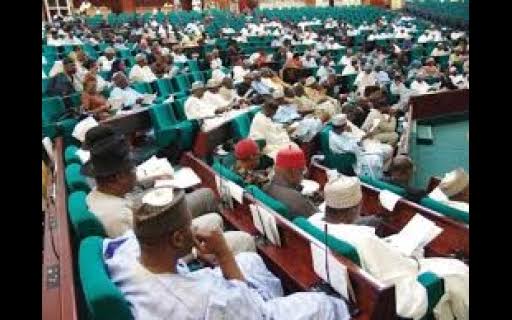
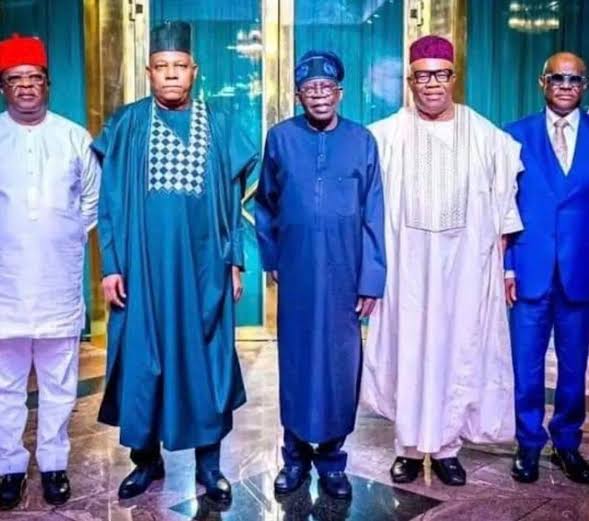
At the inauguration of President Bola Tinubu’s Presidential Campaign Council in Abuja on Wednesday, the menu was unity, the toast was victory in 2027, but the political appetites in the room appeared to extend well beyond the presidential election.
As politicians gathered to plot the road to Tinubu’s second term, another contest quietly crept into the conversation and that is who retains more political power and also who command the National assembly leadership when the dust of the elections settled.
Like guests at a grand banquet, the political heavyweights arrived under one roof, bound by a common mission but carrying different calculations.
Publicly, the gathering was about rallying support for the President’s re-election, closing ranks within the ruling party and persuading Nigerians to renew Tinubu’s mandate.
But beneath the ceremonial smiles and familiar pledges of loyalty, however, lay the harder business of politics. That is securing influence, protecting positions and preparing for the next round of power-sharing.
The presidential contest was the main course, but for some, the appetising prospect was what might follow it.
The tension was not written on any banner, nor was it announced from the podium as a contest for political supremacy.
Instead, it emerged in carefully chosen words, pointed warnings and declarations that appeared innocuous on the surface but carried weight in the larger political calculation.
In a gathering where everyone was expected to sing from the same hymn sheet, the notes were not always identical.
Some spoke of delivering votes,others made a case for continuity, while another voice drew attention to a senatorial ambition that could eventually bring a fresh contest for one of the country’s most coveted political offices.
Three influential figures whose remarks gave the gathering a significance beyond its official purpose were Minister of the Federal Capital Territory, Nyesom Wike; Senate President Godswill Akpabio; and Imo State Governor Hope Uzodimma.
Though united, at least publicly, in their support for Tinubu’s second-term bid, their comments touched on different questions of political survival, electoral performance and the future control of the National Assembly.
Wike spoke the language of electoral arithmetic. Akpabio made the case for retaining the existing order. Uzodimma, in turn, made it clear that he would be seeking a Senate seat, a move widely viewed against the backdrop of his reported interest in becoming the next Senate president.
The three politicians did not engage in a direct exchange. Their words, however, revealed the delicate balance between a collective campaign for Tinubu and individual ambitions that could become more pronounced after the election.
The gathering drew an unusual mix of political interests, including Wike of the Peoples Democratic Party (PDP), Anambra State Governor Chukwuma Soludo of the All Progressives Grand Alliance (APGA), and Osun State Governor Ademola Adeleke of the Accord Party, alongside APC leaders and other political figures.
For Wike, the message was blunt. political influence must be converted into votes.
“If you don’t deliver your state and the President wins, don’t say we have won. It is not a question of I am chairman of this, I am secretary of this, I am a member of this,” he said.
The FCT minister, who was appointed coordinator of Tinubu’s campaign in Rivers State and the FCT, appeared determined to strip campaign appointments of their ceremonial value.
In his assessment, the real test would not be how many political heavyweights occupied the council but how many votes they could deliver.
He cited Lagos State as an example, recalling a conversation with the President’s Chief of Staff, Femi Gbajabiamila.
“I told the Chief of Staff to the President, Femi Gbajabiamila, the other day that if the President did not win in Lagos, don’t say we have won,” Wike said.
He pledged that Rivers State and the FCT would deliver votes for Tinubu, insisting that campaign officials must take responsibility for the electoral outcomes in their respective territories.
Wike’s intervention carried significance given his continued support for Tinubu despite remaining a member of the opposition PDP.
Through his Rainbow Coalition, the minister has sought to mobilise support for the President across party lines, making him a central figure in the administration’s political outreach.
But while Wike was demanding proof of political strength at the ballot box, Akpabio appeared more concerned with what might happen to the existing power structure once the votes had been counted.
The Senate president turned his attention to the leadership of the next National Assembly, appealing to Tinubu to support continuity in the Senate presidency.
Invoking a remark attributed to Soludo, Akpabio reached for the imagery of a garment that had not been torn to argue against changing an arrangement that was working.
“Mr President, you already know that we (the National Assembly) are with you. Please, take the advice of Governor Soludo seriously. He said if the cloth is not torn, why try to amend it? If you try to amend it, you are going to tear the cloth,” he said.
He followed the metaphor with a direct appeal for the current National Assembly leadership to return after the 2027 elections.
“If the National Assembly is so much with you, why not encourage them to come back and support you in your second term?” he asked.
It was an appeal for continuity, but one delivered at a time when the political succession battle within the ruling party is already attracting attention.
The 2027 elections will determine not only whether Tinubu secures another term but also the composition of the 11th National Assembly and the political alliances that will shape the emergence of its leaders.
Akpabio did not stop at making a case for retaining the current leadership. He turned to governors who might be eyeing positions beyond their current offices and warned them against abandoning their constituents in pursuit of other political ambitions.
“And for my brothers who are governors, I want you to know: you must not abandon your people. I did eight years as a governor. The Constitution says you should do eight years. There is no need for you to start eyeing another position that is not available,” he said.
He added: “I have been in this business for over 25 years, and I always win.”
Akpabio did not mention Uzodimma by name. But his warning was difficult to separate from the reports that the Imo governor is positioning himself for the Senate and could seek to succeed him as Senate president.
Uzodimma’s decision to contest for Imo West senatorial district is also important to note because his second term as governor is expected to end in January 2028, months after the inauguration of the 11th National Assembly in June 2027.
A successful bid for the Senate would therefore place him in the chamber at the very moment its leadership is being determined.
It was against this backdrop that Uzodimma took the microphone and made clear that he, too, would be on the ballot.
“Mr President, you will be on the ballot on 16 January 2027. But if we are honest with ourselves, so will we,” he said.
“I will be on the ballot as a senatorial candidate. So, all of us. The challenge of re-electing Mr President is the challenge of re-electing every member of APC.”
The declaration was more than an announcement of his candidacy. Coming after Akpabio’s warning against governors eyeing other offices, it served as a reminder that Uzodimma’s political future, like those of other APC leaders, would be decided through the same electoral process the party was preparing to fight.
He did not directly challenge Akpabio’s remarks. Instead, he framed the senatorial contest as part of a broader obligation to return Tinubu and other APC candidates to office. Yet the timing of his intervention gave his words an added political dimension: while Akpabio was making the case for the current leadership to remain in place, Uzodimma was announcing his entry into the Senate race that could put him in contention for the same office.
The exchange, therefore, was less about an open clash than about two competing ideas of political continuity — one that favours retaining the existing leadership and another that leaves room for new entrants to position themselves for the next political cycle.
Uzodimma subsequently urged APC leaders to put aside their differences and rally behind the party’s candidates.
“We must jettison every misgiving we have against each other. We must reconcile our differences. We must rally as one family behind the party and all the candidates,” he said.
He also cautioned against the complacency that can accompany control of government at multiple levels, warning that political structures alone cannot guarantee electoral success.
“A party that controls every tier of government can easily grow comfortable and begin to mistake the size of its structure for the depth of its support,” he said.
“But as critical as structures are, it is citizens who vote, and each one of them has to be persuaded.”
The remark echoed Wike’s insistence that campaign appointments must produce votes, although the two men approached the question from different angles.
Wike demanded accountability from those entrusted with delivering Tinubu’s re-election, while Uzodimma warned that the APC must not confuse its institutional reach with genuine voter support.
The Imo governor further argued that the success of one candidate should not depend on the failure of another.
“The success of any one of us cannot be built on the failure of another, and every candidate who carries our flag deserves the full support of the whole party. Our unity should be unassailable,” he said.
That appeal for unity comes as the party prepares for a contest in which cooperation at the presidential level may coexist with competition for legislative seats and leadership positions.
The APC’s challenge will be to ensure that the pursuit of individual ambitions does not undermine the collective campaign it is assembling around Tinubu.
Tinubu, who inaugurated the council, urged members to demonstrate unity, commitment and dedication as they prepared for the 2027 elections.
The expanded council includes politicians from outside the APC which reflecting the President’s effort to consolidate a broad coalition of support for his second-term bid.