Isaac Samuel
President Bola Tinubu has transmitted three executive bills to the National Assembly seeking to reform the legal framework governing the National Drug Law Enforcement Agency (NDLEA), expand the mandate of the Nigerian Safety Investigation Bureau (NSIB) and replace the Administrative Staff College of Nigeria (ASCON) with a National School of Government.
The proposed legislations are the NDLEA Bill 2026, the NSIB (Amendment) Bill 2026 and the National School of Government Bill 2026.
The bills are aimed at strengthening drug law enforcement, broadening the scope of transportation accident investigations and improving leadership development and capacity building in the public service.
In the proposed NDLEA legislation, Tinubu is seeking the repeal and re-enactment of the existing NDLEA Act alongside the Indian Hemp Act to establish a consolidated legal framework for tackling drug-related offences.
The proposed law is expected to strengthen enforcement against the cultivation, processing, distribution, trafficking and use of illicit drugs, while providing a more comprehensive framework for the agency’s investigation and prosecution of drug-related offences.
The proposal seeks to update the legal provisions guiding the agency’s operations and address gaps in the existing framework for combating drug-related activities.
In a separate bill, the President is seeking amendments to the Nigerian Safety Investigation Bureau (Establishment) Act, 2022, to expand the agency’s responsibilities beyond aviation accidents and incidents.
Under the proposed changes, the bureau would become a multimodal safety investigation authority with responsibility for investigating occurrences involving rail, maritime and other modes of transportation, in addition to aviation.
The amendment also proposes changes to the bureau’s supervisory arrangements and seeks to strengthen its institutional and operational capacity.
The expansion would provide a broader framework for investigating transportation accidents, identifying their causes and making safety recommendations aimed at preventing similar occurrences.
The third proposal seeks to repeal the law establishing the Administrative Staff College of Nigeria and replace the institution with a National School of Government.
ASCON, established in 1972 and located in Topo, Badagry, Lagos State, provides management training, research and consultancy services for public and private sector organisations.
The proposed National School of Government is expected to focus on leadership development, policy implementation, executive training and improving the capacity of public officials to deliver government programmes.
The proposed changes would require legislative approval before the new institution could replace ASCON.
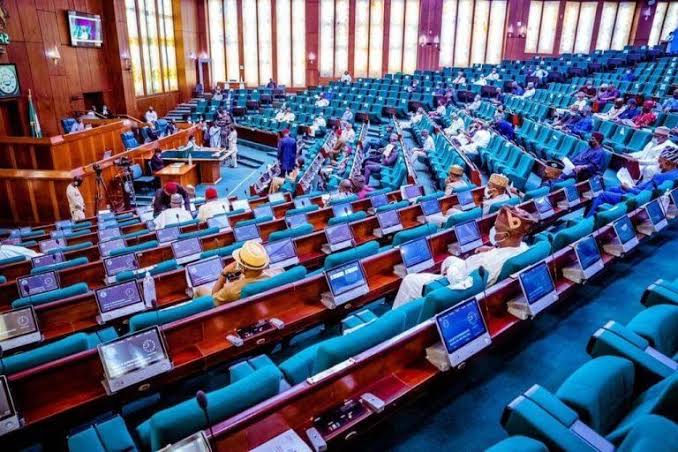
The bills were transmitted to the National Assembly for consideration, with the relevant legislative processes expected to determine their eventual passage.
The proposals form part of the Federal Government’s efforts to reform public institutions, strengthen law enforcement and improve the capacity of government agencies to carry out their statutory responsibilities.
The bills will become law only after passage by the National Assembly and presidential assent.