Isaac Samuel
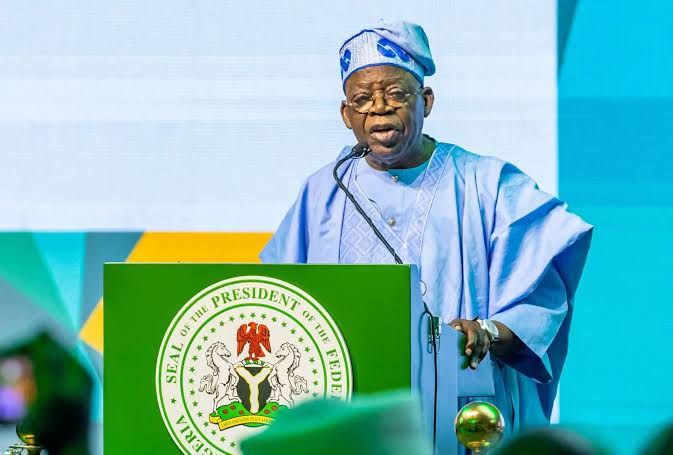
President Bola Ahmed Tinubu’s 66th Independence Day address focused overwhelmingly on economic reforms and his administration’s vision of prosperity, with little attention paid to Nigeria’s persistent insecurity and electricity challenges, while the 2027 general election was not mentioned.
In the address, themed “From Reforms to Prosperity,” Tinubu devoted much of his speech to defending the economic policies introduced since his administration came into office in 2023, arguing that the measures had corrected longstanding distortions and positioned the country for growth.
Although the President referred to insecurity in recounting Nigeria’s history of difficulties, he did not devote a substantive section of the address to the current security situation or announce fresh measures to tackle terrorism, banditry, kidnapping and other forms of violence.
He said:“We have endured war, military rule, economic crises, insecurity and political upheaval. Yet through it all, Nigeria, with the indomitable spirit of its people, has endured.”
Tinubu also acknowledged the sacrifices of the security forces, saying “We are grateful for the men and women of our Armed Forces and security services who place themselves in harm’s way so that the rest of us may live in peace.”
Beyond those references, however, the President’s speech did not provide a detailed assessment of the country’s security situation or outline specific new measures, targets or timelines for addressing the challenges.
The electricity sector similarly received only brief attention in the address.
Tinubu mentioned reliable electricity while describing the kind of economy he wants to build, saying factories should have dependable power and businesses should be able to operate at lower cost.
“I mean a Nigeria in which the farmer can cultivate his land safely, produce more at lower cost, and earn a decent return for his labour. A Nigeria in which factories have reliable power, businesses can obtain credit, and young people can find productive work.”
He later said:“We will use our gas to power new industries.”
The President referred to electricity costs when explaining how the government intends to bring down the cost of producing goods.
“When a farmer produces more cheaply, when fewer crops are lost between the farm and the market, when a manufacturer spends less on electricity, when a truck reaches its destination faster, and when the business environment fosters fair competition, all those savings will ultimately find their way into the price of goods in the market.”
But unlike his June 12 Democracy Day address, where he gave a more detailed account of the electricity sector, including generation shortfalls, transmission problems, the metering deficit and government measures to address the sector’s legacy debts, the Independence Day speech contained no comparable review of the power sector.
Perhaps the most conspicuous omission was the 2027 general election.
The President made no reference to the forthcoming election, INEC, political parties, electoral preparations, voting or the conduct of the 2027 polls in the Independence Day address.
Instead, Tinubu concentrated on the economy, particularly his argument that the difficult phase of reforms had been completed and that government attention would now shift towards prosperity.
“The emergency treatment is over. The foundation has been repaired. The central economic task before us has changed. For three years, our overriding purpose was to correct our nation’s course.
“Now, our purpose is simple: shared and widespread prosperity.”
Tinubu highlighted economic growth, lower inflation from its peak, improved foreign reserves, foreign exchange market stability and increased non-oil exports as evidence, in his assessment, that the reforms were beginning to yield results.
He said the economy had grown by more than four per cent in 2026, while non-oil exports generated more than $6 billion in 2025.
The President also acknowledged that millions of Nigerians remained under economic pressure, but attributed much of the hardship to structural problems that had accumulated over decades.
“Their circumstances did not begin with the reforms of the last three years. Their struggle is the accumulated consequence of decades of low productivity, inadequate infrastructure, insufficient opportunity and institutions that too often failed those who needed them most.”
He said the next phase of his administration would focus on lowering the cost of living, expanding agricultural production, creating jobs, supporting industries and improving infrastructure.
Tinubu ended the address by declaring that Nigeria had moved beyond the most difficult phase of the reforms and should now look towards prosperity.
He said: “The age of reform has done its work. Now begins the age of prosperity.”
And in the speech’s closing metaphor.
“Nigeria has corrected its course. We have passed through our own Red Sea. This is not the time to look back. Let us go forward together, with faith in ourselves, faith in our country, and faith that the sacrifices we have made will yield their reward.”