by Mohammed Bello Doka
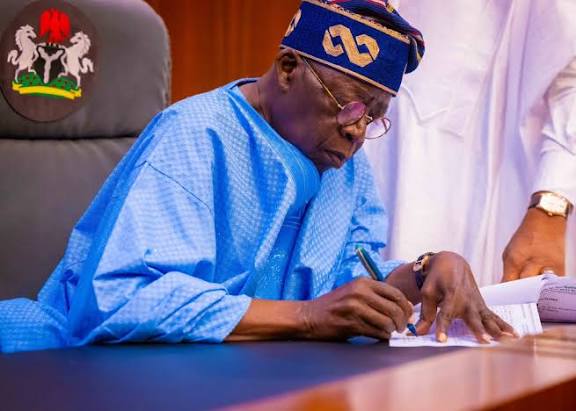
The mathematics of national suicide is rarely this precise. On May 29, 2023, President Bola Ahmed Tinubu stood before the nation and delivered two blows to the Nigerian people with the clinical detachment of a surgeon who forgot to administer anesthesia. He removed the fuel subsidy. He floated the naira. And in that single moment, he transformed the economic foundation of Africa’s most populous nation from a struggling edifice into a crumbling ruin. Thirty million Nigerians were thrown into poverty within one year of the Tinubu presidency because of these two major policies. Thirty million. That is not a statistic. That is a genocide of economic opportunity. That is the largest single increase in poverty in Nigeria’s modern history. And some people want us to salute this man as a genius.
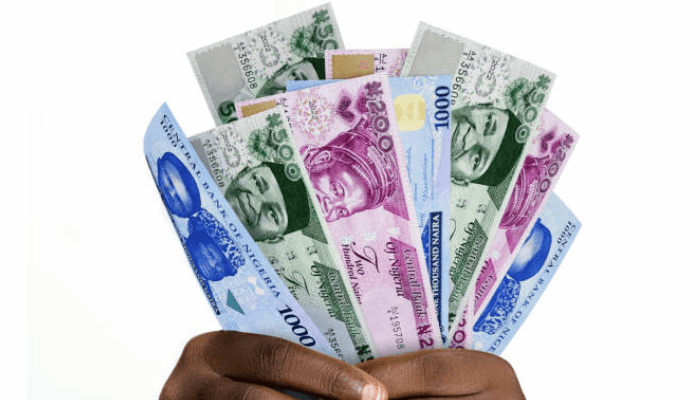
Let us speak plainly. Nigeria is an import-dependent nation. An import-dependent economy cannot withstand unpredictable currency policies without severe consequences for producers and consumers. This is not complex economics. This is common sense. When you devalue the currency of a nation that imports almost everything it consumes, from fuel to food to fertilizer to medicine, you are not reforming anything. You are setting off a bomb in the middle of your own market. The naira collapsed from about N460 to the dollar in 2023 to an average of N1,600 to the dollar in 2025, tripling the cost of fuel, medicine, and other imports. Inflation surged above 30 percent. Food inflation hit 40 percent. Fuel prices, freed from subsidies, soared to N1,000 per liter, strangling transport and livelihoods. Manufacturing credit plunged as interest rates soared. Manufacturing contributes about 9 percent to GDP. These are critical sectors that have been eviscerated. Over seven million businesses, the lifeblood of the informal economy employing 80 percent of the workforce, have collapsed under soaring costs and forex shortages. Youth unemployment, stagnant at 40 percent, has left a generation hopeless. The National Bureau of Statistics projects that 58 percent of Nigerians, 133 million people, will languish in multidimensional poverty by 2025.
Professor Franklin Ngwu of the Lagos Business School, a man who actually understands economics, put it plainly: “At the centre of all the pain we started feeling can be traced to the way the naira was floated. A managed float would have been a better option, where government intervenes to keep rates within a range.” He explained that before the reforms, the black market rate was around N700 to N800 to the dollar, while the official rate was about N450. If the transition had been managed properly, the naira might have settled at N800 or N900. Instead, everything skyrocketed. Foreign exchange, inflation, transport costs, food prices. Everything. This was not genius. This was negligence dressed in a suit and calling itself reform.
Now let us talk about where the money is going. Because if you are going to inflict this level of suffering on a nation, the least you can do is show some restraint. The Tinubu administration has done the opposite. Since taking office, the President has racked up over 20 international trips to choice destinations like Paris, London, and Dubai, staying in luxury hotels while Nigerians cannot afford bus fares. In August 2023, he acquired a new $150 million Airbus A330 presidential jet, replacing a functional fleet. Media reports suggest the plane was secretly bought from a German bank for $100 million through United States and Swiss aircraft brokers and a further $50 million to retrofit it in France. Spending $150 million or N240 billion, equivalent to two-thirds of the N362.9 billion 2024 budget for agriculture, without appropriation, is an abuse of the service-wide vote. Reports surfaced of a N5 billion yacht purchase for official use, though public outcry forced a partial backtrack. Former Minister of Education Oby Ezekwesili captured the outrage perfectly: “The worst display of Fiscal Rascality is when political and public leaders of a country that is highly overburdened with Debts of all kinds, choose to spend scarce public resources on prestige projects and luxuries”.
The National Assembly is no better. The N3.7 trillion padding of the 2024 budget debate unearthed non-transparent and unjustified financial allocations to the legislature. The NASS leadership announced plans to purchase 2023 model Toyota Landcruisers for 109 Senators and 2023 Toyota Prado for 360 members of the House of Representatives. A unit of the expensive 2023 model Toyota Landcruiser, contracted at N160 million in the third quarter of last year, was jerked to N200 million through a contract variation early this year. The specific make for the four presiding officers was jerked to over N450 million each. The reason for the contract variation, as confirmed by a senior management staff of the Senate, is the uncontrollably falling value of the Naira. Let that sink in. The same currency collapse that is pushing millions into poverty is being used as justification to spend more public money on luxury vehicles for lawmakers. SERAP had to go to court to stop the House of Representatives from procuring 360 SUVs worth N57.6 billion for its members. This is not governance. This is organized robbery.
The judiciary is not exempt from this orgy of extravagance. Former Chairman of the National Human Rights Commission Chidi Odinkalu alleged that governors buy cars for judges for personal gains, donating four-wheel drives to the judiciary all over the country. Amnesty International and Transparency International have expressed concern that the procurement of official vehicles and building of houses for judicial officers by the executive is capable of compromising judicial independence. When the executive gifts judges vehicles and houses, judicial independence becomes a fiction.
The most brazen scandal of all involves the very subsidy removal that was supposed to save Nigeria money. Former Vice President Atiku Abubakar has asked the federal government to explain the expenditure of N17.5 trillion on pipeline security in a single year. The Nigerian National Petroleum Company Limited reportedly spent N17.5 trillion on securing pipelines in 2024. For clarity, Nigeria spent roughly N18 trillion on fuel subsidy over a period of twelve years, a national programme that directly cushioned millions of Nigerians. Yet under President Tinubu, the country has now expended nearly the same amount in a single year on opaque pipeline security contracts awarded to private firms tied to associates and cronies of the President. Atiku described this as one of the most brazen financial scandals in our nation’s history. He called it grand larceny dressed as public expenditure. The Tinubu administration, he said, did not end subsidy; it merely redirected public wealth from the entire nation to a privileged cartel anchored around the Presidency.
In 2024 alone, the Federation Account Allocation Committee shared N28.78 trillion to the three tiers of government. Nigerian governors collectively received N5.22 trillion, a 45.5 percent increase from the previous year. Yet despite this windfall, there has been little evidence of improved access to quality public services. The promised N330 billion in palliatives for 8.1 million households has vanished into opacity, with economist Wilson Erumebor accusing the government of state vandalism.
This is the Tinubu economic reform in its full, ugly glory. A government that asks Nigerians to sacrifice while it indulges in decadent opulence. A government that removes subsidies only to redirect the savings to opaque contracts for cronies. A government that floats the naira and watches it drown, then uses the resulting currency collapse to justify spending even more on luxury vehicles for itself. Tinubu calls this short-term pain for long-term gain. But this is no fleeting discomfort. It is a systemic evisceration, akin to organ harvesting with no relief in sight. The nation must rise in vigilance and demand affirmative action to end this clueless regime’s assault on their survival. Because a genius does not lead the most people into poverty in a nation’s history. A genius does not spend billions on yachts and jets while children go to bed hungry. A genius does not redirect subsidy savings to cronies and call it reform. That is not genius. That is grand larceny. That is organized robbery. That is the systematic dismantling of a nation by a leadership that has lost all sense of decency, all sense of proportion, and all sense of shame.
Mohammed Bello Doka is a Nigerian journalist, writer and media professional based in Abuja. His writing focuses on Nigerian politics, governance, security challenges and the country’s place within wider African and international affairs.
Doka has a particular interest in Northern Nigeria, democratic governance, regional security and the political and socioeconomic factors shaping contemporary Nigeria.