
By Ezekiel NYA-ETOK
I recently had reason to inquire about the current price of cement in Nigeria.
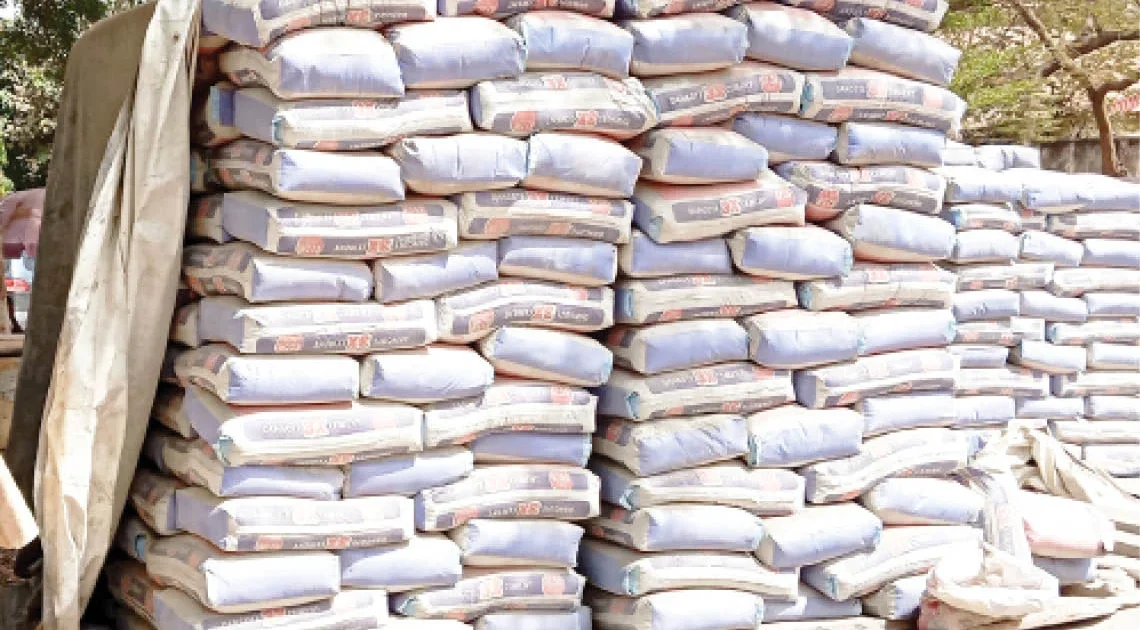
I was told that in some places, a 50kg bag is selling for approximately ₦15,000. I paused.
As an architect, a real estate professional and, more importantly, someone who has spent considerable time advocating for Affordable and Social Housing in Nigeria, I find this deeply troubling.
But I do not intend to approach this subject emotionally. Neither do I intend to accuse our cement manufacturers, distributors or government of wrongdoing without evidence.
Instead, I want to ask a very simple question: HOW DOES A BAG OF CEMENT BECOME ₦15,000 IN NIGERIA?
It is a question that deserves an answer. And I believe Nigerians—particularly the millions of citizens struggling to put a roof over their heads—are entitled to that answer.
LET US FIRST ACKNOWLEDGE ECONOMIC REALITY
Nigeria has undergone significant economic adjustments in recent years.
The Naira has depreciated substantially. The removal of petroleum subsidy affected transportation and logistics costs. Energy remains expensive. Interest rates and financing costs have risen. Manufacturers contend with infrastructure deficits, taxation, plant maintenance, imported machinery and spare parts, security expenditure and numerous other costs associated with doing business in Nigeria.
Cement manufacturers are businesses, not charities. They must recover their costs, invest in their plants, pay their employees and make reasonable returns for their shareholders.
Therefore, this is not an argument against profitability. It is an argument for transparency, competition and affordability in a product that is fundamental to national development. And that brings us to the numbers.
NIGERIA IS NOT A COUNTRY WITHOUT CEMENT
This is perhaps the most important starting point. Nigeria possesses enormous limestone deposits and has developed substantial domestic cement-manufacturing capacity.
Dangote Cement currently states that it has installed Nigerian production capacity of approximately 32.25 million tonnes per annum.
Lafarge Africa states that its four Nigerian plants have installed capacity of approximately 10.5 million tonnes per annum.
BUA Cement has also undertaken major capacity expansion and today ranks among the country’s largest cement producers.
We must be careful here. Installed production capacity is not the same as actual annual production. Plants experience maintenance shutdowns; utilization varies; demand fluctuates; production costs differ from plant to plant.
But the important point remains: Nigeria is no longer fundamentally dependent upon imported finished cement. We have built a major domestic cement industry. That is an achievement for which the Nigerian private sector deserves considerable credit. Indeed, Nigeria has progressed from being substantially dependent upon imported cement to having the capacity to supply its domestic market and participate in exports. So we must ask:
Why should cement remain increasingly unaffordable to the Nigerian who wants to build a house?
FROM ₦7,500 TO AS MUCH AS ₦15,000
The escalation has been dramatic.
In March 2026, housing-sector stakeholders publicly reported that a 50kg bag that sold for around ₦7,500 in the last quarter of 2025 had risen to approximately ₦9,000–₦10,000 at the beginning of 2026, and subsequently to between ₦11,500 and ₦15,000 in several parts of Nigeria.
That means that within a relatively short period, the price in some locations effectively doubled. Something must account for that movement.
The question is: what? Was it energy? Foreign exchange? Transportation? Taxation? Manufacturing costs? Distribution? Retail margins? Reduced production? Supply constraints? Or simply what the market could bear?
There may be perfectly legitimate answers. But Nigerians deserve to see them.
LET US OPEN UP THE ₦15,000
Rather than merely demanding that cement manufacturers reduce their prices, I propose something much more constructive.
Let us open the ₦15,000 bag of cement—not physically, but economically.
For every ₦15,000 paid by a Nigerian consumer, how much represents: the actual manufacturing cost; raw materials; energy and fuel; packaging; plant maintenance and depreciation; financing; taxes and government charges; transportation from factory; distributor’s margin; retailer’s margin; and manufacturer’s profit?
If the numbers demonstrate that ₦15,000 is economically inevitable, then Nigerians will at least understand why. But if the analysis shows substantial unexplained margins somewhere between limestone and the building site, then we need to know where those margins are being created and who is benefiting from them.
THERE IS A PRECEDENT WE SHOULD NOT IGNORE
There is an interesting episode in the recent history of Nigerian cement pricing. In 2024, the Chairman of BUA Cement, Abdul Samad Rabiu, publicly explained that his company had attempted to make cement available at approximately ₦3,500 per bag. According to him, the intervention ultimately failed partly because some dealers who obtained cement at the reduced price were reportedly selling it to consumers for ₦7,000 to ₦8,000.
The Federal Competition and Consumer Protection Commission subsequently referred publicly to this episode while discussing price gouging and exploitative market practices.
That history raises an extremely important question. Could part of today’s problem exist between the factory gate and the final consumer? We should not assume the answer. We should investigate it.
THE MANUFACTURERS ARE DOING WELL
There is another set of numbers worth examining—not to demonise successful Nigerian companies, but to understand the economics of the industry.
BUA Cement’s audited 2025 financial statements report revenue of approximately ₦1.179 trillion, with profit after tax of approximately ₦356 billion.
Dangote Cement’s 2025 accounts report Group revenue of approximately ₦4.307 trillion and Group net profit of approximately ₦1.015 trillion.
Again, profitability is not a crime. I celebrate successful Nigerian businesses.
Indeed, we need many more globally competitive Nigerian companies.
But when an essential construction material becomes increasingly unaffordable while the companies producing it remain strongly profitable, it is reasonable for policymakers and citizens to ask whether there is an opportunity to achieve a better balance between shareholder returns and national housing affordability.
THIS IS NOT REALLY ABOUT CEMENT
For me, this is where the conversation becomes much more important. This is actually about housing.
The Federal Ministry of Housing and Urban Development has itself estimated that building materials can constitute approximately 50–70 per cent of the cost of constructing a house, with cement alone potentially accounting for about 15–20 per cent.
Consider a simple illustration.
Suppose a modest housing project requires 400 bags of cement. At ₦15,000 per bag: 400 × ₦15,000 = ₦6,000,000.
Six million Naira. For cement alone.
If the same cement were ₦10,000 per bag, the bill would be ₦4 million.
That is a ₦2 million difference on one house.
Now multiply that across a 1,000-unit affordable-housing programme.
At an illustrative 400 bags per unit: 400,000 bags × ₦15,000 = ₦6 BILLION.
Cement alone.
This is why cement pricing cannot simply be regarded as a private conversation between manufacturers and traders. It is a national housing question.
WE CANNOT TALK ABOUT AFFORDABLE HOUSING WITHOUT TALKING ABOUT AFFORDABLE BUILDING MATERIALS
Government can provide land, infrastructure, subsidise mortgages, create intervention funds.
Government can even provide tax incentives to developers.
But if the fundamental materials required to build the houses remain beyond reasonable reach, affordable housing will remain largely a slogan.
Every increase in cement ultimately appears somewhere else. It appears in the selling price of houses, in government contract costs. It appears in abandoned private building projects, in the number of years a civil servant must save before completing a modest home.
And, perhaps most dangerously, it encourages compromises in construction quality as desperate builders attempt to reduce cement content or substitute inappropriate materials.
Therefore, cement affordability is not merely an economic matter. It is a housing, infrastructure and potentially building-safety matter.
I AM NOT CALLING FOR ARBITRARY PRICE CONTROL
Let me be very clear about this. I am not advocating that government simply announce tomorrow morning that cement must sell for ₦5,000, ₦7,000 or any other politically convenient figure.
Economics does not work that way.
Artificial price controls without addressing production economics can create scarcity, black markets and ultimately even higher prices.
What I am advocating is something different: TRANSPARENCY.
Let manufacturers tell us the economics.
Let distributors tell us their margins.
Let transporters explain the logistics component.
Let government disclose the taxes, levies and regulatory costs embedded in every bag.
Let independent economists and quantity surveyors examine the figures.
And then let us determine: WHAT SHOULD A COMPETITIVELY PRICED 50KG BAG OF CEMENT REASONABLY COST IN NIGERIA TODAY?
I do not presently claim to know that figure. It may be ₦8,000. It may be ₦10,000. It may even be higher.
But let the evidence establish it.
What I find increasingly difficult to accept is a situation in which Nigerians simply wake up to a new price and are expected to pay it without anybody explaining how we arrived there.
I THEREFORE PROPOSE A NATIONAL CEMENT PRICE ACCOUNTABILITY CONVERSATION
I believe the Federal Government, working with the cement industry and relevant professional and regulatory organisations, should convene an urgent but non-adversarial conversation involving:
cement manufacturers;
major distributors;
the Federal Ministry of Housing and Urban Development;
The Federal Housing Authority and Federal Mortgage Bank,
the Federal Ministry of Industry, Trade and Investment;
the Federal Competition and Consumer Protection Commission;
the relevant committees of the National Assembly;
the Real Estate Developers Association of Nigeria;
Architects; Builders; Quantity Surveyors; Engineers; Economists; Consumer organisations; and representatives of organised labour and civil society.
The assignment should be straightforward.
Show Nigerians how ₦15,000 is created.
There is also a need for a credible comparative study of cement pricing across Africa. But we must do it professionally. It is not enough to convert the price of cement in Ghana, Kenya, Egypt, South Africa or elsewhere into Naira and declare Nigeria expensive or cheap.
We should compare: factory-gate prices; retail prices; bag weights; energy costs; taxes; transportation costs; exchange rates; local raw-material content; capacity utilisation; distribution structures; and purchasing power.
Only then can we establish whether Nigerians are genuinely paying an abnormal premium for cement.
THIS IS A CONVERSATION WE MUST HAVE
Nigeria desperately needs houses. Millions of young Nigerians dream of owning their homes.
Families are struggling with rents.
Government at every level speaks about reducing the housing deficit.
Developers complain about construction costs.
And ordinary Nigerians increasingly begin buildings that take ten or fifteen years to complete.
Against this background, a bag of cement approaching ₦15,000 cannot be treated as just another market statistic.
We must interrogate it.
Not with anger.
Not with accusations.
Not by attacking Nigerian enterprise.
But with facts. With economics. With transparency. And with the overriding national objective of making decent housing attainable for the Nigerian citizen.
I therefore return to the question with which I started:
HOW DOES A BAG OF CEMENT BECOME ₦15,000 IN NIGERIA?
I genuinely want to know. And I believe Nigerians deserve an answer.
NYA-ETOK is an
Architect and Executive Director of Federal Housing Authority
